Donald Trump wants to smash the OPEC oil cartel and he's using the United Arab Emirates to do it. For decades, the Organization of the Petroleum Exporting Countries has held a metaphorical gun to the head of the global economy. They've manipulated prices and choked supply to keep their own coffers full. But the walls are closing in on the Vienna-based group. Between a resurgence of American energy dominance and a shifting geopolitical landscape in the Middle East, the cartel's grip is slipping. The UAE is the cracks in the foundation.
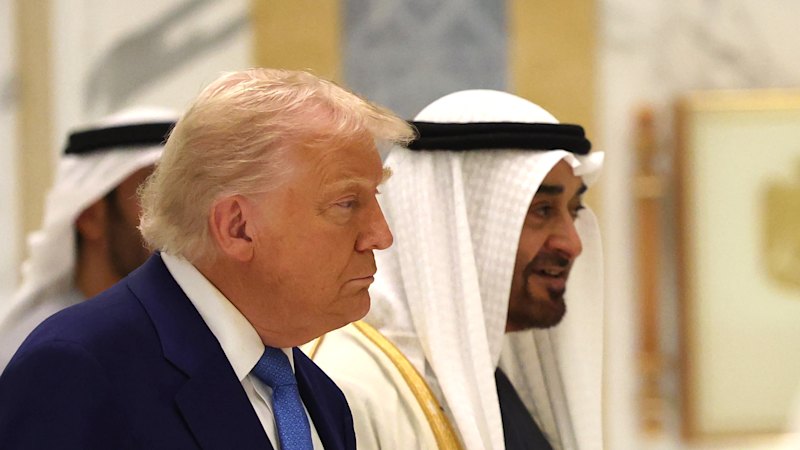
You've probably noticed that the UAE doesn't always march to the beat of the Saudi drum anymore. Under the leadership of Sheikh Mohammed bin Zayed, the Emirates have spent billions expanding their production capacity. They want to pump more oil now, not less. They're looking at a future where oil demand eventually peaks, and they don't want to be left holding trillions of dollars in "stranded assets" beneath the sand. Trump knows this. He's exploited that tension to turn a once-unified front into a house divided.
Why the UAE is Breaking Ranks
The friction between Saudi Arabia and the UAE isn't just a minor spat. It's a fundamental disagreement about the future of money. Saudi Arabia, led by Crown Prince Mohammed bin Salman, needs high oil prices—ideally above $80 a barrel—to fund "Vision 2030" and build futuristic cities in the desert. They want to restrict supply to keep prices propped up.
The UAE has a different plan. They've diversified their economy faster than almost any other Gulf nation. They have a massive sovereign wealth fund and a booming tourism sector. To them, the Saudi strategy of cutting production is a losing game. Why should the UAE keep its modern drills idle while American shale producers grab more market share?
During his first term, Trump pressured OPEC constantly via social media and direct phone calls. He treated the cartel like a business rival rather than a diplomatic entity. By fostering a closer, independent relationship with Abu Dhabi—evidenced by the Abraham Accords and major arms deals—Trump gave the UAE the confidence to stand up to Riyadh. He didn't just ask for lower prices. He created the conditions where it was in the UAE's best interest to ignore OPEC quotas.
The American Energy Weapon
American oil production has hit record highs, recently topping 13 million barrels per day. This isn't just about domestic energy independence. It's a geopolitical hammer. Every time OPEC tries to cut production to raise prices, US producers simply fill the gap. It's a game of whack-a-mole that the cartel is losing.
Trump’s "energy dominance" policy is designed to make OPEC irrelevant. By stripping away regulations and opening up federal lands for drilling, the US has become the world's swing producer. The old logic was that the world needed the Saudis to balance the market. That's a myth now. The Permian Basin in Texas and New Mexico does more to set global prices than any meeting in Vienna.
- The US is now the world's largest producer of crude oil.
- OPEC's share of the global market has fallen to its lowest level in decades.
- Non-OPEC production, led by the US, Brazil, and Guyana, is set to outpace global demand growth.
The UAE sees the writing on the wall. They know that if they don't sell their oil now, they might never get the chance. This "use it or lose it" mentality is exactly what Trump wants to encourage. If the second-largest and third-largest producers in OPEC—the UAE and Iraq—start ignoring their quotas, the cartel effectively ceases to exist. It becomes a club with no rules.
The UAE Strategy Shift
Abu Dhabi has invested over $150 billion to increase its production capacity to five million barrels per day by 2027. You don't spend that kind of cash to let the equipment rust. They've already had public, heated arguments during OPEC+ meetings, nearly walking out of the group entirely in 2021.
Trump’s approach was simple: treat the UAE as a sovereign partner, not a Saudi sidekick. By providing advanced F-35 fighter jets and security guarantees, the US gave the UAE the leverage it needed to pursue an independent energy policy. The Emirates realized they didn't need the protection of the OPEC collective if they had a direct line to the White House.
This shift has massive implications for your wallet. When the cartel breaks, the "risk premium" on oil drops. Competition returns to the market. Instead of a monopoly fixing prices, you have individual nations competing for buyers. That's how you get long-term price stability.
A Cartel in Crisis
OPEC is currently facing a "three-front war." On one side, you have the technological explosion of US shale. On the other, the global transition toward electric vehicles and renewables. And in the middle, you have internal dissent from members like the UAE who are tired of subsidizing the Saudi budget.
The group tried to bring Russia into the fold to create "OPEC+" but that’s been a mixed bag. Russia has its own agenda and often cheats on its production targets to fund its war efforts. When the "plus" members and the core members can't agree, the whole system breaks down. Trump’s strategy of "de-cartelization" isn't just about lower gas prices; it's about stripping power from a group that has used energy as a political weapon since the 1970s.
Sheikh Mohammed bin Zayed is a pragmatist. He's not interested in pan-Arab oil solidarity if it costs his country billions in lost revenue. By aligning with the American vision of a high-supply, low-price environment, the UAE is betting on volume over price. They'd rather sell 5 million barrels at $60 than 3 million barrels at $80. It's basic math.
What This Means for Global Markets
If the UAE finally makes the leap and exits OPEC, expect a total market reset. Other countries like Iraq and Kuwait would likely follow, fearing they'll be left behind. This would lead to a "race to the bottom" in terms of pricing, which is a nightmare for petrostates but a dream for global manufacturing and transportation.
The world is moving away from the era of "peak oil" fears and into an era of "peak demand" fears. In a world of abundance, cartels don't work. They only function when there's a scarcity to manage. Trump’s push to deregulate US energy while simultaneously peeling away UAE support from the Saudi core is a pincer movement that could finally end the cartel’s fifty-year reign.
Don't expect a formal announcement that OPEC is "dissolving." That's not how things happen in the Middle East. Instead, look for "quiet non-compliance." Watch for the UAE to consistently overproduce its quota. Watch for Saudi Arabia to eventually give up on production cuts because they're tired of losing market share. The cartel won't go out with a bang; it'll go out with a whimper as members realize that the "America First" energy policy has made their secret meetings in Vienna irrelevant.
If you're tracking energy prices or investing in the sector, stop looking at what the OPEC ministers say in their press releases. Start looking at the production data coming out of Abu Dhabi and the Permian Basin. That's where the real power lies now. The era of the oil cartel is over, and it was a combination of American drilling and Emirati ambition that killed it.
Keep an eye on the following indicators to see if the cartel is finally snapping.
- UAE production capacity announcements—if they move the 5 million bpd target earlier, it's a signal.
- Direct bilateral energy deals between the US and the UAE that bypass traditional regional frameworks.
- Continued growth in non-OPEC production from "new" players like Guyana.
The leverage has shifted. The UAE did exactly what was necessary for its own survival, which happened to be exactly what Trump needed to break the cartel's back. It's a new world for energy, and the old rules no longer apply.