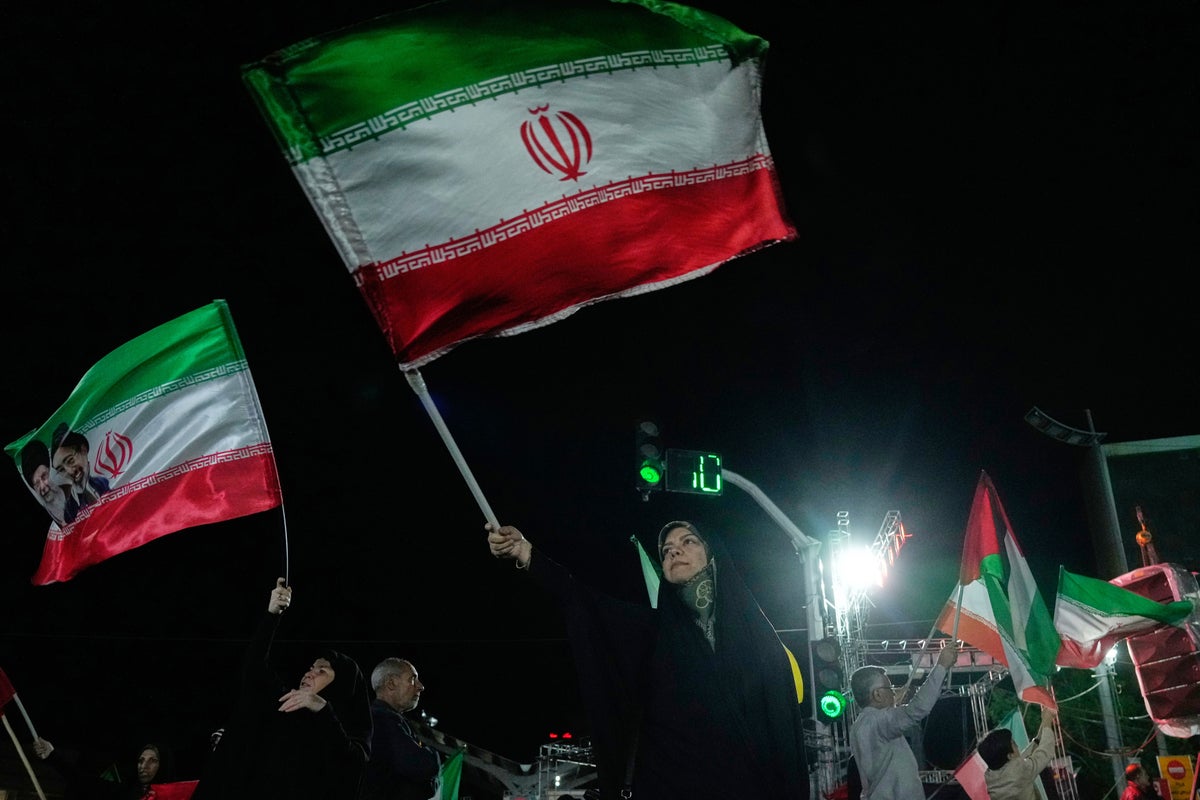
Donald Trump has signaled a cold reception to Iran’s newest diplomatic overture, a proposal that suggests shelving the nuclear program's expansion only until regional conflicts reach a ceasefire. The former president and his inner circle see this not as a genuine peace offering, but as a strategic pause designed to let the Islamic Republic catch its breath while keeping its enrichment infrastructure intact. For Trump, a temporary set-aside is a non-starter because it treats the nuclear threat as a bargaining chip for regional wars rather than a permanent security hazard that must be dismantled.
The core of the disagreement lies in the timeline. Iran wants to link the nuclear file to the current violence in the Middle East, hoping to trade a "freeze" for an end to economic pressure. Trump’s team views this as a trap. They argue that allowing Iran to hold the nuclear program in a state of suspended animation gives the regime the ability to resume high-level enrichment the moment a treaty expires or a new conflict breaks out.
Why a Nuclear Pause Fails the Art of the Deal
In the world of high-stakes negotiations, a pause is often just a preparation for the next move. Trump’s rejection of the "nuclear-for-peace" swap reflects a fundamental shift in how Washington views Iranian diplomacy. Under previous frameworks, small concessions were met with incremental sanctions relief. That era is over. The current perspective from the Trump camp is that any deal which does not result in the permanent, verifiable destruction of enrichment capabilities is merely a delay of the inevitable.
Tehran’s proposal to link the nuclear deal to the end of regional wars is particularly transparent to veteran analysts. It attempts to frame Iran as a stabilizing force while it continues to fund the very proxies involved in those wars. By offering to "set aside" the nuclear issue, Iran is trying to buy back the economic stability it lost under the maximum pressure campaign. They need the cash. They need the oil to flow without the threat of seizure. But they are unwilling to give up the one asset that gives them leverage over the West: the centrifuges.
The Flaw in Linking Nuclear Assets to War
The Iranian logic suggests that if the fighting stops, the nuclear threat diminishes. This is a false equivalence. The nuclear program exists independently of the skirmishes in Lebanon or Gaza. It is a long-term project aimed at regional hegemony. By suggesting a temporary halt, Tehran is banking on the fatigue of Western powers who are desperate for any kind of de-escalation.
Trump is not biting. His history with the Joint Comprehensive Plan of Action (JCPOA) showed a deep-seated distrust of "sunset clauses"—provisions that allow certain restrictions to expire over time. A proposal to pause until a war ends is the ultimate sunset clause. It is undefined, messy, and entirely dependent on conditions that Iran itself helps control.
If the war ends in six months, does the program restart? If the war drags on for six years, does Iran get six years of sanctions relief while keeping its scientists and hardware ready to go? These are the questions that make the proposal a non-starter for an administration that values absolute outcomes over diplomatic "maybe" scenarios.
Pressure Is the Only Language Both Sides Speak
To understand why Trump is unhappy, you have to understand the mechanics of the maximum pressure strategy. The goal was never just to get Iran back to the table; it was to starve the regime of the resources required to sustain both a nuclear program and a regional shadow war.
A temporary freeze would act as a pressure valve. It would allow foreign investment to trickle back into Tehran and stabilize the rial. Once the Iranian economy recovers, the leverage of the United States vanishes. Trump’s advisors argue that the current moment—where Iran is economically vulnerable and its proxies are under heavy fire—is the worst possible time to offer a lifeline.
The Infrastructure of Distrust
Trust is not a factor here. The verification processes required to monitor a "paused" program are nightmarish for intelligence agencies. Even under the strictest inspections, the knowledge acquired during the last few years of rapid enrichment cannot be unlearned. Iran has already moved toward 60% purity, a stone's throw from weapons-grade. A pause at this level is essentially a state of "nuclear threshold," where the regime can produce a weapon in weeks if they decide the pause is over.
The Strategy of Permanent Dismantlement
The alternative being pushed by the Trump camp is a "Big Deal" or nothing. This involves a comprehensive treaty that addresses not just enrichment, but ballistic missile development and the funding of militant groups across the borders. Anything less is seen as a tactical error.
Critics argue that this "all or nothing" approach increases the risk of a direct military confrontation. They suggest that a pause, however flawed, is better than a runaway centrifuge hall. However, the counter-argument is that a flawed deal only guarantees a bigger, more expensive war ten years down the line.
Trump's dissatisfaction isn't just about the terms; it's about the intent. He views the Iranian leadership as a group that only negotiates when they are backed into a corner. If you let them out of the corner for a "pause," you lose the chance to force a real transformation of their behavior.
The Regional Players Weigh In
It isn't just Washington watching this with a skeptical eye. Jerusalem and Riyadh have their own reasons to fear a temporary freeze. For Israel, a pause that leaves the nuclear infrastructure in place is simply an invitation for Iran to build a "bomb in the basement" while the world's attention is turned elsewhere. For the Gulf states, a Tehran with renewed oil wealth is a Tehran that can more effectively interfere in their internal security.
The geopolitical reality is that a temporary nuclear deal solves nothing for the neighbors. It only shifts the timeline. They are looking for a permanent solution that removes the threat entirely, and they see Trump’s hardline stance as their best shot at achieving that.
The Economic Leverage Gap
The numbers don't lie. Iran’s inflation remains high, and its currency has been in a freefall for years. This economic desperation is what drove the proposal in the first place. When a regime that typically uses "Death to America" as a slogan starts offering to set aside its most prized project, it isn’t because they’ve had a change of heart. It is because the bank account is empty.
Trump understands this dynamic better than most. He views the offer as a sign of weakness, not a sign of goodwill. In his view, when an opponent shows weakness, you don't give them a deal—you tighten the grip until the concessions become total.
The Shadow of 2015
The memory of the original nuclear deal looms large over these discussions. That deal was predicated on the idea that economic integration would lead to a more moderate Iran. Instead, the influx of cash was followed by a massive expansion of Iranian influence in Yemen, Syria, and Iraq.
Trump’s refusal to entertain a temporary freeze is a direct response to that perceived failure. He is betting that the regime will eventually crumble or concede fully if the pressure is maintained. It is a high-risk gamble that ignores the possibility of Iran lashing out or sprinting for a weapon in a last-ditch effort to secure its survival.
Beyond the Centrifuges
The nuclear issue is often treated as a technical problem involving kilograms of uranium and the number of cascades. But for the Trump team, it is a political problem. The centrifuges are a symptom of a regime that views itself in a perpetual state of war with the West. You cannot "set aside" a symptom and expect the disease to go away.
Any agreement that allows the Iranian leadership to remain in power while retaining the ability to restart their nuclear program is seen as a victory for Tehran. Trump’s goal is to redefine the relationship entirely, moving away from the "containment" models of the past forty years and toward a model of "enforced compliance."
The Mirage of a Moderate Tehran
There is a recurring hope in some diplomatic circles that a deal will empower "moderates" within the Iranian government. Trump has never bought into this narrative. He views the Iranian power structure as a monolith controlled by the Supreme Leader and the Islamic Revolutionary Guard Corps (IRGC).
In this view, there are no moderates to empower—only different faces for the same revolutionary agenda. A temporary pause would only benefit the IRGC by providing them with the funds needed to crack down on internal dissent and shore up their defenses.
The Reality of Enrichment Knowledge
One of the most significant hurdles to any pause is the "knowledge gain" that has occurred over the last three years. Iran has moved far beyond the limits of the 2015 deal. They have tested advanced IR-6 centrifuges and learned how to manage high-level enrichment cycles.
You can’t put that knowledge back in a box. Even if they stop the machines today, the technical expertise remains. This is why Trump insists on a deal that includes the permanent destruction of facilities like Fordow, which is buried deep inside a mountain and specifically designed to withstand an airstrike. A pause that leaves Fordow operational is a pause that leaves the door to a nuclear weapon wide open.
The Looming Deadline of Maximum Pressure
The clock is ticking for both sides. Iran’s economy can only endure this level of isolation for so long before social unrest becomes a systemic threat to the ruling class. Meanwhile, the U.S. faces the challenge of keeping an international coalition together in the face of rising energy prices and the potential for a wider war.
Trump's rejection of the "set aside" proposal is a signal that he is willing to wait. He is betting that Tehran will break before Washington does. It is a strategy of attrition, played out on a global stage with the highest possible stakes.
The Iranian proposal was an attempt to find a middle ground where none exists. By rejecting it, Trump has reasserted that the only way forward is through a total surrender of nuclear ambitions. Anything else is just a temporary ceasefire in a war that has been going on since 1979. The regime in Tehran is now faced with a stark choice: negotiate on Trump’s terms or watch their economy continue its slow-motion collapse while the military pressure builds on their doorstep.
A temporary freeze is a ghost of old diplomacy. It offers the illusion of progress without the substance of security. For a veteran of the New York real estate wars and the highest level of global politics, an illusion is never worth the price of the paper it’s written on.