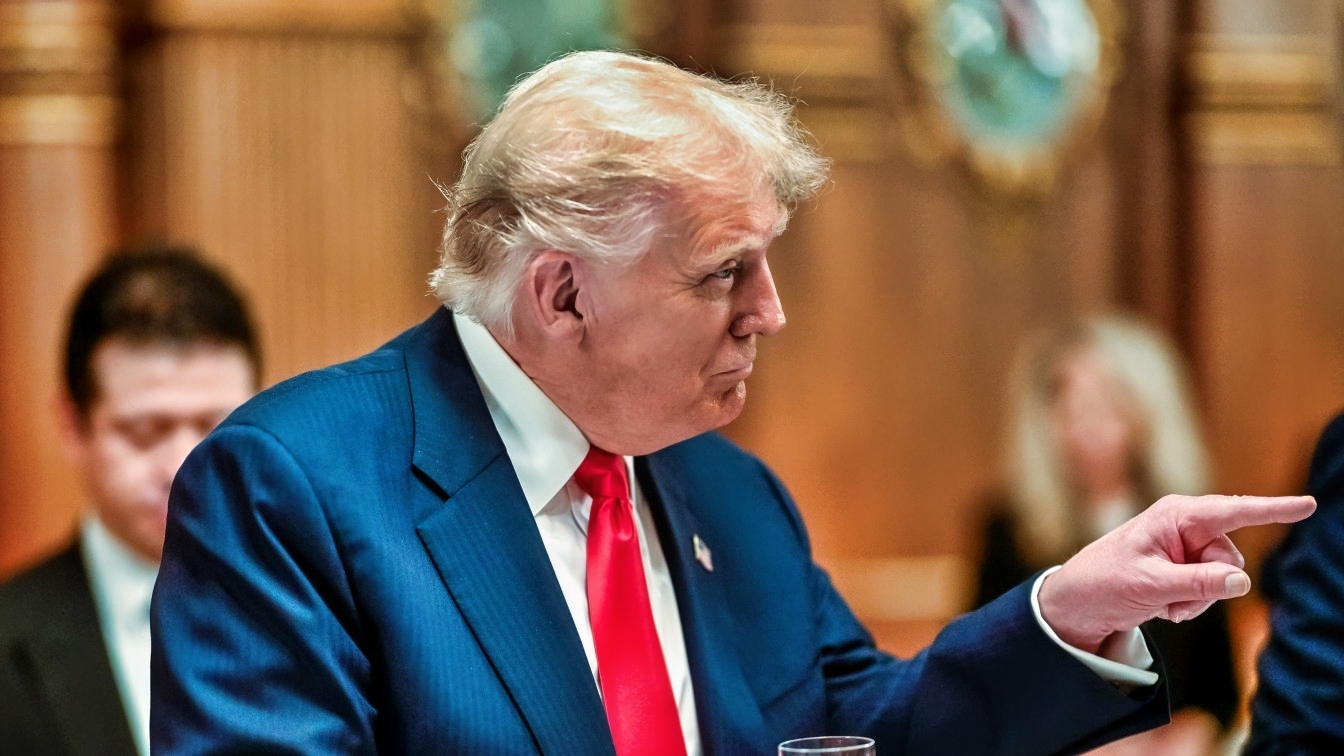
Power in international politics rarely follows a clean script. When Donald Trump and Venezuela's interim president, Delcy Rodriguez, shook hands in New York during the United Nations General Assembly, it signaled a jarring pivot. This was the first direct face-to-face encounter between the American administration and Caracas leadership since the stunning military operation that removed Nicolás Maduro from power.
If you expected ideological purity or permanent hostility, you haven't been paying attention to how realpolitik actually functions. Washington spent years labeling the socialist apparatus in Caracas as an untouchable pariah. Yet, pragmatism has a way of short-circuiting revolutionary rhetoric. Maduro sits in a Brooklyn detention facility awaiting trial, while his former vice president stands in Manhattan cutting terms with the very power that unseated him.
The Optics and the Reality of the New York Pull-Aside
The handshake wasn't a formal state visit. It happened on the sidelines of a UN reception, but the weight behind it is massive. Trump openly boasted about the unfolding realities of Venezuelan oil and regional control, leaving little doubt about who dictates the terms of engagement. Observers watching Rodriguez's body language noted the sharp contrast between her public claims of a "historic dialogue" and the brute-force reality of American leverage.
Critics on both sides are furious. Hardline anti-regime figures view any interaction with Rodriguez as a betrayal of democratic transition, arguing that she spent two decades serving as a core pillar of the Chavista apparatus. On the flip side, ideological loyalists inside Venezuela see the optics as an extreme humiliation—the head of a supposedly anti-imperialist state bending the knee to Washington.
Both viewpoints miss the underlying game. Rodriguez isn't playing for ideological pride; she is fighting for institutional survival.
Following the Energy Trail
You cannot understand this sudden diplomatic thaw without looking at the barrel of an oil drill. The normalization of high-level talks directly coincides with massive shifts in energy concessions and foreign capital moving back into South America. Major corporate players are lining up to stake claims in reserves that were locked behind sanctions and hostility for decades.
The Trump administration's posture has been entirely transactional. Washington wants stability, guaranteed oil flows, and a check on hostile foreign influences in the Western Hemisphere. If Rodriguez's administration provides the administrative machinery to deliver those assets, ideological pasts are quickly forgiven or overlooked.
It is a stark reminder that geopolitical alignment is rarely about democracy or human rights in the immediate term. It is about control over critical infrastructure and resources.
What Happens to the Opposition
The elephant in the room during this entire diplomatic dance is the domestic political opposition, particularly figures like María Corina Machado. For years, millions of Venezuelans pinned their hopes on a complete dismantling of the regime and a total restoration of democratic governance.
Instead, the intervention and subsequent backroom realignments have left civil society scrambling. Interim leadership under Rodriguez has managed to retain executive control by cooperating with external demands while neutralizing internal rivals. When foreign capitals prioritize short-term stability and energy security over protracted democratic rebuilding, local opposition movements often find themselves sidelined.
The meetings in New York prove that Washington is comfortable dealing with familiar bureaucratic faces as long as those faces comply with American strategic demands.
The dust from Maduro's capture hasn't settled yet, but the trajectory is clear. Venezuela has entered a strange, hybrid era where the rhetoric of the socialist revolution coexists awkwardly with corporate concessions and direct oversight from the White House. The handshake in New York wasn't a reconciliation; it was an acknowledgment of a new master-and-manager arrangement disguised as diplomacy.


