Donald Trump thought he solved it with a social media post. On Monday, the US president claimed he single-handedly averted an imminent Israeli blitz on Beirut. He told the world that after speaking with Benjamin Netanyahu and communicating through backchannels with Hezbollah, both sides agreed that "all shooting will stop."
Then Tuesday arrived.
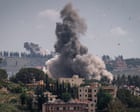
Instead of silence, southern Lebanon shook under the weight of at least 30 Israeli airstrikes. In Sidon, rescue workers pulled the bodies of six family members, including two children, from the rubble of their home. In Nabatiyeh, the Israeli military dropped fresh evacuation orders before pounding the city. Overnight, Hezbollah sent drones and rockets into the western Galilee and toward Safed.
The ink wasn’t even dry on Trump's declaration before the reality on the ground obliterated it. This isn't just a failure of diplomacy; it’s a structural reality of how this war is being fought. If you think a few phone calls from Washington can halt this conflict, you don't understand what is driving Netanyahu or Hezbollah in 2026.
The Illusion of a Social Media Ceasefire
We’ve seen this script before. A nominal ceasefire has technically been in place since April 17, but it has existed entirely on paper. Neither side has respected it for a single day.
Look at what happened behind the scenes right before Trump praised Netanyahu on Truth Social. Behind the public "Thank you, Bibi" messages, the actual conversation was reportedly furious. US officials leaked that Trump lost his temper with the Israeli prime minister, using profanity to tell him that his escalation was turning global opinion against Israel and putting American diplomatic efforts at risk.
But Netanyahu isn't listening to American anger right now because his political survival and Israel's immediate military objectives don't align with Washington's timeline.
Moments after Trump claimed Israel turned its troops around, Netanyahu posted his own statement. He didn't directly call the US president a liar, but he did something just as potent. He explicitly stated that if Hezbollah doesn't stop firing, Israel will strike Beirut. More importantly, he confirmed that the military will continue operating exactly as planned in southern Lebanon.
Why the Litani River Changed Everything
To understand why this fighting won't stop, you have to look at the map. This isn't the border skirmish of late 2024. The strategic landscape fundamentally shifted when Israeli ground forces crossed the Litani River, making their deepest incursion into Lebanese territory in over a quarter-century.
Over the weekend, Israeli troops raised their flag over Beaufort Castle. For anyone who remembers the brutal 1982-2000 occupation, that specific Crusader fortress is deeply symbolic. By seizing it, Israel signaled that it isn't just raiding; it is establishing a prolonged presence deep inside Lebanon.
Israel's Deepening Incursion (June 2026)
--------------------------------------------------
[Litani River Border] -> Ground forces push north
[Beaufort Castle]     -> Captured and occupied
[Beirut Suburbs]      -> Threatened with heavy bombardment
French Foreign Minister Jean-Noel Barrot stated plainly that nothing can justify Israel’s prolonged occupation deep inside Lebanese territory. But Israeli Defense Minister Israel Katz countered with cold military logic. Israel's defense establishment is dealing with new tactical threats from Hezbollah, and commanders are demanding an expansion of the war to cut off supply lines completely.
From the Israeli perspective, a partial ceasefire that leaves their soldiers exposed deep inside Lebanon while Hezbollah retains its rocket infrastructure is a strategic trap. They aren't going to stop shooting while their troops are sitting ducks at Beaufort Castle.
The Sticking Point in Washington and Tehran
The breakdown in Lebanon isn't just a local issue. It is directly holding up the broader US-Israeli war negotiations with Iran.
Right now, delegations from Israel and Lebanon are meeting at the US State Department in Washington. Lebanese Prime Minister Nawaf Salam is pushing for a full ceasefire, calling negotiation the shortest road to ending the occupation. But Hezbollah is completely bypassing these direct talks. They don't have formal diplomatic relations with Israel, so they are relying on Iran to apply the pressure.
This has created a massive diplomatic knot:
- Iran's Stance: Iranian Foreign Minister Abbas Araqchi insists that any broader peace agreement with the US must include a total halt to Israeli actions in Lebanon. They view the fronts as entirely linked.
- The US Stance: Trump’s administration wants to isolate the issues, containing the Lebanon theater so it doesn't derail a deal to reopen the Strait of Hormuz.
- Hezbollah's Stance: Senior official Mahmoud Qmati made it clear that the group will not accept a partial ceasefire where Israel stops bombing Beirut but keeps hunting fighters in the south.
When Israeli strikes intensified on Monday, Iranian state media immediately reported that Tehran was considering freezing peace talks with Washington. While Trump brushed this off in a CNBC interview—saying the talks were getting "very boring" anyway—the threat worked. It forced Trump to scramble for a quick fix, leading to his premature ceasefire announcement.
What Happens Next on the Ground
Don't expect the bombs to stop falling because of diplomatic theater in Washington. If you want to know where this conflict is actually heading over the next few weeks, watch these indicators instead of social media announcements.
First, keep an eye on the Dahiyeh quarter, the densely populated Shia suburb in southern Beirut. Thousands of residents fled the area this week after Israel threatened total destruction if rocket fire continued. If Israel launches a sustained bombing campaign there, Iran will likely follow through on its threat to collapse the broader peace talks entirely.
Second, watch the Lebanese military. The US is currently drafting a plan to train Lebanese state forces to counter Hezbollah's influence in Beirut. It's a high-risk strategy that could easily backfire and spark internal civil strife if handled poorly.
The hard truth is that Trump cannot tweet a decades-old religious and territorial conflict into submission. Until Israel achieves its containment goals north of the Litani River, or until Iran decides it needs a deal badly enough to abandon its primary proxy, any announcement of a ceasefire is just noise. Expect the battlefield to dictate the terms, not the White House.


