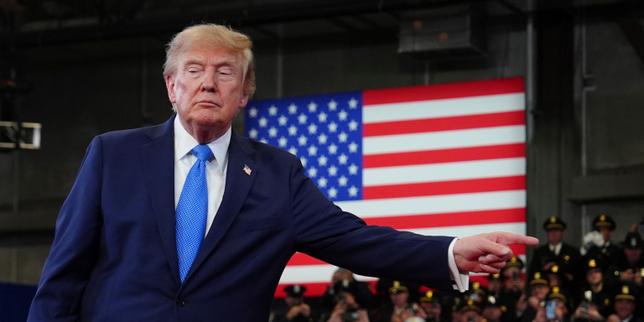
The media wants you to hyperventilate over every rhetorical grenade thrown at a podium. When Donald Trump floated the idea of declaring the Strait of Hormuz a United States territory after the current conflict with Iran, mainstream analysts immediately clutched their pearls. They called it reckless, impossible, and a violation of international maritime law. Tehran responded with predictable bluster, insisting the corridor remains strictly Iranian.
Both sides are missing the point. This isn't about legal cartography or annexing a chunk of the Persian Gulf. It is about a fundamental shift in how global choke points are managed, priced, and protected.
Stop looking at the map through the obsolete lens of twentieth-century sovereignty.
The Fallacy of Maritime Neutrality
For decades, the lazy consensus in geopolitics assumed that critical sea lanes like the Strait of Hormuz belong to whoever happens to border them, regardless of their capacity to maintain open commerce or their hostility toward the global economy. Through this flawed logic, a nation can weaponize twenty percent of the world's petroleum flow, shut down transit on a whim, and still demand the legal protections of a sovereign coastline.
That is an economic absurdity.
Imagine a scenario where a private highway company builds a vital bypass around a collapsing city, only to let a hostile local militia control the toll gates, burn the trucks, and hold the supply chain hostage. You wouldn't debate the militia's historic property rights. You would clear the lane and secure the tarmac.
Global energy transit is no different. When the cost of gasoline spikes by thirty-five percent because regional actors treat international lifelines as personal ransom notes, traditional notions of territorial waters evaporate. The market demands security, not polite diplomatic fictions.
Redefining the Choke Point Economy
Let’s look at the hard data from maritime tracking firms like Kpler. Even amid active military operations and localized blockades, millions of barrels of oil still need to move to keep modern industrial economies from seizing up. The physical reality is stark: local regimes lack the capital, the technology, and the systemic incentives to keep these corridors operating efficiently. They treat them as leverage points for extortion.
When Washington asserts control—whether through a spoken threat at a New York rally or a permanent naval posture—it provides a public good that local authorities are structurally incapable of delivering: predictable logistics.
Critics argue that a presidential decree cannot alter international borders. They are right, but they are answering a question nobody asked. This is not a real estate transaction; it is an enforcement mechanism. If an authority cannot guarantee safe passage for neutral commercial shipping, its territorial claims over international straits become legally and economically void.
The Real Cost of Doing Nothing
I have watched policy pundits obsess over diplomatic optics while supply chains bleed out. Every time a tanker gets harassed or a shipping lane faces a synthetic blockade, manufacturers pay the price, logistics networks fracture, and consumers absorb the inflation shock.
The alternative to American or allied security enforcement is not a peaceful, self-regulated Middle East. The alternative is perpetual energy blackmail.
Téhéran can tweet all it wants about the strait remaining in its hands, but sovereignty without the ability to secure global commerce is just an empty title. If you control the naval assets, the air cover, and the escort fleets that keep the tankers moving, you effectively own the channel.
The sooner international relations catch up to this economic reality, the fewer illusions we will have to shatter.