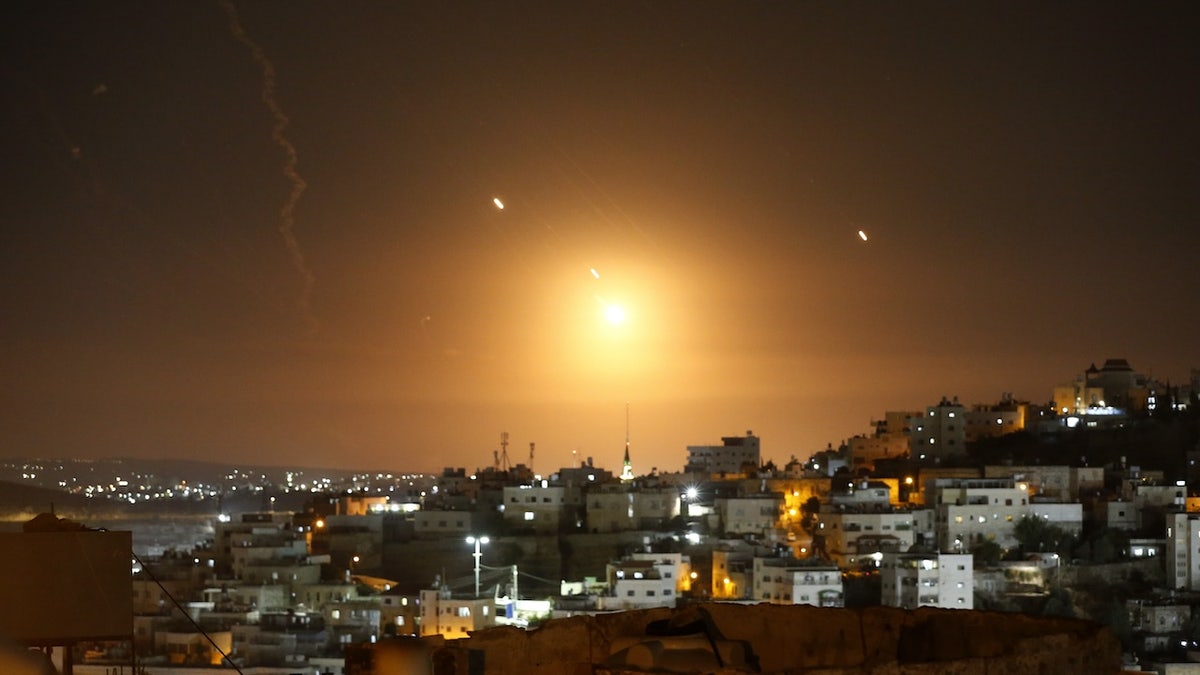
The clock is officially ticking. On Saturday night, Donald Trump didn't just tweet—he issued a 48-hour ultimatum that could plunge the Middle East into a total blackout. The demand is simple: Iran must fully reopen the Strait of Hormuz by Monday night or face the "obliteration" of its power plants.
If you've been watching gas prices creep up over the last three weeks, you're already feeling the opening act. But this isn't just about a few extra cents at the pump. We're looking at a scenario where the world’s most vital energy chokepoint stays shut while the region's entire electricity and water infrastructure becomes a shooting gallery. If you found value in this article, you might want to look at: this related article.
The 48 Hour Countdown and the Power Plant Threat
Trump’s Saturday night post on Truth Social was vintage Trump—loud, capital letters, and zero room for nuance. He explicitly stated that the U.S. will start hitting Iranian power plants, "starting with the biggest one first," if the blockade isn't lifted.
It’s a massive pivot. Just 24 hours earlier, the administration was talking about "winding down" the war. Now, we're staring at a target list that likely includes the Damavand natural gas plant near Tehran or the Ramin facility in the west. These aren't just military outposts; they're the lifeblood of civilian life. For another angle on this event, refer to the latest coverage from TIME.
Why the sudden aggression? It’s the economy. Brent crude has already cleared $112 a barrel. In the U.S., gas has hit a four-year high of $3.91. For a president heading into a high-stakes election year, those numbers are a political death sentence. He needs the oil flowing, and he's betting that threatening to turn off Iran’s lights will force their hand.
Iran's "Zero Restraint" Response
Don't expect Tehran to blink first. Iranian military spokesman Ebrahim Zolfaqari didn't take long to fire back. His message was clear: if Iran’s energy infrastructure goes down, so does everyone else's.
Iran isn't just threatening U.S. bases. They’ve specifically named information technology (IT) hubs and water desalination plants across the Gulf as "legitimate targets." This is the nightmare scenario for countries like Qatar, Bahrain, and Kuwait. These nations rely almost entirely on desalination for their water. If those plants are hit, it’s not just an energy crisis; it’s a humanitarian catastrophe.
The Iranian military's "Khatam al-Anbiya" command center has already mapped out the region’s vulnerabilities. They claim 70% to 80% of the Gulf’s major power plants are sitting ducks along the coastline. One well-placed drone or missile could "plunge the entire region into darkness."
Why the Strait of Hormuz is the Ultimate Weapon
To understand why this is happening now, you have to look at the math. The Strait of Hormuz handles about 20 million barrels of oil every single day. That’s a fifth of the entire planet's supply.
- The Arab Oil Embargo (1970s): Removed 4 million barrels per day.
- The 2026 Crisis: Effectively removes 20 million barrels per day.
This is five times worse than the crisis that defined the 1970s. While Iran claims the strait is "open" to everyone except its enemies, the reality on the water is different. Shipping insurance has skyrocketed. No sane tanker captain is sailing into a zone where long-range missiles are flying.
Long Range Missiles and the Failure of Air Defense
One of the most concerning developments over the last 24 hours is the reported failure of Israeli air defenses. Despite having some of the most advanced systems in the world, Brigadier General Effie Defrin admitted that missiles targeting the southern cities of Dimona and Arad were not intercepted.
These strikes landed dangerously close to Israel’s sensitive nuclear research facilities. Even more alarming, Iran has reportedly used ballistic missiles with a 4,000-kilometer range for the first time. According to Israeli military chief Eyal Zamir, these weapons aren't just for regional fights—they can reach Berlin, Paris, and Rome.
The Fallout for the Rest of the World
This isn't just a Middle Eastern war anymore. It's a global supply chain heart attack.
- Australia: Six oil ships bound for the country have already been cancelled.
- Japan: Companies are burning through their three-week LNG (Liquefied Natural Gas) reserves.
- Europe: Natural gas prices surged 35% in a single week.
The U.S. Treasury tried to calm things down by issuing a 30-day "general license" to allow Iranian oil already at sea to be traded, but it’s a drop in the bucket. The real issue is the 48-hour clock.
What Actually Happens Next
The deadline ends late Monday. If Iran doesn't stand down—and there's no indication they will—we're looking at a series of strikes that will change the face of the Middle East.
If the U.S. hits the Bushehr nuclear complex or the massive gas plants near Tehran, Iran will almost certainly retaliate against the Ras Laffan LNG facility in Qatar or the SAMREF refinery in Saudi Arabia.
For the average person, this means your energy bills are about to get a lot more expensive, and the "winding down" of this conflict was nothing more than a pipe dream. If you're looking for a silver lining, there isn't one. Prepare for a volatile week in the markets and at the pump. Watch the Monday night deadline closely; it’s the point of no return.