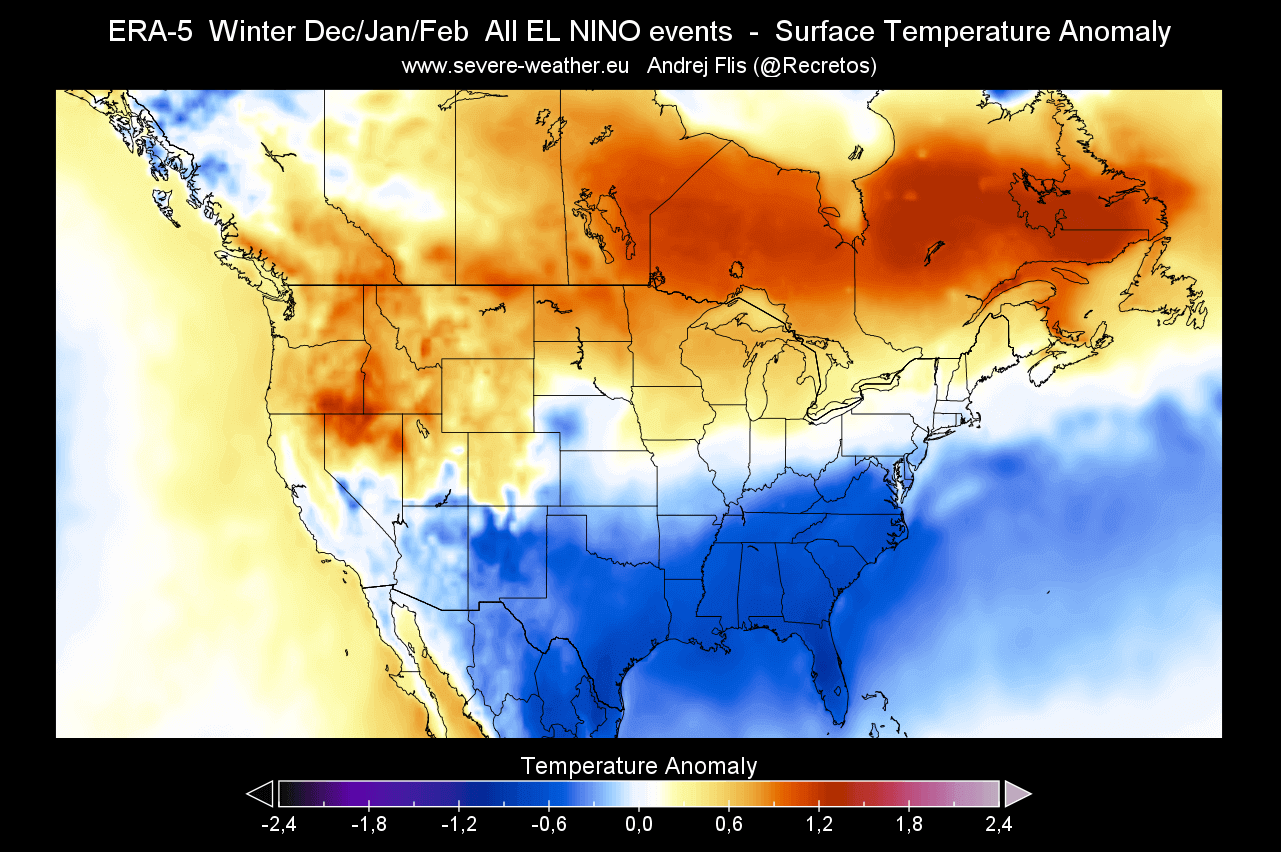
The transition from a neutral ENSO (El Niño-Southern Oscillation) state to a high-probability El Niño event alters global thermodynamic balances, creating predictable, non-linear disruptions across economic, agricultural, and infrastructural systems. Traditional media frequently treats these developments as isolated extreme weather events. This perspective misdiagnoses the structural reality. El Niño is not a localized weather anomaly; it is a massive kinetic energy redistribution mechanism within the ocean-atmosphere system that amplifies the systemic volatility already induced by rising baseline global temperatures.
Understanding the strategic implications of an impending El Niño requires breaking down the phenomenon into its core mechanical drivers, mapping its predictable geographic transmission channels, and quantifying the specific vulnerabilities it exposes within global supply chains and commodities markets. If you liked this article, you might want to read: this related article.
The Tri-Partite Engine of ENSO Coupling
The mechanics of an El Niño event rely on a disruption of the Walker Circulation—the atmospheric loop driven by temperature and pressure differentials across the equatorial Pacific. Under normal conditions, strong trade winds blow from east to west, piling up warm surface water in the western Pacific (the Western Pacific Warm Pool) and causing the upwelling of cold, nutrient-rich water along the South American coast.
An El Niño event occurs when these trade winds weaken or reverse. This atmospheric deceleration initiates a three-stage thermodynamic feedback loop. For another angle on this event, refer to the recent update from Associated Press.
1. The Kelvin Wave Transmission
As trade winds slacken, the gravitational and thermal gradient maintaining the Western Pacific Warm Pool collapses. A subsurface pulse of warm water, known as an eastward-propagating equatorial Kelvin wave, travels across the Pacific. This wave depresses the thermocline—the transition layer between warm surface water and cold deep water—in the eastern Pacific, effectively cutting off the upwelling of nutrient-dense currents.
2. Atmospheric Convection Displacement
The eastward migration of warm surface waters shifts the primary zone of atmospheric convection from the western Pacific toward the central and eastern regions. The rising moist air that typically fuels monsoon systems in Southeast Asia and northern Australia relocates to the central Pacific. This alters the location of low-pressure cells globally, permanently distorting the subtropical jet stream during the event's lifecycle.
3. Bjerknes Feedback Amplification
The displacement of warm water reduces the east-west sea surface temperature gradient across the Pacific. Because this temperature gradient drives the trade winds in the first place, its reduction further weakens the winds. This positive feedback loop accelerates the warming process, locking the climate system into an El Niño state that typically persists for 9 to 12 months.
When this coupled ocean-atmosphere anomaly interacts with a baseline climate that has absorbed over 90% of excess anthropogenic heat into the oceans, the amplitude of the resulting weather extremes increases. The baseline temperature elevation acts as a force multiplier, meaning an El Niño today operates with a significantly higher thermal budget than an equivalent event forty years ago.
The Geography of Asymmetrical Impacts
The transmission of El Niño's energy manifests through distinct regional anomalies. Rather than distributing moisture and heat evenly, the altered jet streams create binary outcomes: severe moisture deficits in traditionally humid zones and catastrophic precipitation in arid or semi-arid regions.
The Indo-Pacific Drought Corridor
Southeast Asia, India, and northern Australia sit at the losing end of the displaced Walker Circulation. As convective activity moves east, these regions experience persistent high-pressure anomalies characterized by sinking, dry air.
- The Monsoon Bottleneck: In India, the southwest monsoon accounts for over 70% of annual rainfall. El Niño conditions correlates strongly with a delayed onset and spatial fragmentation of this monsoon, directly threatening kharif (summer-sown) crop cycles.
- The Indonesian Peatland Vulnerability: Reduced rainfall in Indonesia lowers the water table in massive peatland ecosystems. This converts carbon-sinking wetlands into highly combustible tinderboxes, leading to widespread subterranean fires that resist standard suppression techniques and release immense volumes of particulate matter and greenhouse gases.
The Western Hemispheric Deluge
Conversely, the southern United States, Peru, Ecuador, and parts of East Africa experience heightened convective activity due to the proximity of the warmed Pacific waters and a suppressed, more southerly subtropical jet stream.
- The Andean Coastal Impact: In Peru and Ecuador, the collapse of the cold Humboldt Current triggers extreme localized convective storms. The resulting precipitation falls on arid coastal topography, causing rapid-onset flash flooding, debris flows (huaicos), and the destruction of transport infrastructure designed for hyper-arid baselines.
- The Horn of Africa Bifurcation: While East Africa frequently suffers from multi-year droughts during La Niña phases, the onset of El Niño shifts regional dynamics toward extreme rainfall. While this can alleviate structural water scarcity, it frequently introduces secondary crises, including widespread topsoil erosion and conditions ripe for vector-borne diseases.
Sectoral Vulnerabilities and Supply Chain Bottlenecks
Evaluating El Niño through a strategic lens requires translating meteorological anomalies into specific operational disruptions within critical global sectors. Organizations operating without a clear understanding of these micro-mechanisms face unhedged exposure to supply chain shocks.
Agricultural Yield Volatility
The primary transmission vector of El Niño into global markets is agricultural disruption. The concentration of core soft commodities in vulnerable geographic corridors creates distinct supply vulnerabilities.
[El Niño Onset]
   │
   ├──► Southeast Asia Drought ──► Rice & Palm Oil Deficits ──► Export Restrictions
   │
   ├──► Australian Aridity ──────► Wheat Yield Contraction ────► Global Grain Strain
   │
   └──► Peruvian Coast Warming ──► Anchovy Fishery Collapse ──► Feed Market Inflation
The global supply of palm oil is highly concentrated in Indonesia and Malaysia. A protracted moisture deficit slows fruit bunch development, causing a lagged production decline that hits the market six to nine months after the peak of the meteorological event. Similarly, Australian wheat production, heavily dependent on winter and spring rainfall in the southern and eastern agricultural belts, faces steep volume contractions under El Niño conditions.
In the marine economy, the depression of the Peruvian thermocline prevents nutrient-rich waters from reaching the photic zone. This cuts off the primary food source for the world's largest discrete fishery: the Peruvian anchoveta. The inevitable suspension or severe reduction of fishing quotas shocks the global aquaculture and livestock industries, which rely on anchoveta-derived fishmeal as a foundational high-protein feed input.
Energy Security and the Hydropower Deficit
Modern industrial economies remain heavily reliant on predictable hydrological cycles for power generation. El Niño destabilizes this asset class in regions dependent on run-of-river and reservoir-based hydroelectric facilities.
In South and Central America, nations like Brazil, Colombia, and Zambia in Africa rely on hydropower for significant portions of their baseload electricity. When El Niño-induced droughts deplete reservoir levels below critical operational thresholds, generation capacity drops precipitously. To prevent grid collapse, these nations are forced to make emergency purchases of expensive, carbon-intensive fossil fuels (liquefied natural gas and diesel) on the spot market. This creates a dual penalty: localized industrial energy inflation and a sharp spike in national emissions profiles.
Conversely, in regions experiencing excessive rainfall, such as California or the Gulf Coast, energy infrastructure faces physical risks. Extreme precipitation risks overwhelming dam spillways, requiring defensive water releases that sacrifice power generation potential to preserve structural integrity.
Logistics and Maritime Chokepoints
The operational efficiency of global shipping routes is increasingly bound to climate stability. The most acute vulnerability during an El Niño event is the Panama Canal.
The canal operates via a system of locks supplied by freshwater from Gatun Lake and Alajuela Lake. El Niño events historically correlate with severe rainfall deficits in the Panamanian rainforest, reducing the inflow into these feeder lakes. As water levels drop, the Panama Canal Authority is forced to implement draft restrictions, reducing the maximum depth of vessels permitted to pass, and to slash the number of daily vessel transits.
The strategic consequences of a restricted Panama Canal are systemic:
- Cargo Disintermediation: Neo-Panamax vessels must reduce their load weight, forcing shipping lines to distribute cargo across more vessels or reroute around Cape Horn or the Cape of Good Hope.
- Transit Surcharges: The reduction in daily slots triggers bidding wars for available transits, exponentially increasing spot freight rates.
- Intermodal Strains: Shippers attempting to bypass the canal by discharging cargo at US West Coast ports place immediate, unhedged strain on rail and long-haul trucking infrastructure, driving up domestic logistics costs.
Limits of Predictive Modeling and Actionable Frameworks
While meteorologists can identify the development of an El Niño up to six months in advance using numerical weather prediction models and ocean buoy arrays (such as the Tropical Atmosphere Ocean project), predicting the exact intensity and spatial footprint remains challenging.
The Spring Predictability Barrier
Climate models encounter a structural limitation known as the "spring predictability barrier." Observations taken before April or May exhibit weak correlation with the actual evolution of the tropical Pacific during the following autumn and winter. Subtle variations in localized wind bursts can either rapidly amplify a developing El Niño or cause it to damp out entirely. Strategic decisions made using early-season data must therefore integrate a wide margin of error.
The Flavor Dichotomy: Eastern Pacific vs. Central Pacific
Not all El Niño events are structurally identical. Predictive models must distinguish between two primary modalities:
- EP (Eastern Pacific) El Niño: The traditional variant, where the maximum sea surface temperature anomalies concentrate along the South American coast. This type typically produces the most severe global teleconnections and dramatic infrastructure risks in the Western Hemisphere.
- CP (Central Pacific) El Niño / Modoki: The anomalies concentrate near the International Date Line, flanked by cooler waters on both the east and west. A Modoki event alters global jet streams differently, frequently reversing the expected precipitation patterns in regions like the western United States and changing the drought distribution across Australia.
Mistaking a Central Pacific El Niño for an Eastern Pacific event leads to misallocated capital, flawed agricultural hedging, and incorrect infrastructure preparation.
Strategic Operational Plays for High-Exposure Entities
Mitigating the systemic risks of a confirmed El Niño requires shifting from a reactive posture to structured operational frameworks.
Diversify Supply Sourcing Across Climate Zones
Procurement teams must evaluate their raw material pipelines for geographic concentration in known El Niño impact corridors. For agricultural inputs, this requires building redundant supply agreements in counter-cyclic regions (e.g., shifting sourcing from Southeast Asia to West Africa or South America where local conditions permit). For manufacturing entities reliant on components moving through the Panama Canal, contracts must be pre-negotiated with alternative intermodal networks or West Coast port facilities ahead of capacity constraints.
Capital Allocation for Hydrological Resilience
Industrial operators and asset managers should conduct rigorous stress testing on water-intensive operations located in drought-prone zones. For energy producers, this involves updating financial models to account for potential periods of fossil-fuel substitution during hydropower deficits. For mining operations in arid regions like northern Chile or Peru, it demands accelerated investment in desalination infrastructure and closed-loop water recycling systems to protect operational continuity against regulatory or physical supply cutoffs.
Dynamic Financial Hedging of Commodity Exposures
Treasury departments must utilize weather derivatives and structured commodity hedges to neutralize the financial volatility driven by El Niño. Because the price impacts on soft commodities (rice, sugar, coffee, wheat) often feature a structural lag of several months following the onset of the meteorological phase, a window of opportunity exists to lock in futures contracts before supply contractions register fully in global spot prices.