When severe weather slams both the Pacific and Atlantic coasts simultaneously during Thanksgiving week, the resulting travel chaos is rarely caused by the storms themselves. Yes, atmospheric rivers in the West and coastal low-pressure systems in the East bring heavy rain, mountain snow, and punishing crosswinds that force immediate runway closures and highway gridlock. Yet the true culprit behind the multi-day gridlock that strands millions of travelers is a fragile, hyper-optimized aviation and transit network operating with zero margin for error during the single highest-volume travel period of the year.
Most weather reports stop at the radar map. They tell you how many inches of snow will fall in the Cascades or how fast the wind will gust at Newark Liberty International Airport. That surface-level forecasting misses the operational mechanics of modern holiday transit. Airlines no longer maintain spare aircraft or standby flight crews sitting idle at major hubs waiting for a storm to pass. Every plane is scheduled to fly nearly continuously, and every crew member is mapped to a razor-thin sequence of connecting legs. When bad weather hits both coasts at the exact same time, the system cannot reroute capacity from a calm region to a distressed one. The entire national grid locks up from the outside in.
The Anatomy of a Two-Coast Weather Squeeze
Meteorologically, a dual-coast Thanksgiving storm event usually stems from a highly amplified jet stream—the fast-moving ribbon of air high in the atmosphere that steers weather systems across North America. When this current develops deep north-south waves, known to forecasters as a meridional flow, it creates a synchronized domino effect across the continent.
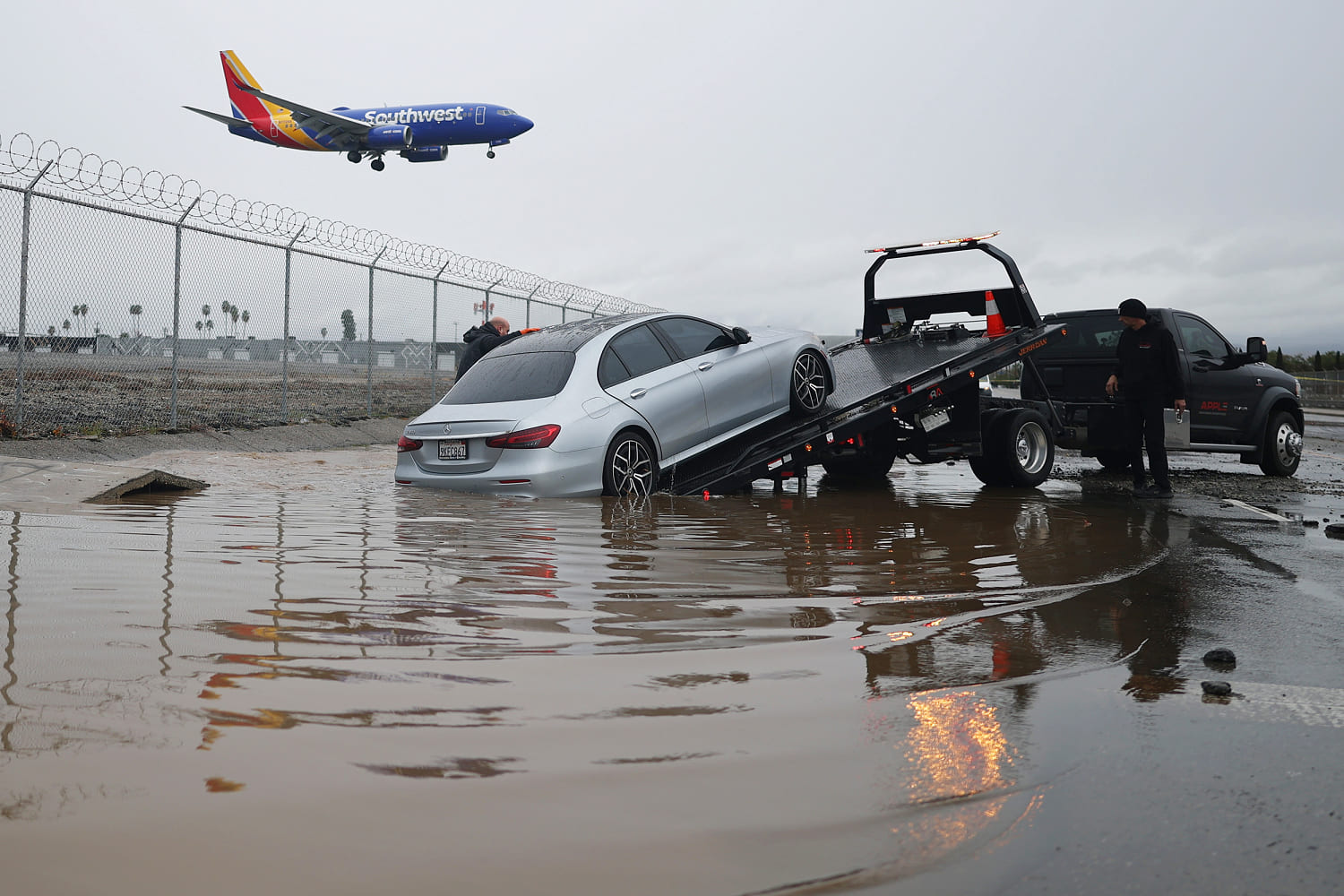
On the West Coast, a deep trough dipping down from the Gulf of Alaska funnels moisture-laden Pacific air straight into California, Oregon, and Washington. These systems often arrive as atmospheric rivers, long, narrow corridors of concentrated water vapor capable of dumping months' worth of rain in forty-eight hours while burying Sierra Nevada and Cascade mountain passes under several feet of heavy, wet snow. Interstate 5 and Interstate 80, the primary north-south and east-west arteries for West Coast holiday drivers, frequently shut down due to jackknifed tractor-trailers, mudslides, or zero-visibility whiteouts.
Simultaneously, the downstream ridge-and-trough pattern in the upper atmosphere forces cold Arctic air southward into the central plains while drawing warm, humid air northward from the Gulf of Mexico along the Eastern Seaboard. Where those two air masses collide, rapid cyclogenesis occurs—a storm system intensifies quickly as it tracks up the Atlantic coast. For travelers in the Northeast corridor from Washington, D.C., to Boston, this translates into driving rain, coastal flooding, low cloud ceilings, and fierce crosswinds that cut airport arrival rates in half.
The timing could not be worse. Thanksgiving travel differs fundamentally from summer vacation travel or business commuting. Business travelers fly mid-week and often carry only a small bag, making them easy to rebook. Holiday travelers move in concentrated waves—primarily the Tuesday and Wednesday before the holiday, and the Sunday afterward—often in family groups with checked luggage, strollers, and rigid schedules. Load factors on commercial flights during these peak windows routinely exceed ninety percent. There are simply no empty seats left in the system to absorb displaced passengers.
Why Modern Airlines Collapse Under Bi-Coastal Pressure
To understand why a storm in Seattle and a storm in New York can cancel a flight in Dallas or Chicago, you have to look at how major carriers restructured their networks over the past two decades. The industry relies on a hub-and-spoke model paired with aggressive asset utilization.
In theory, hubs allow airlines to connect smaller cities to global destinations efficiently. In practice, a weather delay at a coastal megahub—such as San Francisco, Los Angeles, Newark, or Boston—acts like a blood clot in a major artery.
Consider a hypothetical example of how this cascade unfolds on the Wednesday before Thanksgiving. Suppose morning fog and heavy rain in San Francisco force Federal Aviation Administration (FAA) air traffic controllers to institute a Ground Delay Program. Instead of landing sixty planes an hour, the airport can safely handle only thirty. Flights scheduled to depart Chicago, Denver, and Atlanta for San Francisco are held at their origin gates to prevent airborne holding patterns over Northern California.
Those delayed aircraft are not just going to San Francisco and stopping. They are scheduled to turn around in forty-five minutes and fly to Newark, Houston, or Seattle. Meanwhile, on the East Coast, thirty-five-knot crosswinds at Newark force the FAA to close a primary runway, cutting capacity there by forty percent. Now, planes coming from the West Coast cannot leave on time, and planes trying to reach the East Coast are stuck on tarmacs across the Midwest.
The Crew Timing Trap
Even after the clouds clear and runways reopen, the recovery drags on for days because of federal aviation safety regulations. Under FAA Part 117 rules, pilots and flight attendants are strictly limited in how many hours they can remain on duty and how many hours they can fly within a rolling window.
When a flight sits on a taxiway for three hours waiting for a de-icing slot or a break in coastal winds, the crew's duty clock keeps ticking. Frequently, a crew times out just minutes before takeoff. The aircraft is fueled, the passengers are boarded, and the weather has improved, yet the flight cancels because the pilots are legally prohibited from flying. Finding replacement crews during Thanksgiving week is nearly impossible; reserve pilots have already been called up to cover earlier disruptions, or they are themselves stuck as deadheading passengers on delayed flights elsewhere in the country.
The Ground Game Is Just as Fragile
Roughly eighty-five to ninety percent of Thanksgiving travelers do not fly; they drive. When rough weather hits both coasts, highway infrastructure faces a parallel set of stresses that standard traffic apps rarely communicate accurately until drivers are already trapped.
In the West, elevation changes turn minor storm shifts into major emergencies. A two-degree drop in temperature transforms rain into black ice across mountain passes like Donner Summit in California or Snoqualmie Pass in Washington. State transportation departments enforce strict chain-control checkpoints, which immediately bottleneck multi-lane interstate traffic down to single-file crawls. One spin-out by an unprepared driver can block a canyon highway for six hours, stranding thousands of vehicles with dwindling fuel and no nearby exits.
On the East Coast, the problem is sheer population density colliding with aging drainage and transit infrastructure. The Interstate 95 corridor runs through low-lying coastal plains and dense urban centers. Heavy rainfall overwhelms storm drains, leading to flash flooding on major expressways and commuter rail tracks. When regional rail services like Amtrak's Northeast Corridor or commuter lines in New York, New Jersey, and Massachusetts suspend operations due to downed trees on overhead power lines or flooded tunnels, stranded rail passengers flood the highways via rideshares and rental cars, compounding road congestion exponentially.
What the Travel Industry Will Not Tell You
Public messaging from airlines, airport authorities, and transportation departments during severe holiday weather tends to follow a predictable script. Officials urge passengers to "arrive early," "pack patience," and "check flight status before heading to the airport." While well-intentioned, that advice often ignores the structural realities working against the traveler.
First, airline fee waivers issued ahead of major storms come with fine print that catches many flyers off guard. When carriers issue a weather waiver, they typically allow you to change your flight without paying a fare difference, provided you travel within a narrow window—often just two or three days before or after your original date—and keep the exact same origin and destination cities. If you decide to drive to a nearby airport where the weather is clear, or if you want to shift your trip to the following week, you will likely have to pay the prevailing last-minute fare, which during Thanksgiving week can run into thousands of dollars per ticket.
Second, because weather is classified as an "act of God" outside an airline's direct control, federal regulations in the United States do not require carriers to pay for hotel rooms, meal vouchers, or ground transportation when storms cancel your flight. If you are stranded overnight at a connecting hub because a coastal storm delayed your inbound plane, you are generally paying out of pocket for lodging—assuming you can even find an available hotel room near an airport where five thousand other passengers are looking at the exact same moment.
Third, reliance on automated rebooking algorithms frequently hurts families and groups. When a flight cancels, the airline's computer system automatically assigns passengers to the next available seats. Because Thanksgiving flights are already packed, the algorithm will routinely split a family of four across three different flights over the next forty-eight hours, or book them on a routing with two long overnight layovers. Waiting in line at an airport customer service desk to fix this takes hours, during which other travelers are snapping up the few remaining seats via mobile apps.
Survival Tactics for Bi-Coastal Holiday Chaos
Navigating a dual-coast weather event requires treating holiday travel like a logistical operation rather than a routine commute. Passive travelers who wait for the airline or highway patrol to tell them what to do inevitably get stuck at the back of the line.
Rethink Your Departure Window
The single most effective hedge against Thanksgiving weather disruption is moving your departure forward. If forecasts show a storm system approaching either coast for Tuesday night or Wednesday, shifting your flight to Monday morning or Tuesday before noon dramatically improves your odds. Early morning flights have the highest on-time completion rates because the aircraft is usually already parked at your departure gate overnight, insulating it from ripple-effect delays building up across the network later in the day.
Master the Rebooking Hierarchy
If your flight is delayed or canceled, never rely on a single channel to fix it. Execute a three-pronged approach simultaneously:
- Open the airline's mobile app immediately. Modern carrier apps often display alternative routings before gate agents even finish announcing a cancellation. Look for routings through unaffected interior hubs—such as Salt Lake City, Minneapolis, or Charlotte—depending on where the storm bands are concentrated.
- Call the airline's customer support line while walking to a service desk. If hold times on the domestic English line exceed thirty minutes, call the airline's international support number (such as their Canadian or UK desk); those call centers access the exact same reservation system and often have shorter queues during domestic U.S. weather events.
- Know your alternative airports. If you are flying into a storm-battered coastal metro area, check flights into secondary airports within a two-hour drive. Flying into Providence or Hartford instead of Boston, or Sacramento instead of San Francisco, can bypass localized coastal fog or wind restrictions entirely.
Prepare Your Vehicle for Static Gridlock
For those driving through storm zones on either coast, standard vehicle maintenance is insufficient. Winter and heavy-rain holiday driving demands preparation for prolonged immobility rather than just slippery roads. Keep your fuel tank above half full at all times; if an interstate closes due to a multi-vehicle pileup or mudslide, you may need to idle your engine intermittently for hours to run the heater or defroster. Pack physical traction aids, high-calorie non-perishable food, drinking water, a portable jump-starter, and wool blankets inside the passenger cabin—not buried under suitcases in the trunk where you cannot reach them in a blizzard or torrential downpour.
The Inevitable Friction of Peak Demand
Weather forecasting has grown remarkably accurate over the last decade. Meteorologists can now spot a brewing Thanksgiving atmospheric river or coastal nor'easter five to seven days out with high confidence. Yet our ability to predict these storms has far outpaced our transportation system's ability to absorb them.
As long as airlines operate at near-total capacity with lean staffing and coast-to-coast highway corridors remain vulnerable to single-point failures, rough weather on both coasts will continue to trigger nationwide paralysis. Knowing the forecast tells you when the rain or snow will fall, but understanding the mechanics of the grid is the only way to avoid getting trapped inside it when the storm hits.