The mainstream media is selling you a fairy tale about a homecoming hero. They want you to believe that Thaksin Shinawatra’s release from hospital detention is a sign of "national reconciliation" or a softening of the Thai establishment. They are wrong. This isn't a victory for democracy, and it certainly isn't a win for the millions of Red Shirt protesters who bled in the streets of Bangkok for a decade.
What you are actually witnessing is the final, cynical merger of two former enemies who realized they hate the youth more than they hate each other. Thaksin didn't break the system; he became its most expensive insurance policy.
The Myth of the Reformed Martyr
The standard narrative suggests that Thaksin’s return to Thailand after 15 years in exile was a gamble for justice. It wasn't. It was a pre-arranged business merger.
For years, the "Yellow Shirt" establishment—the military, the judiciary, and the royalist elite—viewed Thaksin as an existential threat. He was the populist billionaire who bought the loyalty of the rural masses. But times changed. The rise of the Move Forward Party (MFP) and their "Orange" movement presented a new threat that neither Thaksin nor the generals could abide: a genuine desire to dismantle monopolies and reform the monarchy.
Suddenly, the man the military ousted in 2006 became the only person who could save them.
The Art of the Pseudo-Prison Sentence
Let’s look at the "punishment." Thaksin was sentenced to eight years. That was quickly reduced to one year via a royal pardon. He spent exactly zero nights in an actual prison cell, citing "health issues" that required a stay in a luxury suite at the Police General Hospital.
In the real world, we call this a "plea deal." In Thai politics, it’s a masterclass in optics. By allowing Thaksin to return and "serve" his time in a hospital, the establishment checked two boxes:
- They maintained the illusion of the rule of law.
- They kept their new partner close enough to manage the transition of power.
The Great Betrayal of the Red Shirts
If you want to see the true cost of this deal, look at the faces of the activists still sitting in Thai jails on Lèse-majesté charges. While Thaksin was being ferried to his mansion in a motorcade, young students were—and are—facing decades behind bars for merely suggesting that the country needs a modern constitution.
Thaksin’s Pheu Thai party spent the 2023 election cycle promising they would never join forces with the "pro-dictatorship" parties of the generals who led the 2014 coup. They lied. The moment the Move Forward Party won the most seats, Pheu Thai shoved them aside to form a "grand coalition" with the very men who had spent twenty years trying to destroy the Shinawatra name.
This is the "nuance" the international press misses: Thaksin is no longer a disruptor. He is the new gatekeeper. He has traded his populist credentials for a seat at the table of the elite, effectively neutralizing the most powerful opposition movement in modern Thai history.
Why the "Orange Wave" Scares Everyone
The People Also Ask: "Is Thailand finally stable?"
The answer is a brutal "no." Stability is not the absence of coups; it’s the presence of legitimacy. The current government has none. It is a Frankenstein’s monster of a coalition that ignores the 14 million people who voted for Move Forward.
The establishment and Thaksin are betting that if they give the people enough "digital wallet" handouts and tourist visa waivers, the hunger for structural change will fade. They are treating a systemic desire for dignity like a consumer demand for cheaper gas.
- The Monopoly Problem: Thailand’s economy is a playground for a handful of billionaire families.
- The Judicial Problem: The courts are routinely used as weapons to dissolve any party that gains too much traction with the youth.
- The Thaksin Factor: He provides the "populist" face for an authoritarian backbone.
Imagine a scenario where a tech startup builds a revolutionary product, wins the market, and then is forced by the board to merge with the failing legacy incumbent they were supposed to replace. That is the Move Forward Party’s current reality, and Thaksin is the CEO of the legacy incumbent who just cashed out.
The Illusion of a "Soft Landing"
Foreign investors love this deal. They see "stability." They see a familiar face in Thaksin and a military that won't launch a coup as long as their interests are protected. But this is a short-term play.
By blocking the Move Forward Party and rehabilitating Thaksin, the Thai elite have removed the "safety valve" of the democratic process. When people realize that voting doesn't change the trajectory of the country—because the winners just join the losers to stay in power—the frustration doesn't disappear. It goes underground. It hardens.
Thaksin’s release isn't the end of a conflict. It’s the beginning of a much more dangerous era where the battle lines aren't "Red vs. Yellow," but "The Elite vs. Everyone Else."
The Data the Media Ignores
While the headlines focus on Thaksin's health and his mansion, look at the economic indicators:
- Thailand’s GDP growth consistently lags behind neighbors like Vietnam and Indonesia.
- Household debt is at nearly 90% of GDP.
- The aging population is one of the fastest-growing in the world outside of Japan.
Thaksin’s brand of "Thaksinomics" worked in the early 2000s because the world was different. You can't spend your way out of a structural crisis with 10,000 baht digital handouts. You need to break the monopolies that Thaksin himself is now a part of.
The High Price of Coming Home
Thaksin Shinawatra used to be a symbol of the "little guy" fighting the "big guys." Today, he is the ultimate "big guy."
He didn't come home to save Thailand. He came home because he was tired of living in Dubai and saw a window to trade his political capital for his freedom. He sacrificed the movement he built on the altar of his own comfort.
Stop calling this a political evolution. It’s a corporate restructuring. The generals get to keep their power, the Shinawatras get to keep their wealth and their home, and the Thai people get a government they didn't vote for.
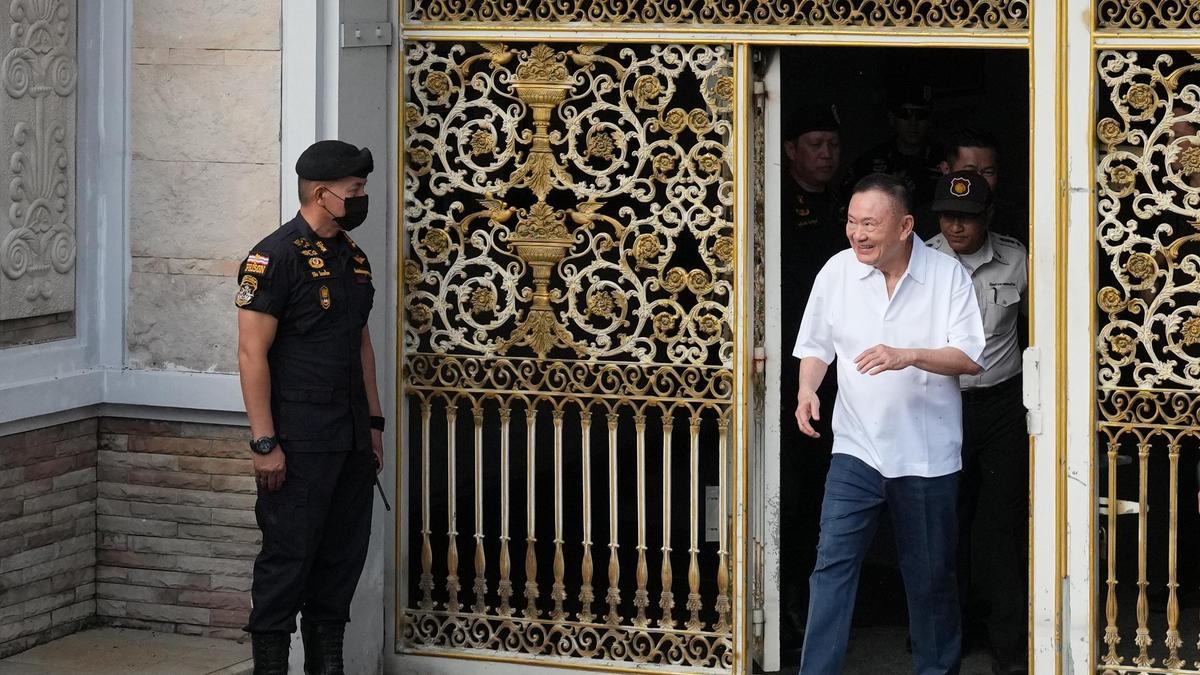
The next time you see a photo of Thaksin smiling from his porch, remember that for every day he spent in a hospital "ward," a student is spending a year in a cell for asking for the things Thaksin used to pretend to believe in.
The "Red Shirt" era is over. The "Orange" era is being suppressed. But don't mistake silence for peace.
Go ahead and celebrate the "homecoming" if you want. Just recognize it for what it is: the day the resistance was sold for a hospital suite and a pardon.