Nine minutes and forty-two seconds.
That is all the time it takes to turn half a billion dollars of precision-milled aluminum, gallium arsenide solar arrays, and years of sleepless engineering into an expensive rainstorm of ionized plasma over the Atlantic Ocean.
If you have ever stood three miles away from a heavy-lift orbital launch, you know that the sound does not hit your ears first. It hits your sternum. It is a physical, concussive wave that vibrates the fillings in your teeth and makes the gravel beneath your boots dance. You watch the pillar of blinding white fire climb into the Florida sky, trailing a thick, sunlit plume of exhaust that curls into high-altitude wind shear, and for the first few minutes, everything feels invincible. Physics is bending to human will.
Then, at T-plus nine minutes, a telemetry line on a screen in a darkened mission control room flattens. A trajectory curve bends downward instead of flattening into an orbital arc. A voice on the loop—calm, trained to strip away panic even as a career’s worth of work disintegrates—calls out an anomaly in the upper stage.
Forty satellites. Gone.
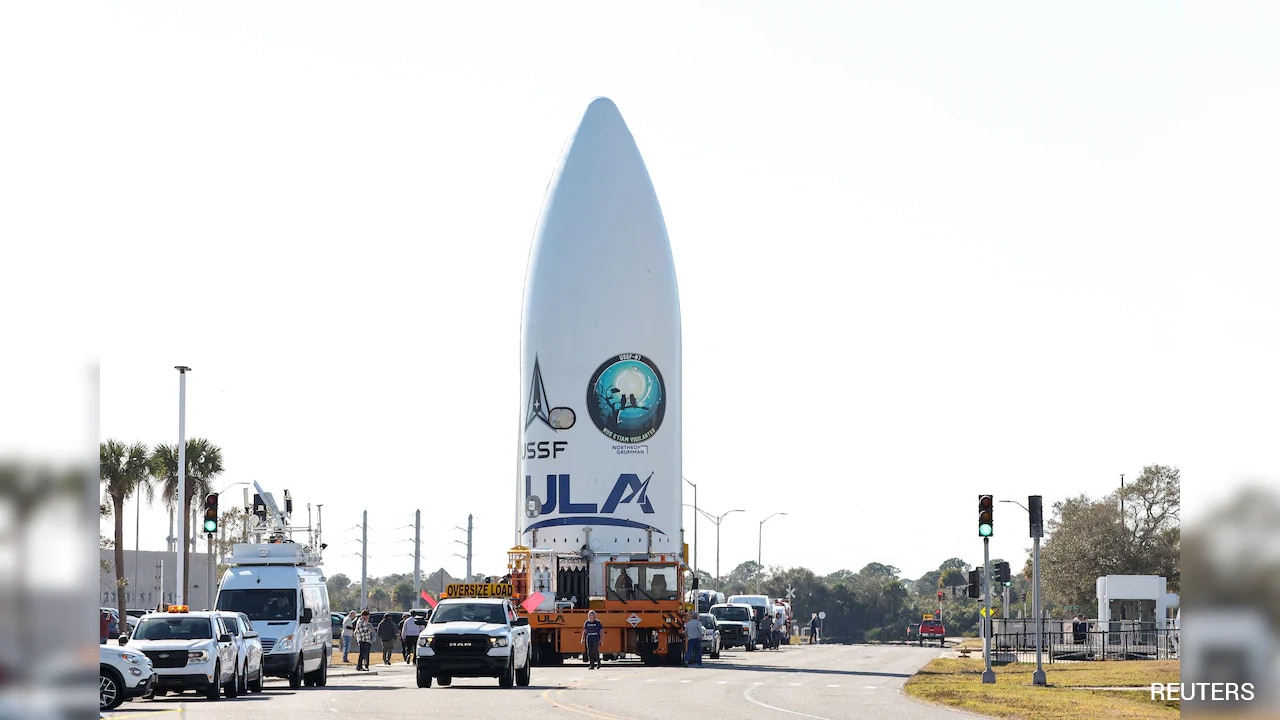
On paper, the headline is clean, clinical, and easy to scroll past over morning coffee. Amazon’s Project Kuiper—or Amazon Leo, as the corporate rebrand insists we call it—suffered a catastrophic launch failure. Forty broadband satellites, packed tightly inside a rocket fairing like eggs in a carbon-fiber carton, never reached their target altitude of roughly 600 kilometers. They tumbled back into the thickening soup of the upper atmosphere, burning up long before they could ever beam a single packet of data down to Earth.
To a Wall Street analyst, it is a rounding error on a $10 billion capital expenditure plan. To a SpaceX partisan on social media, it is punchline fodder.
To anyone who has ever waited on a satellite connection to load a medical chart, submit a college application, or check a storm radar while living forty miles past the end of the last fiber-optic cable, those ten minutes represent something entirely different. They represent another winter in the dark.
The Weight of Invisible Infrastructure
To understand why the loss of forty machines in the upper atmosphere matters on the ground, consider a hypothetical family living in a valley in eastern Kentucky, or a remote fishing cooperative on the coast of Labrador. Let us call the mother Elena, a nurse practitioner who handles triage from a spare bedroom because the nearest regional clinic is a ninety-minute drive over mountain switchbacks.
Elena does not care about rocket propulsion cycles, Isp ratings, or the geopolitical rivalry between Jeff Bezos and Elon Musk. She cares about latency. She cares about whether a high-resolution image of a patient’s skin lesion will upload before her connection times out, or whether her son’s physics lecture will freeze into a pixelated smear every time a spring thunderstorm rolls over the ridge.
For decades, the promise of rural connectivity was a graveyard of broken subsidies and half-finished trenching projects. Laying fiber-optic glass through granite mountains or across tundra costs tens of thousands of dollars per mile. Telecom monopolies took the federal grants, wired the profitable suburbs, and left the valleys to rot on copper lines from the 1970s or legacy geostationary satellites orbiting 22,000 miles away—so far out in space that a single click takes over half a second just to make the round trip.
Low Earth Orbit changed the math. By flying constellations of thousands of small satellites just a few hundred miles above the planet, companies could blanket the entire globe in low-latency broadband without digging a single ditch.
Think of a geostationary satellite as a single stadium floodlight mounted miles in the air; it covers a massive area, sure, but the light is dim, delayed, and easily blocked. A Low Earth Orbit constellation is like thousands of fireflies swarming just above the treetops. Because they are so close, the signal is instantaneous. Because there are so many of them, as one dips below the horizon, another seamlessly takes its place.
SpaceX saw this first and moved with terrifying speed, launching Starlink satellites by the dozens on reusable boosters until they owned the sky. By the time Amazon entered the arena, the orbital real estate was already getting crowded, and the regulatory clock was ticking loudly.
Racing the Federal Clock
The Federal Communications Commission does not hand out spectrum licenses for free, nor does it let corporations squat on orbital shells forever. Under the terms of Amazon’s license, the company is legally required to have half of its planned constellation—more than 1,600 satellites—in orbit and operating by mid-2026, with the full fleet of over 3,200 aloft by 2029.
Miss those deadlines, and the government can revoke the spectrum rights, handing the keys to the sky over to competitors.
This is the invisible pressure cooker behind every launch manifest. When you are behind by thousands of spacecraft, you do not have the luxury of launching one or two satellites at a time. You have to pack the fairing to the absolute brim. Forty satellites per flight is not an ambitious milestone; it is the baseline survival rate.
And yet, Amazon found itself trapped in a paradox of its own making. Historically reluctant to buy rides on Falcon 9 rockets owned by its fiercest competitor, Amazon orchestrated the largest commercial launch procurement in human history. They bought up dozens of flights across three different rocket providers—United Launch Alliance, Arianespace, and Jeff Bezos’s own Blue Origin.
There was just one problem. Almost none of those rockets were ready on time.
Vulcan Centaur suffered years of engine delays and testing setbacks. Ariane 6 slipped repeatedly to the right on European launch calendars. New Glenn, Blue Origin’s orbital heavy-lifter, spent years in development purgatory while Starships were already flying test arcs over Texas. Amazon had built a massive, gleaming factory in Kirkland, Washington, capable of churning out multiple satellites a day, only to watch them sit in cleanrooms like Ferraris parked in a garage with no roads leading out.
When a launch vehicle finally clears the pad with forty of those birds bolted to its dispenser, the relief inside the program is palpable. Every successful deployment buys breathing room against the FCC mandate. Every failure rips a hole in the schedule that cannot be patched with overtime pay.
Anatomy of a Failure
Rocketing to orbit is a controlled explosion balanced on the tip of a needle. During the first two minutes of flight, a launch vehicle fights the thickest part of Earth’s atmosphere, enduring maximum aerodynamic pressure—the moment when wind shear tries to tear the fuselage apart like a wet cardboard box.
Getting past that milestone lures spectators into a false sense of security. The booster separates. The blinding orange glare of first-stage kerosene or solid rocket motors gives way to the ghostly, almost silent blue-violet plume of a vacuum-optimized upper stage engine. In the vacuum of near-space, there is no dramatic fireball to watch on a livestream. There are only numbers scrolling across a telemetry feed.
Velocity needs to reach roughly 17,500 miles per hour. Not straight up, as childhood intuition suggests, but sideways. Orbit is not about escaping gravity; at 600 kilometers up, Earth’s gravity is still nearly as strong as it is on your living room floor. Orbit is about falling toward the Earth so fast sideways that the curvature of the planet drops away beneath you at the exact same rate you fall.
If that upper stage engine shuts down ninety seconds early, or a turbopump cavitates, or a guidance valve sticks open by a fraction of a millimeter, you do not achieve that sideways balance. You become a suborbital ballistic projectile.
I remember watching the telemetry feed of an orbital failure years ago from an engineering bay in California. Nobody screams like they do in movies. Instead, a heavy, suffocating silence drops over the room. People stare at their monitors as if willing the altitude numbers to tick back up through sheer force of eye contact. Someone slowly takes off their headset and sets it on the desk. You realize, with a cold knot in your stomach, that years of soldering, thermal vacuum testing, vibration table runs, and late-night code reviews are currently burning at three thousand degrees Fahrenheit over empty ocean.
For the engineers who built those forty Amazon satellites, the grief is uniquely personal. Unlike mass-produced consumer electronics, early-batch orbital hardware is practically hand-crafted. Technicians know individual spacecraft by their serial numbers and quirks—the one whose solar array hinge needed a custom shim, the one whose star tracker passed calibration on the third try. When the upper stage fails, all forty die together in the dark, entirely out of reach of any repair crew.
The Monopoly Problem Nobody Wants to Talk About
It is tempting to view a rocket failure as a purely technical hiccup, an inevitable tax paid to the harsh laws of orbital mechanics. Spaceflight is hard. Even SpaceX blew up boosters on landing pads and lost early payloads before achieving its current cadence of clockwork reliability.
Look closer at the fallout, though, and the stakes widen far beyond a single bad day at the launchpad.
Right now, global satellite internet is dangerously close to becoming a single-company monopoly. Starlink has thousands of active satellites overhead, millions of subscribers, military contracts, and a vertically integrated launch system that allows it to loft new hardware at a fraction of what competitors pay.
Competition is not just an abstract economic virtue; in telecommunications, it is the only thing keeping prices honest and service resilient. When one company controls the orbital infrastructure, that company’s founder decides who gets coverage, what it costs, and when it gets turned off. Whether you admire the engineering behind Starlink or worry about the concentration of power in one set of hands, the world desperately needs a viable second player in Low Earth Orbit.
Amazon is one of the only entities on Earth with the balance sheet deep enough to absorb a $10 billion buildout and challenge that dominance. Every time a rocket carrying Amazon’s satellites fails to reach orbit, the timeline for real competition stretches out by months.
Consider what happens next in the boardrooms and regulatory halls. Competitors will argue that Amazon cannot meet its deployment milestones and should forfeit its spectrum. Launch providers will ground their fleets for months-long mishap investigations overseen by the Federal Aviation Administration, creating a traffic jam on the launch manifest that delays every subsequent batch of satellites waiting in Washington.
Meanwhile, the factory in Kirkland keeps humming, building satellites that have nowhere to go, stacking up inventory while capital burns at an alarming rate.
The Debris Question
There is a silver lining to failing inside ten minutes, grim as it sounds to the insurers writing nine-figure payout checks.
When a rocket fails before reaching orbital velocity, gravity cleans up the mess immediately. The forty satellites and the spent upper stage did not become permanent space junk. They did not turn into hyper-velocity shrapnel threatening the International Space Station or triggering a Kessler Syndrome cascade that could lock humanity out of space for generations.
They fell back into the atmosphere, vaporizing cleanly into harmless trace aerosols high above the ocean, leaving the orbital lanes clear for the next attempt. In an era when Low Earth Orbit is already cluttered with dead rocket bodies, defunct spy satellites, and fragments from anti-satellite weapons tests, an immediate reentry is the cleanest possible ending to a worst-case scenario.
Of course, clean doesn't pay the bills, and it doesn't bring broadband to the valleys waiting below.
Back to the Cleanroom
I have often wondered what keeps aerospace engineers coming back to their desks the morning after a launch vehicle splatters across the ocean. If you write software and a server crashes, you reboot the instance and push a hotfix before lunch. If you build hardware for space and a valve fails ten miles above the stratosphere, you spend the next six months sifting through gigabytes of sensor logs, looking for a phantom anomaly that lasted forty milliseconds before the telemetry link died.
It is humbling, brutal work. It strips away corporate PR gloss in seconds. You cannot market your way into orbit, and no amount of press releases can argue with Newton’s second law.
Tomorrow morning, technicians in cleanroom bunny suits will walk back onto the floor in Kirkland, Washington. They will pull the next batch of flat-packed satellites onto the assembly line, torque down the fasteners, run the thermal checks, and prep them for shipping crates bound for the Florida coast.
And thousands of miles away, in places where the power lines end and the gravel roads begin, people like our hypothetical nurse practitioner Elena will keep staring at spinning loading icons on their screens, waiting for the sky to finally open up.
Ten minutes was enough to erase forty satellites, a year of momentum, and a fortune in aerospace hardware. In the cold math of orbital flight, the only thing left to do is wheel the next rocket out to the pad, clear the range, and light the fuse all over again.