The rules of global maritime trade just hit a $2 million wall. For decades, the Strait of Hormuz was governed by the delicate, albeit fraying, consensus of "transit passage"—a legal doctrine ensuring that ships could move through the 21-mile-wide artery without being stopped, searched, or taxed by the countries on its banks. That era ended on March 13, 2026.
What was once a theoretical threat has morphed into a high-stakes shakedown. The Islamic Revolutionary Guard Corps (IRGC) has effectively established a "toll booth" regime, rerouting the world’s energy supply through a single, IRGC-monitored corridor near Larak Island. This is not a blockade in the traditional sense; it is something far more sophisticated and potentially more permanent. Tehran is not closing the door; it is charging for the key.
The Mechanics of the Shakedown
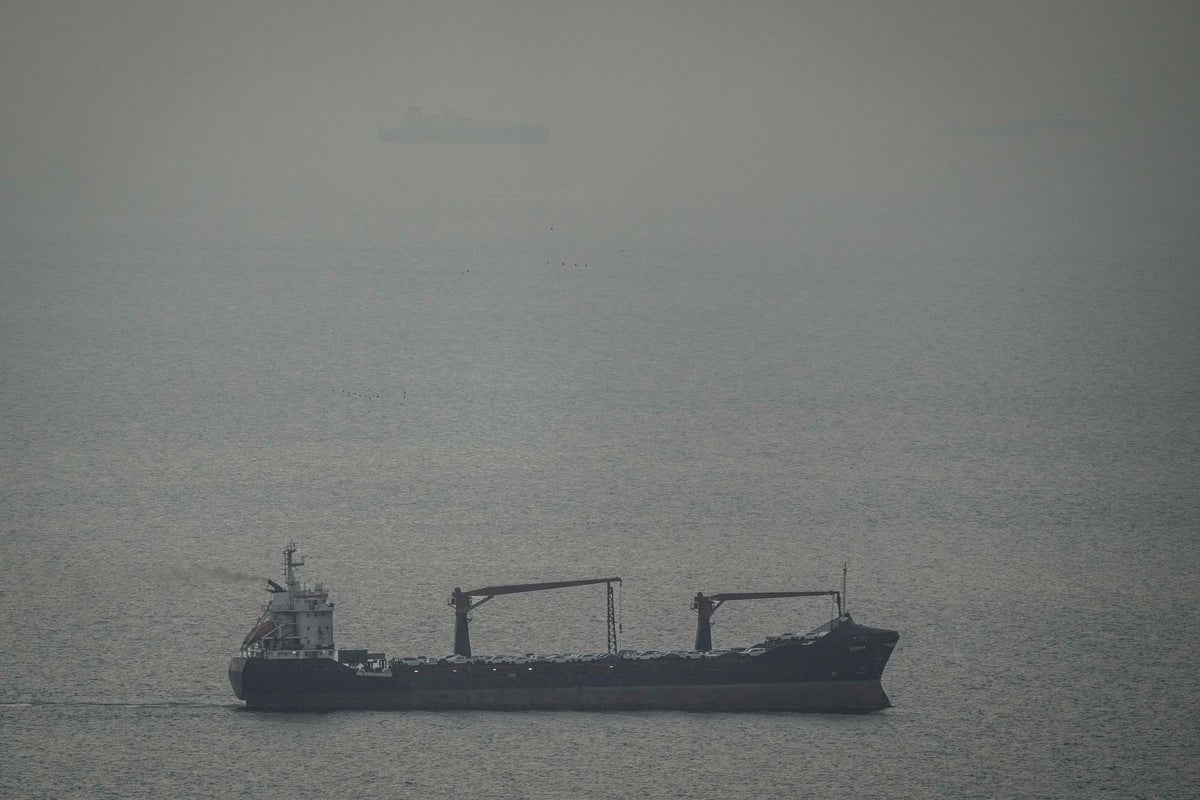
To understand how the "Tehran Toll Booth" operates, one must look past the geopolitical rhetoric and into the logistics of the IRGC Navy (IRGCN). Since mid-March, traditional shipping lanes in the Strait have sat eerily empty. Automatic Identification System (AIS) data confirms that since March 15, virtually no major commercial vessels have utilized the standard international traffic separation schemes. Instead, traffic has funneled into Iranian territorial waters.
The process is chillingly clinical. Ship operators are directed to contact "approved intermediaries"—often shell companies with deep ties to the IRGC operating in third-party jurisdictions. Before a vessel even approaches the mouth of the Persian Gulf, it must submit a "clearance dossier" that includes:
- Full crew manifests and biometric data.
- Granular ownership structures (to verify no "hostile" US or Israeli links).
- Cargo manifests, with a heavy priority currently placed on oil and LNG.
- Final destination and proof of payment.
Once vetted, the ship receives a digital clearance code. Upon arrival at the eastern entrance of the Strait, an IRGC pilot boat intercepts the vessel, verifies the code via radio, and escorts it through the "Safe Corridor." This is not a courtesy service. At least two vessels have already confirmed paying a "transit fee" of $2 million each. In a move designed to bypass the Western financial grid, these payments are increasingly being settled in Chinese Yuan (CNY) or through complex barter arrangements.
The Legal Shell Game
Iran’s legal justification for this move is a masterclass in exploiting international loopholes. The United Nations Convention on the Law of the Sea (UNCLOS) is the bedrock of maritime law, but there is a catch: while Iran signed the treaty in 1982, it never ratified it.
Tehran’s argument hinges on a distinction between "Innocent Passage" and "Transit Passage." Under Transit Passage (Articles 37-44 of UNCLOS), ships have a right to cross international straits that cannot be suspended or conditioned on payment. Iran, however, argues that as a non-ratifying state, it is only bound by "Innocent Passage" within its territorial waters. Unlike Transit Passage, Innocent Passage can be suspended if a coastal state deems the transit a threat to its security.
By declaring the current regional conflict a state of emergency, the IRGC has redefined "innocence" to mean "cooperation." If you pay the fee and submit to the vetting, you are "innocent." If you refuse, you are "hostile." It is a circular logic that turns a global right into a sovereign privilege.
The $2 Million Tax on Global Stability
The economic ripples of this regime are already turning into a tsunami. With roughly 20% of the world’s oil and 25% of its LNG passing through this chokepoint, the "Iran Tax" is being felt at gas pumps and factories worldwide.
| Impact Category | Pre-Crisis (Feb 2026) | Current (March 27, 2026) |
|---|---|---|
| Brent Crude Price | $78 / barrel | $120+ / barrel |
| Strait Transits | ~150 / day | ~13 / day |
| Transit Fee | $0 | $2,000,000 |
| Insurance Premium | Standard | "War Risk" (500% Increase) |
For a standard VLCC (Very Large Crude Carrier), the $2 million toll is only the beginning. When you add the astronomical "war risk" insurance premiums and the costs of potential multi-day delays for vetting, the price of a single voyage has increased by nearly 30%.
While Western nations cry foul, a silent queue is forming at Tehran’s door. Governments in India, China, and Malaysia have already engaged in direct negotiations to secure "green-channel" status for their fleets. This creates a two-tier global economy: those who recognize Iranian hegemony in the Strait and those who are priced out of the market.
The Larak Island Nerve Center
The tactical heart of this operation is Larak Island. Located just off the coast of Bandar Abbas, this rugged outcrop has been transformed into a maritime panopticon. The IRGC has deployed advanced coastal radar, signal intelligence arrays, and drone launch pads to monitor every square inch of the corridor.
This isn't just about security; it's about data. By forcing every ship through this corridor, Iran is building the world’s most comprehensive database of global energy logistics. They know exactly who is buying what, from whom, and where it is going—information that is arguably more valuable than the $2 million cash grab.
The End of Free Navigation?
The real danger is not the $2 million fee, but the precedent. If the international community accepts the Tehran Toll Booth as a "temporary wartime necessity," it effectively signals the death of the high seas as a global common.
We are witnessing the "Suez-ification" of natural waterways. Unlike the Suez or Panama Canals, which are man-made engineering marvels that require massive maintenance and thus justify fees, the Strait of Hormuz is a natural gift of geography. By monetizing it, Iran is challenging the very concept of freedom of navigation that has underpinned the global order since the end of World War II.
The US administration finds itself in a strategic bind. A direct military strike on the Larak Island infrastructure risks a total closure of the Strait and a global depression. Yet, every day the toll booth remains open, the IRGC’s coffers grow, and the international law books become more irrelevant.
The question for shipowners is no longer whether the toll is legal. The question is whether they can afford to stay in business without paying it. As of this morning, the queue at the entrance of the "Safe Corridor" is growing.
Would you like me to analyze the specific insurance implications for cargo vessels currently idling in the Gulf of Oman?