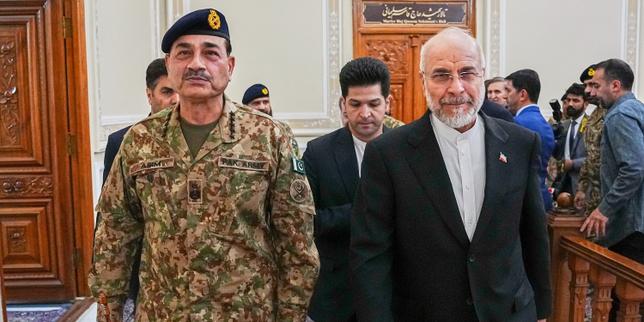
The Middle East is currently holding its breath. We've seen this cycle before, but this time the air feels thinner. Tehran is signaling that it might skip the latest round of ceasefire negotiations, a move that feels less like a diplomatic snub and more like a calculated threat. By claiming they have "new cards to play on the battlefield," the Iranian leadership isn't just posturing. They're telling the world that the diplomatic track is optional for them. It’s a dangerous gamble. If you think this is just standard rhetoric, you aren't paying attention to the shift in tone coming out of the Revolutionary Guard.
The core of the issue is leverage. Iran doesn't want to show up to the table looking like they've been backed into a corner by recent assassinations or tactical setbacks. Instead, they're leaning into the ambiguity. Will they attack Israel directly? Will they let their proxies do the heavy lifting? By leaving these questions unanswered, Tehran keeps its adversaries guessing, which is exactly where they want them.
The illusion of diplomatic certainty
Western diplomats often talk about "frameworks" and "roadmaps" as if peace is a destination you can reach with a GPS. In the current Middle East conflict, those maps are on fire. Iran’s hesitation to join the talks isn't about the specific terms on the paper. It's about the optics of power. They know that the moment they sit down, they're acknowledging a status quo that they've spent decades trying to dismantle.
There's a common misconception that Iran is a monolith. It isn't. You have the diplomatic wing trying to avoid total economic collapse, and the military wing that views any concession as a betrayal of the revolution. Right now, the hardliners have the microphone. When they talk about "new cards," they’re likely referring to advanced drone technology or more coordinated multi-front strikes from the "Axis of Resistance." This isn't just talk. We’ve seen the reach of these systems in recent months.
Why the battlefield looks different in 2026
The technology has shifted. Warfare in the region isn't just about troop movements anymore; it’s about deniability and precision. Tehran’s "new cards" could be anything from cyber-attacks on critical infrastructure to the deployment of hypersonic missiles that they've been bragging about for years. They've watched how modern conflicts play out. They know that a single well-placed strike can do more than a month of traditional shelling.
- Proxies are no longer just shields. Groups like Hezbollah and the Houthis have evolved into sophisticated military forces with their own industrial bases.
- Information warfare is the front line. Iran uses the threat of escalation to manipulate global oil prices and pressure Western governments through their domestic electorates.
- The threshold for "all-out war" has moved. Both sides are hitting targets that would have sparked a world war twenty years ago, yet they're calling it "measured response."
It’s a gritty, ugly reality. We’re seeing a normalization of high-intensity conflict that stays just below the level of a regional conflagration. But how long can you stay on that edge before someone slips?
The danger of the empty chair
When a major player stays away from the negotiating table, the vacuum is usually filled by explosives. By distancing themselves from the talks, Tehran is essentially giving their proxies a green light to experiment. If the diplomats can't provide a win, the generals will try to take one. This creates a feedback loop of violence where neither side can afford to be the first to stop.
Honestly, the "cards" Tehran mentions might be more about psychological pressure than hardware. The fear of what Iran might do is often more effective than what they actually do. It keeps Israeli defense systems on high alert, costing millions of dollars a day, and keeps the US carrier groups tied down in the Mediterranean. It’s a war of attrition where the primary resource being burned is patience.
Redefining the red lines
The old red lines are gone. We used to think an attack on a consulate or a direct strike from Iranian soil was the ultimate "point of no return." We've passed those points. Now, the new red line is invisible. It’s the moment one side decides that the cost of the status quo is higher than the cost of a full-scale war.
Tehran’s current stance suggests they believe they still have room to maneuver. They're betting that the West is too distracted or too tired to call their bluff. But the "battlefield cards" they’re threatening to play are double-edged. Any major escalation could invite the very regime-threatening response they’ve spent forty years trying to avoid. They're playing chicken with a brick wall.
What actually happens if the talks fail
If these negotiations collapse because of Iranian non-participation, don't expect a sudden explosion of activity. Expect a slow, grinding increase in the "gray zone" conflict. You’ll see more mysterious ship failures, more drone "mishaps," and more targeted strikes. It's a strategy of 1,000 cuts.
The reality is that nobody in the region actually wants the "big one." Not really. But they're all so committed to their public personas of strength that they might accidentally stumble into it. Tehran’s refusal to commit to the talks is a classic move to increase their "asking price" for peace. The problem is, the price might soon be higher than anyone is willing to pay.
Watch the rhetoric regarding the "new cards" closely. If they start getting specific about technical capabilities, the window for diplomacy is closing. If it stays vague, there’s still a deal to be made. Keep your eye on the movement of hardware, not just the press releases. The real story is always told in the logistics, not the soundbites.
Move your focus toward tracking regional maritime insurance rates and energy futures. Those are the only honest indicators of how close we are to the edge. When the markets panic, the "cards" are about to be played.

:strip_icc()/pic2513216.jpg)