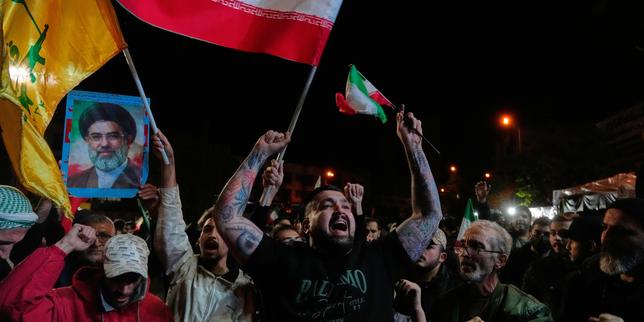
The ceasefire announcement meant to quiet the guns in the Levant has reached the streets of Tehran not as a victory, but as a jarring reminder of a widening gap between state rhetoric and the exhausting reality of the Iranian public. While official channels blast celebratory anthems, the mood on the ground is a mix of tactical relief and deep-seated cynicism. This is not the jubilant "resistance" triumph the Islamic Republic’s propaganda machine envisioned. Instead, it is a moment of cold calculation where the average citizen is more concerned with the fluctuating price of the rial than the strategic depth of a regional proxy.
The disconnect is total. To understand why a ceasefire fails to ignite the Iranian spirit, one must look past the state-organized rallies. Those gatherings are choreographed, filled with civil servants and the ideological core. The real story is found in the quiet whispers of the Grand Bazaar and the tense conversations in the shared taxis of North Tehran. For the Iranian people, every missile fired and every truce signed is viewed through the lens of domestic deprivation. They see a government that spent decades and billions of dollars building a "Ring of Fire" around its rivals, only to watch that investment undergo a brutal stress test that left the domestic economy in tatters.
The High Cost of the Shadow War
The math of the Iranian street is simple and unforgiving. People track the cost of living with the precision of a day trader. When news of the ceasefire hit, the primary question wasn't about the borders of Lebanon or the fate of political leaders, but whether the dollar would drop. It didn't. The systemic rot in the Iranian economy, fueled by years of sanctions and internal mismanagement, has reached a point where geopolitical "wins" no longer provide even a temporary sugar high for the markets.
The government’s strategy of forward defense—the idea that fighting in Beirut or Damascus prevents fighting in Tehran—is losing its grip on the public imagination. Decades ago, this narrative had teeth. It carried the weight of the Iran-Iraq War’s trauma. Today, a younger generation looks at the crumbling infrastructure, the water shortages, and the rolling blackouts, then looks at the high-tech weaponry being shipped abroad. They don't see a shield. They see a massive transfer of national wealth into a void.
A Legacy of Managed Skepticism
Skepticism in Iran is a survival mechanism. The Iranian public has seen this cycle before: escalation, threats of total war, a brokered pause, and then the slow slide back into a war of attrition. There is no belief that this ceasefire represents a permanent shift toward regional stability. Instead, it is viewed as a tactical reset—a chance for all parties to lick their wounds and rearm for the next inevitable round.
This weary realism creates a vacuum that the state cannot fill with ideology. In the past, the Islamic Republic could rely on a sense of nationalistic fervor during times of regional tension. That fervor has been largely spent. The protests of 2022 and 2023 changed the fundamental chemistry of the relationship between the ruler and the ruled. Now, when the state asks for sacrifice for the sake of the "Axis," the answer from the streets is a resounding "with what money?"
The Proxy Paradox
One of the most overlooked factors in the current Tehran climate is the internal debate over the effectiveness of the proxy model. For years, the Iranian military establishment sold the idea that their regional allies were an insurmountable deterrent. The recent conflict challenged that assumption. The sheer scale of the intelligence breaches and the systematic decapitation of allied leadership have left many Iranians wondering if the "deterrent" was actually a liability that invited more danger to their doorstep.
This isn't just an academic debate. It's a fundamental questioning of the country's grand strategy. If the massive investment in external forces didn't prevent direct strikes or high-profile assassinations within Iran itself, then the entire logic of the last forty years comes under fire. The ceasefire doesn't solve this crisis of confidence; it merely gives people the breathing room to vocalize it.
The Rial vs the Rocket
In the cafes of Tehran, the conversation isn't about the terms of the truce. It’s about the fact that a kilo of red meat now costs a significant portion of a monthly minimum wage. The "resistance" identity is being crushed by the weight of the grocery bill. This economic desperation has stripped away the luxury of geopolitical pride for the vast majority of the population.
The government attempts to frame the ceasefire as a validation of their steadfastness. They claim that their enemies were forced to the table. But the Iranian worker, who has seen their purchasing power vanish, sees only the continuation of a status quo that offers them nothing. The state's insistence on projecting power abroad while failing to provide basic stability at home is a gamble that is nearing its expiration date.
Strategic Silence and Private Doubt
There is a specific kind of silence that follows these big geopolitical shifts in Iran. It’s not the silence of agreement, but the silence of exhaustion. People are tired of being the ideological vanguard for a cause that doesn't put bread on the table. The ceasefire is a welcome break from the immediate threat of a wider war that could see Tehran directly targeted, but it provides zero hope for a better life.
Even within the ranks of the more traditional supporters of the system, there are murmurs. They see the sophisticated nature of the opposition’s technology and the precision of their strikes. They compare it to the slow, grinding nature of their own bureaucracy. The gap isn't just ideological; it’s technological and organizational. The ceasefire is a moment where these shortcomings are being reflected upon, rather than ignored in the heat of battle.
The Geography of Discontent
The skepticism isn't uniform, but it is pervasive. In the border provinces, where the threat of conflict is often felt most acutely, the ceasefire is met with a grim nodding of heads. In the urban centers, it is met with a shrug and a return to the struggle of daily life. The Islamic Republic is presiding over a nation that has largely tuned out its grand narrative.
This internal detachment is perhaps the greatest threat to the state’s long-term objectives. A government can survive sanctions, and it can survive a certain amount of military pressure. What it struggle to survive is a population that no longer believes in the central mission of the state. The "victory" flags currently flying in Tehran are symbols of a reality that exists only on state television.
The Illusion of Control
The regime’s biggest challenge now is maintaining the illusion that they are the ones dictating the terms of the regional order. Every time a ceasefire is signed, they claim it as a win. But when that ceasefire is broken, or when the underlying tensions remain unresolved, the claim rings hollow. The Iranian public is sophisticated; they understand that their leaders are often reacting to events rather than shaping them.
They see the pressure coming from all sides—the economic strangulation, the internal dissent, and the military setbacks of their allies. They know that a ceasefire is often just a comma in a very long, very painful sentence. The skepticism isn't just about the current truce; it's about the entire trajectory of the nation.
The streets of Tehran are quiet for now, but it is the quiet of a pressure cooker, not a park. The ceasefire hasn't lowered the temperature; it has only stopped the steam from whistling for a moment. The fundamental issues that drive Iranian discontent—the ruined economy, the social restrictions, and the costly foreign policy—remain entirely unaddressed. Until those are fixed, no amount of regional maneuvering will bridge the gap between the palace and the pavement.
The Islamic Republic has mastered the art of the tactical pause, but it is losing the war for its own people’s trust. You cannot feed a family on the news of a tactical withdrawal or a temporary truce. As long as the rial continues its downward trajectory and the price of basic goods climbs, the skepticism in Tehran will only harden into something much more dangerous than mere doubt. Peace in the region is a phantom if there is no peace between a government and its citizens.



