The myth that American military assets in the Middle East could operate with impunity has been dismantled. For decades, the network of bases spanning from Qatar to Bahrain was viewed as a strategic insurance policy, a deterrent capable of projecting overwhelming force without courting direct catastrophe. That belief ended this weekend.
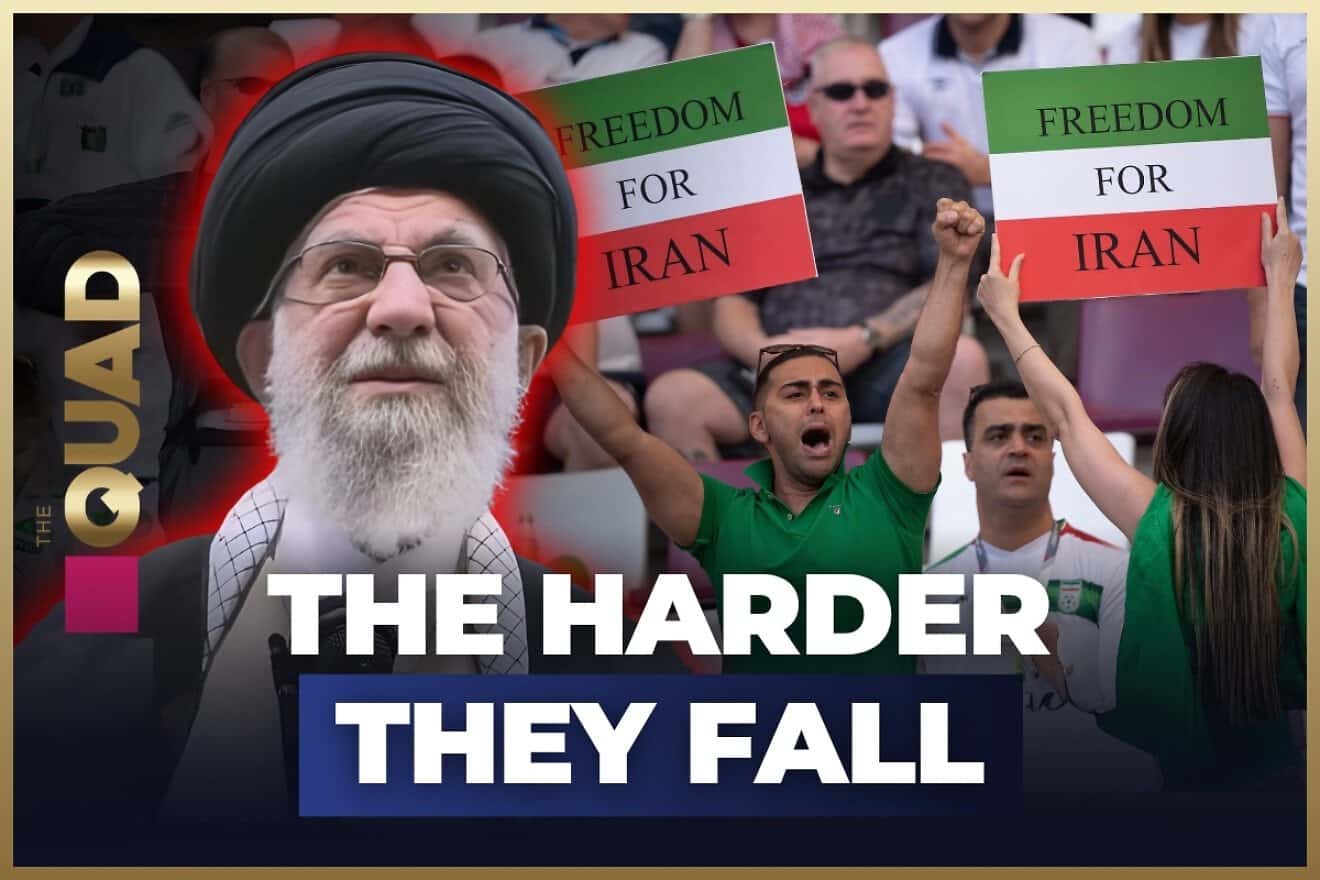
When the United States and Israel launched their synchronized offensive on February 28, targeting the heart of the Iranian leadership and ultimately claiming the life of Supreme Leader Ali Khamenei, they did not just execute a military objective. They burned the house down. Iran’s swift and coordinated retaliation against American installations across the Gulf is not merely a reflexive lash-out. It is an admission that the red lines of the last quarter-century have been erased.
The strategy was simple in its conception and catastrophic in its result. By decapitating the Iranian regime, the allied forces assumed the Iranian state would fracture under the weight of internal chaos. Instead, the response demonstrates a command structure that remains disturbingly intact. Tehran has successfully hit military sites in Bahrain, Kuwait, Qatar, Jordan, Saudi Arabia, and the United Arab Emirates. The assumption that the regime would prioritize self-preservation over regional combustion was a fatal miscalculation.
The Myth of Deterrence
We have long operated under the pretense that our technological superiority creates a protective bubble. The Patriot missile batteries, the THAAD systems, and the advanced air defense arrays stationed at places like Al Udeid in Qatar or the Fifth Fleet headquarters in Bahrain were designed to intercept the threats of a bygone era. They were never built to withstand a saturating saturation barrage from a cornered state actor possessing a massive, battle-hardened missile stockpile.
The reality is colder. These bases are geographically fixed, high-value targets. They are sitting ducks in a neighborhood where the enemy has stopped caring about the cost of escalation. When Iran launched drones and missiles at these sites, they proved they could bypass the very defense systems that were supposed to provide us with total security. It is a terrifying reality check for any commander who believed the status quo could hold indefinitely.
The Gulf monarchies, who have spent years attempting to maintain a fragile neutrality, are now paying the price for proximity. They were clear about their refusal to host strikes against Iran, yet the geography of their nations has made them co-belligerents by default. Now, their civilian infrastructure and their ports are feeling the tremor of a war they fought tooth and nail to avoid.
The Cost of Aspiration
Beyond the burnt hangars and the damaged tarmac, we are looking at an economic shock that will ripple far wider than the local theater of conflict. Dubai International Airport, the world’s busiest hub, is closed. Shipping lanes in the Strait of Hormuz are effectively blockaded by the threat of further strikes. This is not a contained military engagement; this is a disruption of the global circulatory system for energy and trade.
The architects of this escalation, specifically those in Washington and Jerusalem who pushed for the "Epic Fury" operation, operated with a singular focus on eliminating the nuclear program and the leadership hierarchy. They saw a path to victory that bypassed the messy realities of proxy warfare. They ignored the fact that Iran’s power is not just in its leadership but in its deep-rooted, asymmetric capacity to bleed its enemies slowly over time.
Three American service members are dead. Five others are wounded. These are the first confirmed casualties of what is rapidly becoming a war of attrition. The promise that this operation would make the region easier to manage is looking like the grandest deception of the decade. We have traded a manageable, if difficult, stalemate for a wild, uncontrolled descent into regional fire.
The Failure of Intelligence
The intelligence assessment that claimed Iran was unlikely to pose a direct threat to American interests for the next decade stands as a monument to institutional blindness. It reveals a failure to understand the fundamental shift in Iranian military doctrine. They stopped playing by the rules of the old game years ago. They have shifted their posture toward high-volume, precision-guided, and mass-drone capabilities that negate our reliance on traditional air power.
There is a lingering arrogance in the Pentagon and the Knesset that suggests we can strike, recover, and reset. But you do not reset an entire region. You do not wake up the day after killing a Supreme Leader and expect the adversary to retreat to their corner. The Iranian leadership structure, even in its transitionary, battered state, has proven that it still has its hand on the ignition switch for the entire Middle East.
The military objective was reached. The leadership is gone. But the strategic environment has collapsed into something far more dangerous. We are currently watching the dismantling of the post-Cold War security architecture in real time, and no amount of advanced weaponry can rebuild what has already been shattered.
The next few days will not be about whether we can win a war. It will be about whether we can leave without losing everything we have built in the region over the last forty years. We are beyond the point of diplomatic maneuvers or carefully worded statements. The fire is burning, and we are holding the matches.