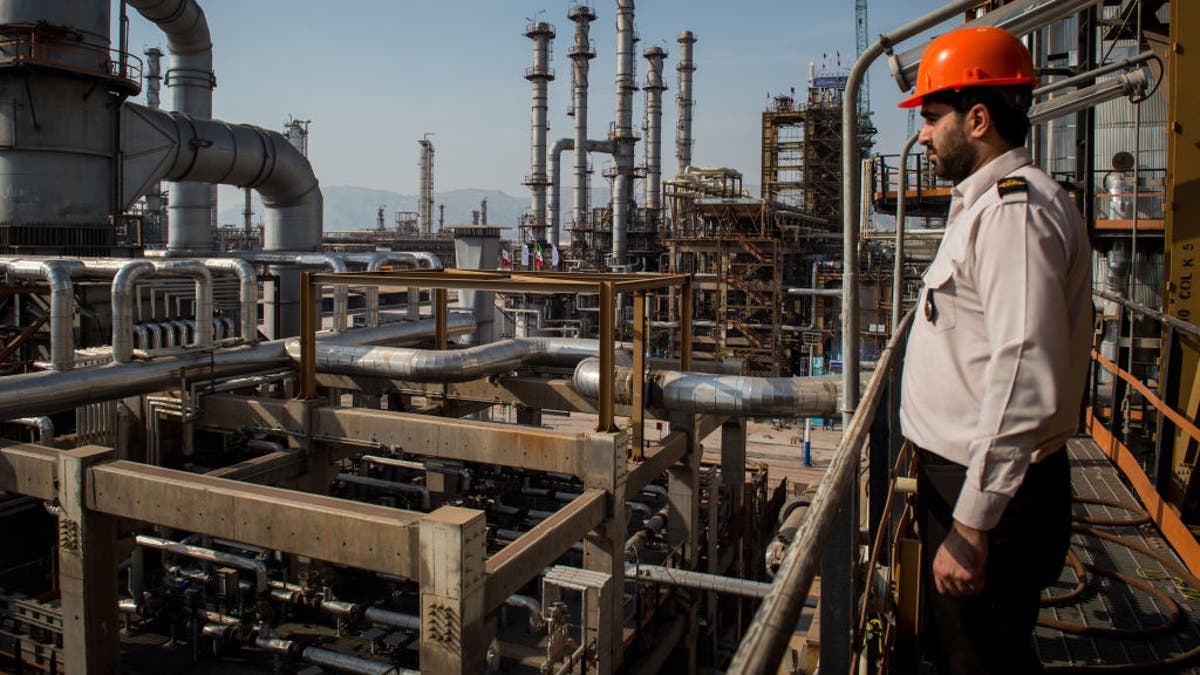
The headlines are screaming about a "collapse" because of smoke over Kharg Island. Mainstream analysts are dusting off their 1970s oil shock playbooks, predicting $150 barrels and a global economic cardiac arrest. They are wrong. They are looking at a digital-age energy market through a lens smeared with Cold War grease.
If you believe the standard narrative that hitting Iranian oil facilities on day nine of a regional conflict spells doom for the West, you aren't paying attention to the plumbing of the modern energy market. In fact, a decapitated Iranian energy sector is less of a global catastrophe and more of a forced recalibration that the market has already priced in, even if the cable news pundits haven't.
The Myth of Iranian Indispensability
Let’s start with the cold, hard numbers that the "lazy consensus" ignores. Iran produces roughly 3.2 million barrels per day (bpd). In a global market of over 100 million bpd, that is a rounding error. More importantly, because of years of "maximum pressure" sanctions, the vast majority of that oil isn't hitting the open global market anyway. It flows through the "Ghost Fleet"—a shadowy network of aging tankers with transponders turned off, moving crude to specific refineries in teapot independent Chinese plants.
When you hit an Iranian refinery, you aren't "starving the world" of oil. You are inconveniencing a handful of independent refiners in Shandong. The global Brent benchmark might spike on the fear of escalation, but the physical supply-demand balance remains shockingly stable.
Why? Because the world is currently drowning in spare capacity. OPEC+ is sitting on millions of barrels of voluntary cuts that they are itching to bring back to market. Saudi Arabia and the UAE can flick a switch and replace Iranian volumes before the smoke clears from the Ganaveh pipelines. The "shock" is a psychological artifact, not a physical reality.
The Shale Shield is Real and Aggressive
I have watched traders lose fortunes betting on "Middle East Risk Premiums" that never materialize. They forget that the United States is now the largest oil producer in human history.
In 2008, a flare-up in the Gulf sent gasoline prices soaring because the U.S. was a desperate importer. Today, American Permian Basin production acts as a global shock absorber. Every time a missile hits a storage tank in the Middle East, it provides a price signal that incentivizes more American drilling and more efficient extraction technology.
The "contrarian truth" is that conflict in the Gulf validates the American energy transition. It accelerates the move toward domestic reliability and forces capital out of volatile "petro-states" and into North American infrastructure. If you are holding Iranian supply as the linchpin of your portfolio, you are betting on a ghost.
The Fallacy of the Strait of Hormuz "Kill Switch"
The favorite campfire story of geopolitical "experts" is the closure of the Strait of Hormuz. They claim Iran will "choke the world."
Imagine a scenario where a country voluntarily commits economic suicide to spite its neighbors. That is what a total closure of the Strait would be. Iran’s own economy, crippled as it is, still breathes through that narrow waterway. They cannot block the Strait without starving their own population and, more importantly, infuriating their only remaining patrons: China and India.
Furthermore, the technology of maritime security has evolved. We aren't in 1984 anymore. Drone swarms and satellite-guided interdiction make "blocking" a waterway a massive, visible target for immediate kinetic response. The Strait is a diplomatic talking point, not a functional military "kill switch."
Energy is No Longer a Commodity—It is Software
The real disruption isn't the physical oil; it's the data. Modern refineries and grids are increasingly managed by automated systems. The "Day 9" strikes didn't just hit steel and crude; they tested the resilience of regional SCADA systems.
The industry insiders I talk to aren't worried about the fire on the horizon. They are worried about the cyber-retaliation that follows. If you want to see a real "game-ender" (to use a term the novices love), look at the digital vulnerability of the global pumping stations. But even there, the West has spent the last decade hardening its shells.
We have moved from a world of "resource scarcity" to a world of "logistical complexity." The oil is there. The tankers are there. The only thing missing is the courage to admit that Iran's energy leverage is a relic of a bygone era.
The Hidden Winners of the Smoke
If you want to follow the money, don't look at the pump. Look at the balance sheets of the major integrated firms and the renewable energy lobbyists.
- The Majors: Companies like Exxon and Chevron benefit from the "fear premium" without losing a single drop of production. They are effectively getting a global pay raise funded by Middle Eastern instability.
- The Transition Lobby: Every explosion in an Iranian oil field is an un-skippable advertisement for electric vehicles and nuclear power. Security of supply is the ultimate salesman for the green transition.
The irony is thick: by attacking or defending these facilities, the actors involved are merely accelerating the irrelevance of the very resource they are fighting over.
Stop Asking if Prices Will Rise
People constantly ask, "How high will gas go?" That is the wrong question. The right question is: "How quickly can the market re-route?"
The global supply chain is now a hyper-adaptive organism. Within 48 hours of any strike, traders have already re-charted tankers, adjusted refinery slates, and tapped into strategic reserves. The friction that once caused economic collapses has been lubricated by high-frequency trading and real-time satellite tracking of every vessel on the water.
The "insider" secret is that we need these spikes to clear the deadwood. High prices destroy demand in inefficient sectors and force innovation. If you're crying about the Day 9 strikes, you're likely holding onto an obsolete view of how the world powers itself.
The volatility isn't the crisis. The volatility is the system working exactly as intended to shed its dependence on unstable actors.
Stop watching the fire. Start watching the flow. The era of the "Oil Weapon" is dead, and Iran is just the last to realize it.
Sell the fear. Buy the resilience.
Go look at the Cushing inventory levels and tell me again why we should be panicked about a fire in the Persian Gulf. You can't, because the data doesn't support the drama.