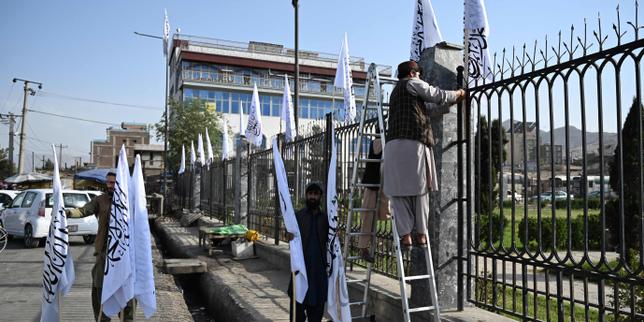
Five years ago, Kabul fell in a matter of hours. The Western-backed government vanished, foreign troops fled, and the international community slammed the door shut on Afghanistan. Diplomatic missions packed up. Sanctions choked the financial system. Millions braced for a pariah state frozen in time, cut off from the rest of the world forever.
Except that isolation didn't hold.
If you look closely at the map of regional diplomacy today, the Afghan de facto administration isn't sitting alone in the dark anymore. They aren't formally recognized by Western capitals—nobody is handing out UN credentials just yet—but practical, hard-nosed geopolitics has quietly rewritten the rules. Neighbors, economic powerhouses, and regional heavyweights decided that ignoring Kabul creates more problems than engaging with it.
You need to understand what actually shifted behind closed doors. It's messy, it's pragmatic, and it has almost nothing to do with human rights declarations.
The Regional Pragmatism That Defeated Sanctions
Diplomatic isolation relies on a united front. When major powers agree that a regime is illegitimate, nobody picks up the phone. But global politics doesn't work like a uniform bloc anymore. China, Russia, Pakistan, Iran, and several Central Asian republics quickly realized that a collapsed Afghan state poses a direct threat to their own security and economic ambitions.
So they adapted.
Beijing didn't wait for Western approval to accept an official Afghan ambassador. Chinese state-linked firms have quietly negotiated access to mineral resources, eyeing massive copper and lithium deposits that require stability to extract. Russia has steadily moved toward removing the movement from its list of banned terrorist organizations, prioritizing regional counter-terrorism cooperation over Western pressure campaigns.
Central Asian neighbors like Uzbekistan and Turkmenistan never stopped trading. Power grids stay connected. Gas pipelines keep flowing. Freight trains cross borders daily because keeping the Afghan population on the brink of starvation invites refugee crises and cross-border militant spillover.
Regional governments figured out a simple workaround. They don't need to issue a formal decree recognizing a government to do business with it. They call it pragmatic engagement. You deal with the people holding the territory because you have no other choice.
Where Western Pressure Failed
Western nations expected economic strangulation to force political concessions. They froze billions in central bank reserves parked abroad. They applied sanctions and tied every dollar of humanitarian aid to strict conditions regarding girls' education and women's employment.
It hasn't worked.
The leadership in Kabul absorbed the shock. They managed to stabilize their domestic currency through strict import controls, customs collections at border crossings, and domestic tax gathering. While the humanitarian situation remains catastrophic for millions of ordinary citizens—especially women who have been systematically erased from public life—the regime itself didn't collapse under financial pressure.
In fact, the hardliners dug their heels in deeper. When foreign pressure mounts, ideological movements often double down rather than fold. International condemnation became a tool for internal consolidation.
Western diplomats are now trapped in a policy contradiction. They want to pressure the regime on human rights, but they also want to deliver aid to starving populations and stop the country from becoming a staging ground for transnational terrorism. You cannot isolate a country completely while simultaneously demanding its cooperation on security.
The Economic Realities Driving New Partnerships
Money talks louder than ideology. Afghanistan sits on an estimated one trillion dollars in untapped mineral wealth. Rare earth elements, iron, copper, and lithium are buried beneath the mountains.
Global demand for these materials is skyrocketing. Traditional supply chains are strained. Regional investors aren't going to let moral concerns stop them from securing supply lines when competitors are circling.
Take the recent infrastructure pushes. Regional trade corridors are expanding. Afghanistan is trying to position itself as a vital transit bridge between Central Asia and South Asia. When a freight train cuts through the mountains to deliver goods from Russia down toward Pakistan, borders blur. Economic gravity always wins in the end.
Foreign businesses operate differently now. They send delegations to Kabul. They sign memorandum deals. They accept the security guarantees offered by the current administration, bypassing traditional Western diplomatic channels entirely.
What This Means for Global Stability
Pretending a government doesn't exist doesn't make it go away. That is the hard lesson of the past five years.
While Western capitals maintain a comfortable distance, the geopolitical reality on the ground has shifted permanently. The international community is splintered. A multipolar world means rogue states or pariah regimes can find patrons, trading partners, and diplomatic openings without changing their internal policies by an inch.
This sets a dangerous precedent for international norms. It proves that a regime can systematically strip half its population of basic rights, ignore every standard of international law, and still claw its way back into regional legitimacy simply by outlasting the attention span of global powers.
The isolation strategy is dead. What comes next is a messy, transactional free-for-all where security and trade trump human rights every single time. Keep your eyes on the border trade deals and regional energy pacts if you want to understand where the world is actually heading.