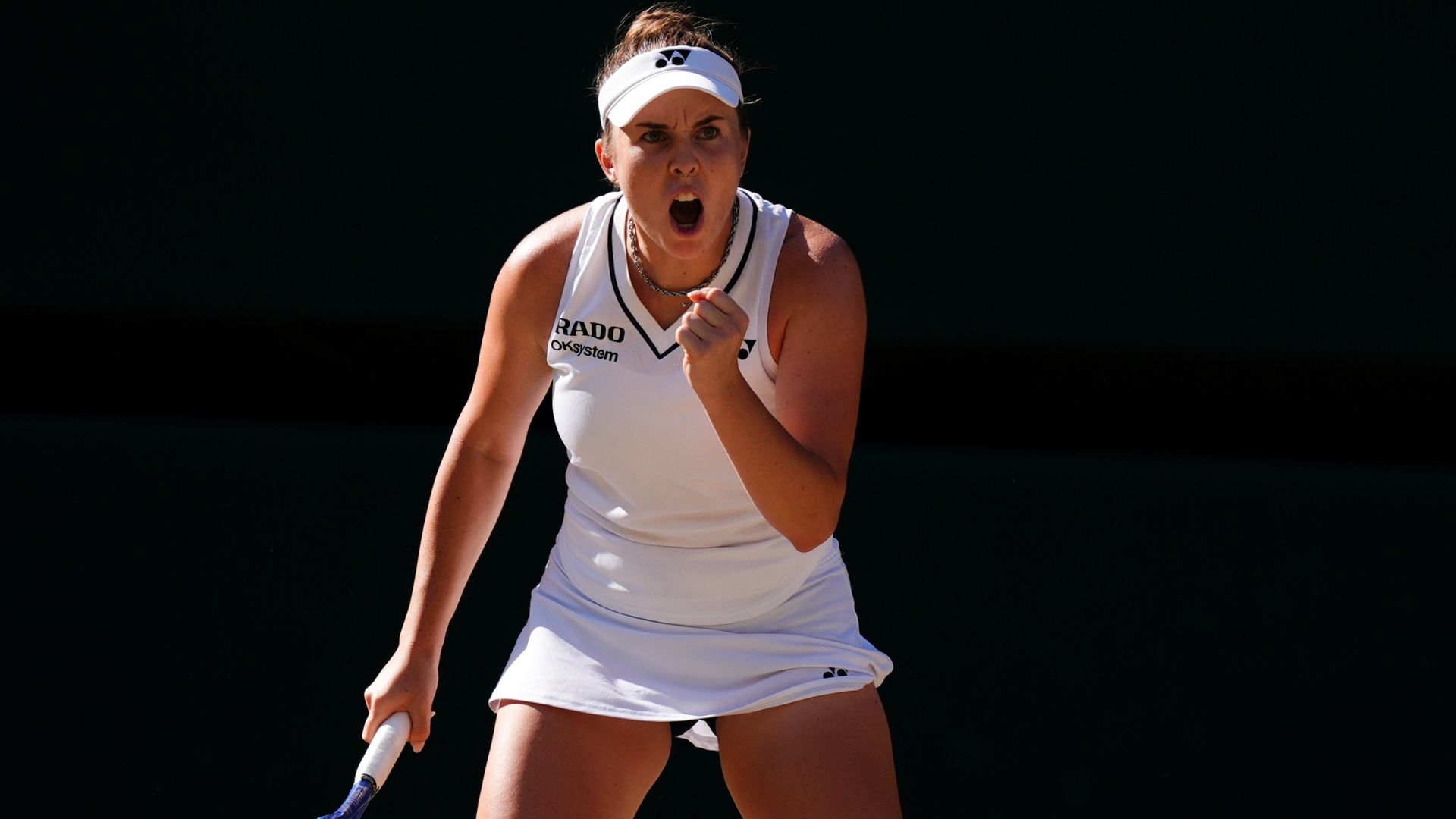
Linda Noskova’s 6-2, 5-7, 6-3 victory over Karolina Muchova in the 2026 Wimbledon singles final provides a masterclass in first-strike tennis, high-velocity rally control, and acute crisis management under psychological compression. At 21 years old, Noskova became the youngest women's champion at the All England Club since Petra Kvitova in 2011, continuing an unprecedented era of Czech domination where three of the last four grass-court majors have been claimed by players from the Czech Tennis Federation pipeline.
A technical dissection of the match reveals how elite baseline mechanics, aggressive return positioning, and tactical composure during a severe mid-match performance decline secured the Venus Rosewater Dish.
The Triad of First-Strike Superiority
Modern grass-court play demands immediate control of point geometry. Noskova’s opening-set dominance was built on three core mechanical advantages:
- Return-of-Serve Depth and Aggression: Noskova took the second-serve return inside the baseline, reducing Muchova’s reaction time by an estimated 0.15 to 0.20 seconds. By striking second-serve returns at an average hit point well inside the court, she consistently forced Muchova into defensive late-preparation stances.
- Forehand Wing Velocity: Rather than relying on high-margin topspin, Noskova executed flat, heavy forehands targeted down the line to Muchova's forehand wing, neutralizing Muchova's preferred slice variations before they could establish a rhythm.
- First-Serve Efficiency: In the opening set, Noskova won 82 percent of her first-serve points. The placement targeted the T-intersection on the ad court, denying Muchova the chance to chip returns crosscourt to extend rallies.
Muchova’s primary weapon—her court-craft and slice-and-volley variation—requires time to dictate tempo. Noskova systematically eliminated that time during the first set, taking a 6-2 lead by truncating rallies to four shots or fewer.
The Psychological Bottleneck and Crisis Recovery
A match that appeared destined for a swift conclusion transformed into a high-stress endurance test during the second set. Leading 5-2, Noskova reached five separate match points, all of which were neutralized by Muchova through high-risk second-serve deliveries and precise net approaches.
When an athlete experiences a sudden drop in closing efficiency, two distinct failure modes occur:
- Deceleration of Stroke Mechanics: The player tightens racquet head speed, resulting in shallow ball depth that allows the opponent to step forward.
- Predictable Directional Choices: Under cognitive stress, players default to crosscourt safety rather than down-the-line attack angles, allowing defenders to anticipate movement.
Muchova capitalized on Noskova’s temporary mechanical hesitation, winning five consecutive games to steal the second set 7-5.
The decisive analytical shift occurred at the start of the third set. Rather than doubling down on conservative baseline play, Noskova reset her baseline stance, increasing her average groundstroke speed back to first-set levels. She restored her serve-plus-one combination, earning early control of the court and breaking Muchova early to establish a lead she would not surrender, finally converting her sixth championship point to seal the 6-3 set.
Structural Dominance of the Czech Tennis Ecosystem
Noskova’s victory is not an isolated variance; it is the output of a repeatable talent-development pipeline. The Czech Republic has produced three Wimbledon champions in four years—Marketa Vondrousova (2023), Barbora Krejcikova (2024), and Linda Noskova (2026)—alongside persistent top-ten contenders like Muchova.
The system relies on specific operational advantages:
- Surface Diversity in Early Training: Czech regional academies prioritize fast indoor hard courts and clay during developmental years, instilling both technical footwork and immediate forward transition mechanics.
- Peer-Level Match Conditions: High density of WTA-ranked players practicing within small geographic radii creates high-stress competitive environments daily, reducing the transition shock of Grand Slam pressure.
- Biomechanical Efficiency over Raw Power: Czech coaching models emphasize kinetic chain sequencing, maximizing power output relative to body weight while minimizing cumulative injury stress.
Strategic Outlook for Tour Dominance
To sustain top-ten status and contest future major finals, Noskova must optimize two key tactical metrics:
- Second-Serve Win Percentage: While her first serve remains an elite weapon, her second-serve win rate drops significantly against high-tier returners who attack soft central placement.
- Mid-Court Volley Transition: As opponents adapt to her baseline weight of shot, teams will employ deep backslice strategies. Developing a more reliable mid-court drive volley will prevent extended baseline exchanges on slower surfaces.
Noskova’s performance at SW19 confirms her status as a premier power player of her generation. Her capacity to absorb a major second-set collapse and re-establish primary strategic patterns in the third set demonstrates elite competitive resilience, establishing a clear template for hard-court and grass-court dominance in the years ahead.