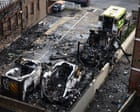
The trial commencing in Larissa is not merely an inquiry into a collision between two trains. It is a forensic autopsy of a state’s failure to protect its citizens through the basic implementation of modern safety technology. On February 28, 2023, a passenger train carrying over 350 people, many of them students returning from a holiday weekend, slammed head-on into a freight train on the same track near the Tempi Valley. The impact killed 57 people. While the immediate focus of the prosecution rests on the shoulders of a single stationmaster, the deeper reality involves years of ignored warnings, diverted funds, and a signaling system that existed only on paper.
Greece’s rail network was operating in a technological vacuum. For over a decade, the European Train Control System (ETCS) and the Global System for Mobile Communications-Railway (GSM-R) remained unfinished despite millions of euros in European Union subsidies intended for their completion. These are not luxury upgrades. They are the standard safety nets that prevent human error from turning into mass casualty events. Had Contract 717—the infamous agreement to restore signaling and remote control across the Athens-Thessaloniki line—been fulfilled, the trains would have automatically braked kilometers apart. Instead, they were being guided by hand, voice, and paper in an era of high-speed travel.
The Myth of the Lone Error
The government’s early narrative centered almost exclusively on "human error." This is a convenient shield for institutional negligence. To blame a stationmaster with minimal training for the deaths of 57 people is to ignore the layers of safety that are supposed to exist precisely because humans are fallible. In a functioning railway system, no single person should have the power to cause a head-on collision.
The stationmaster at Larissa was reportedly working alone on a night shift he was ill-equipped to handle. He was a new recruit, placed in a high-pressure node of the national artery after a truncated training period. However, focusing on his hand-turned keys ignores the fact that his console was partially blind. The local signaling system was malfunctioning. He was flying a jet with a broken altimeter, yet the airline—in this case, Hellenic Train and the state-owned OSE—kept the flight on the schedule.
Behind this individual failure lies a decade of brain drain and austerity. Experienced railway workers were pushed into early retirement or transferred to other government departments to balance books. The staff that remained was spread thin, often working double shifts without adequate rest. When you hollow out the human infrastructure of a high-risk industry, you aren't saving money. You are borrowing against the lives of the passengers.
The Ghost of Contract 717
If you want to understand why those two trains occupied the same track for twelve minutes without an alarm sounding, you have to look at the paperwork of Contract 717. Signed in 2014, this contract was meant to deliver a fully functional, automated safety system. By 2023, it was still a work in progress, mired in extensions, legal disputes, and technical incompatibilities between different contractors.
Investigations by the European Public Prosecutor’s Office (EPPO) have since highlighted a pattern of mismanagement. There are serious questions about how the funds were utilized and why the Greek Ministry of Transport allowed the line to operate at high speeds without the safety protocols required by EU law. The lack of a functioning "light" system meant that drivers were essentially operating on "sight," trusting the radio instructions of stationmasters. On a line where trains travel at 160 kilometers per hour, relying on sight is a death sentence.
The Greek railway regulatory body (RAS) was also largely toothless. It lacked the personnel and the political independence to shut down the line or impose the necessary sanctions to force compliance. This is a common theme in Greek infrastructure projects where the regulator is often funded or appointed by the very ministry it is supposed to oversee. The result is a culture of "good enough," where risks are managed through luck rather than logic.
The Evidence in the Dust
The trial must address the harrowing allegations of a cover-up at the crash site. Within days of the collision, the site was leveled with gravel and concrete. Why? Standard investigative protocol for a major transport disaster requires the preservation of the scene for months, if not years, to allow for the collection of trace evidence and chemical analysis.
Family members of the victims hired independent experts who found traces of volatile chemicals, such as xylene, at the site—substances not officially listed as being transported by the freight train. This has sparked a secondary firestorm of public anger. There is a persistent belief among the families that the freight train was carrying undeclared, illicit fuel, which would explain the massive fireball seen on CCTV footage—an explosion that many experts believe was too large to be caused simply by the trains' electrical transformers.
By paving over the site, the authorities may have permanently destroyed evidence that could explain why so many passengers burned to death rather than dying from the impact. This action wasn't just a logistical mistake. It was a breach of trust that has fueled a movement of nearly 1.5 million Greeks who signed a petition to strip ministers of their legal immunity.
The Silence of the Cabin
We must also look at the role of the train drivers. Posthumous recordings indicate a sense of routine unease. The drivers were well aware that the signaling was out. They had been complaining through their unions for years, even sending legal warnings to the ministry months before the crash. One such warning, sent in early 2023, explicitly stated that a major accident was "mathematically certain" if the current state of the tracks persisted.
The drivers were ignored. In a top-down political culture, whistleblowers are often treated as obstacles to progress or partisan agitators. The tragedy of Tempi is that the people who knew the system best were the ones the government listened to least. They were told to keep the trains running because the Athens-Thessaloniki line is the pride of the network—a symbol of a modernizing Greece.
But modernity is not just a shiny locomotive. It is the invisible code in the signaling box. It is the redundant sensor that detects a train on a track. It is the culture that stops a train the moment a safety threshold is breached, regardless of the delay.
Europe’s Responsibility
While the trial is a Greek affair, the implications are European. The EU has poured billions into the "Trans-European Transport Network." If a member state can take those funds and fail to implement the safety standards they were meant to buy, the entire European rail safety framework is undermined.
The European Railway Agency (ERA) had issued reports flagging deficiencies in Greece's safety culture long before Tempi. Yet, the trains kept moving. This suggests a failure of oversight at the continental level. The EU's power is often financial, but once the money is spent, its ability to enforce actual day-to-day safety is surprisingly limited. This trial will be a test case for whether "administrative errors" at the ministerial level will be treated as the criminal negligence they are.
The Erosion of Public Trust
The political fallout has been massive, yet the core power structures remain largely intact. Following the crash, the Minister of Transport resigned, only to be re-elected to parliament months later, shielded by a law that makes it incredibly difficult to prosecute cabinet members for actions taken during their tenure.
For the families in the courtroom, this isn't about politics; it’s about the basic contract between a state and its people. You buy a ticket, you expect the tracks to be clear. You pay taxes, you expect the safety systems you funded to be installed. When that contract is broken so violently, the only thing that can begin to repair the damage is an unvarnished account of who allowed the system to rot from the inside out.
The defense will likely attempt to shift the focus back to the technicalities of the night—the specific radio calls, the exact minute the switch was turned incorrectly. But the prosecution must keep the lens wide. A single mistake at a station desk should never result in a graveyard. The true culprits are the ones who allowed a 19th-century operational model to govern a 21st-century rail line.
The trial is expected to last for months, if not years. It involves dozens of defendants, from local station officials to high-ranking executives at OSE and ERGOSE. But the ghost in the room will always be the missing signaling system. Every witness testimony must be weighed against that absence.
Watch the technical experts when they testify about the "black boxes" and the lack of telemetry. Their evidence will prove that the crash was not an accident in the traditional sense. It was a foreseeable event that was actively permitted by years of systemic neglect. The families are not just looking for a guilty verdict for a stationmaster; they are looking for an admission that the state failed in its most fundamental duty.
Contact your local representative to demand a public audit of all EU-funded infrastructure projects to ensure safety systems are not being traded for political expediency.