Habitat restoration fails when conservationists treat shelter as an aesthetic problem rather than a thermodynamic engineering challenge. When researchers in Australia deployed 3D-printed artificial rocks to house six endangered broad-headed snakes (Hoplocephalus bungaroides), four survived the trial period. That 66.7 percent survival rate in a degraded, bushfire-ravaged environment proves that synthetic microhabitats can replicate the exact thermal gradients and structural geometries required by apex ectotherms. To scale wildlife recovery across fragmented landscapes, conservation biology must shift from passive land protection to precision habitat manufacturing.
The Structural Deficit in Post-Fire Ecosystems
Wildfires and illegal bushrock harvesting strip sandstone outcrops of their primary ecological currency: thin, exfoliating rock slabs. Broad-headed snakes do not use random crevices; they require specific horizontal fissures that rest directly on exposed sandstone bedrock. Natural geological weathering takes centuries to fracture sandstone into these precise dimensions. When human collection or extreme thermal stress from megafires destroys these slabs, the ecosystem enters a structural bottleneck that natural succession cannot resolve within the lifespan of the resident reptile population.
Standard reforestation initiatives miss this entirely. Planting native flora restores canopy cover and stabilizes soil, yet it actively degrades habitat suitability for heliothermic reptiles by shading the rock outcrops they depend on for thermoregulation. Without direct solar radiation hitting the upper surface of a thin rock slab, the conductive heat transfer into the underlying crevice drops below the threshold required for metabolic function. Conservation interventions that ignore the physics of rock-to-rock conduction inevitably fail to retain target reptile populations.
The Three Pillars of Reptile Microhabitat Engineering
To replace natural sandstone slabs without introducing ecological liabilities, artificial shelters must satisfy three non-negotiable physical parameters.
Thermal Conductivity and Specific Heat Capacity
Natural Hawkesbury sandstone absorbs solar radiation during the day and releases it slowly after sunset. If a synthetic rock is fabricated from standard concrete or low-density polymer, it either overheats rapidly—cooking the occupant—or sheds heat too quickly after dusk, forcing the snake into premature torpor. The material matrix must mimic the thermal inertia of native stone, maintaining an internal crevice temperature that tracks the preferred body temperature of Hoplocephalus bungaroides (roughly 28°C to 32°C during active periods) while buffering against ambient temperature spikes.Crevice Geometry and Thigmotactic Security
Reptiles rely on thigmotaxis—physical contact with solid surfaces—to minimize evaporative water loss and deter predators. A crevice that is too wide allows mammalian predators like feral cats or foxes to reach inside, and it permits convective airflow that strips moisture from the animal's skin. A crevice that is too narrow physically excludes adult snakes. Effective artificial rocks utilize internal baffling and tapered apertures that restrict entry to animals matching the dorsoventral compression profile of the target species.Hydrological Permeability and Micro-Condensation
Dry air kills ectotherms faster than starvation. Natural sandstone is porous; it absorbs rainwater and releases moisture gradually into the sub-slab microclimate. Non-porous synthetic materials create desiccating chambers unless engineered with capillary channels or hygroscopic aggregates that trap ambient humidity and prevent lethal dehydration during extended Australian droughts.
Deconstructing the Six-Snake Trial
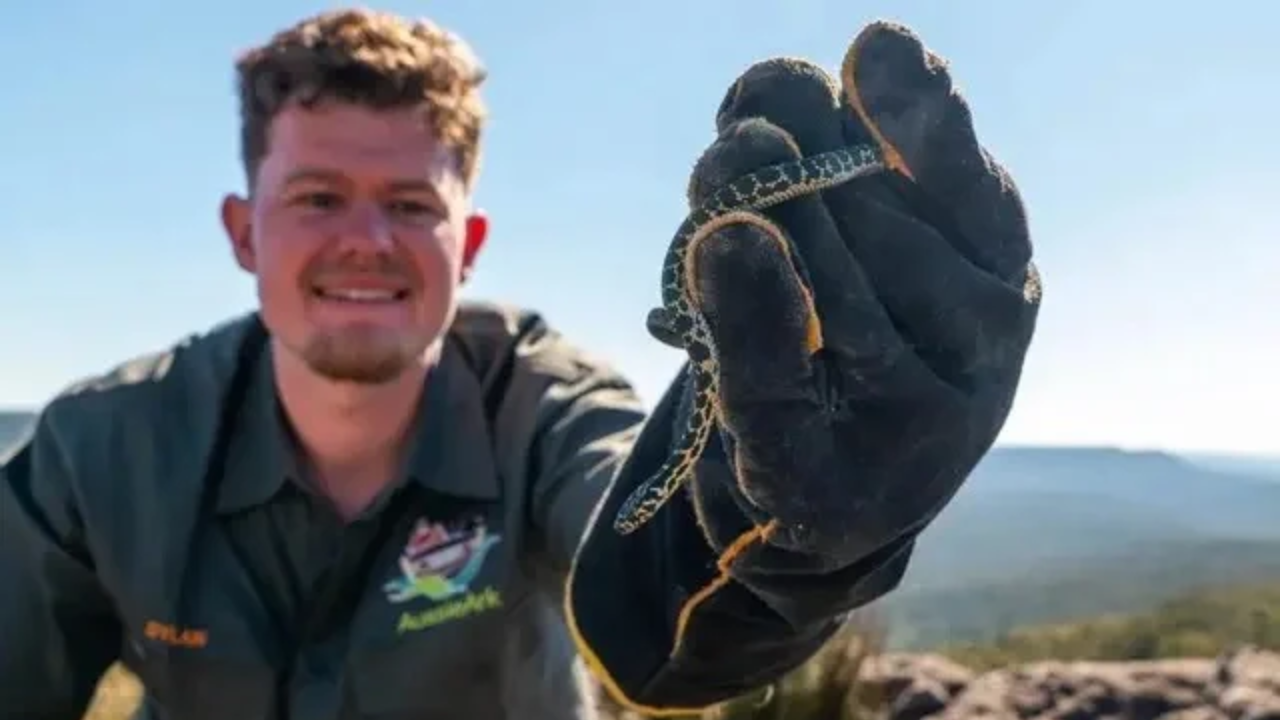
The Australian experiment tracked six endangered broad-headed snakes introduced into a habitat supplemented with custom-fabricated artificial rocks. Four individuals survived, establishing home ranges and utilizing the synthetic structures as primary diurnal retreats. While a sample size of six lacks the statistical power to establish definitive population-level mortality curves, the operational mechanisms revealed by both the survivors and the mortalities provide critical engineering feedback.
The four surviving snakes demonstrated immediate behavioral acceptance of the synthetic slabs. Ectotherms do not evaluate shelter based on material origin; they evaluate sensory inputs—specifically thermal gradients, surface roughness, and spatial confinement. The surviving cohort located the artificial crevices, thermoregulated effectively within them, and avoided predation by native raptors and invasive mesopredators. This confirms that behavioral neophobia is not a barrier to synthetic habitat adoption when the physical cues match evolutionary expectations.
Analyzing the two mortalities separates design flaws from baseline ecological friction. In any translocation or field trial involving small vertebrates, predation and dispersal mortality occur naturally. If a snake leaves the microhabitat array to forage in adjacent woodland, it enters a high-risk zone unprotected by the engineered structures. The critical distinction lies in whether the two non-surviving individuals died inside the artificial rocks due to thermal or structural failure, or outside the array due to standard trophic pressures. Because the four survivors thrived within the exact same deployment parameters, the data points toward external predation or dispersal loss rather than systemic material failure.
Known Facts vs. Operational Hypotheses
Rigorous conservation management requires separating verified empirical outcomes from working assumptions before committing capital to mass production.
- Verified Fact: Four of six Hoplocephalus bungaroides survived in a habitat augmented with 3D-printed artificial rocks, proving that the prototypes do not induce acute toxicity, lethal hyperthermia, or absolute behavioral rejection.
- Verified Fact: Natural bushrock removal and severe wildfires have permanently reduced the carrying capacity of sandstone escarpments across New South Wales, creating an acute housing shortage for crevice-dwelling fauna.
- Operational Hypothesis: Mass-deploying synthetic rocks will increase the long-term carrying capacity and reproductive output of wild populations. Testing this requires multi-year demographic tracking to verify that snakes not only survive under artificial slabs, but also successfully mate, gestate, and recruit juveniles into the adult population.
- Operational Hypothesis: Artificial rocks can deter illegal poaching by flooding the landscape with heavy, anchored, or commercially valueless lookalikes. While plausible, poachers targeting the illegal pet trade may simply learn to identify the visual markers of synthetic units unless weathering pigments and surface textures achieve near-total visual mimicry.
The Economics of Precision Habitat Manufacturing
Traditional habitat restoration relies on manual labor and bulk raw materials—moving boulders by helicopter or hand-carrying quarried stone into remote national parks. Both methods carry prohibitive cost functions and severe ecological footprints. Quarrying natural sandstone to restore a degraded site simply transfers habitat destruction from one escarpment to another. Helicopter transport burns aviation fuel and requires cleared landing zones that fragment intact bushland.
Additive manufacturing and composite casting invert this cost structure. By scanning natural sandstone slabs with high-resolution LiDAR or photogrammetry, engineers capture the exact micro-topography of functional crevices. Once the digital mold is finalized, units can be cast on-site or transported in lightweight, modular components that assemble into heavy, predator-proof structures.
The Cost-Benefit Matrix of Deployment
Scaling from a six-snake proof-of-concept to landscape-level recovery demands strict unit economics.
Tooling and Digital Design (Fixed Cost)
Scanning natural outcrops and iterating CAD models to optimize thermal mass and aperture dimensions requires upfront capital. Once validated, the marginal cost of replicating the digital file is zero.Material Synthesis (Variable Cost)
Using locally sourced crushed sandstone aggregate bound with low-carbon cementitious polymers reduces transport weight and ensures the chemical and thermal signature of the artificial rock matches the surrounding geology.Installation and Anchoring (Labor Cost)
Poachers easily flip loose natural rocks, destroying the microhabitat in seconds. Artificial rocks must be engineered with subterranean anchor points or interlocking geometries that make manual removal impossible without specialized extraction tools. This turns a simple shelter into a permanent defensive fortification against illegal collection.
Limitations and Ecological Failure Modes
No engineered intervention operates without trade-offs. Treating artificial rocks as a universal fix for reptile decline introduces specific operational risks that field teams must actively manage.
First, structural permanence creates maintenance liabilities. Natural sandstone slabs eventually crack, erode, and merge into the soil profile. Synthetic polymers or high-strength composites can persist for decades or centuries. If a deployed batch exhibits a subtle design flaw—such as trapping rainwater and drowning occupants during unseasonal storms, or leaching microplastics under intense UV radiation—recovering thousands of anchored units from rugged terrain becomes a massive financial drain.
Second, artificial habitat arrays can inadvertently function as ecological traps. If conservationists cluster synthetic rocks too densely to simplify monitoring, they create unnatural prey concentrations. Invasive predators like red foxes (Vulpes vulpes) and feral cats (Felis catus) possess high spatial memory; once a predator learns that a grid of artificial slabs reliably houses snakes and velvet geckos (Amalosia lesueurii), it will patrol the grid systematically. Spatial dispersion must mimic natural geological randomness to prevent predators from optimizing their foraging routes.
Third, microhabitat restoration does not solve prey-base collapse. Broad-headed snakes feed heavily on velvet geckos, which also depend on thin sandstone crevices. If a wildfire incinerates the invertebrate community that sustains the geckos, dropping artificial rocks onto the scorched ridge will not save the snakes. Shelter deployment must be synchronized with trophic recovery; otherwise, apex predators will starve inside thermally optimized boxes.
The Strategic Execution Playbook
Conservation agencies and environmental engineering teams must transition immediately from small-scale biological trials to standardized, landscape-level deployment protocols.
Standardize the Thermal-Structural Spec
Publish open-source CAD files and material recipes validated by the four-snake survival cohort. Stop funding redundant prototyping across separate universities. Establish a baseline manufacturing standard that defines minimum thermal inertia, maximum aperture height, and UV-degradation thresholds for sandstone-mimicking composites.
Deploy Prey-First Seeding Arrays
Install artificial rock grids at least 12 to 18 months prior to reintroducing endangered snakes. Use this buffer period to allow native invertebrates and primary prey species like velvet geckos to colonize the crevices and establish stable breeding populations. Verify prey density through non-invasive environmental DNA (eDNA) swabs of the artificial crevices before releasing apex reptiles.
Implement Randomized Spatial Dispersion
Abandon uniform grid layouts. Use GIS terrain modeling to map natural fracture patterns on intact escarpments, then program deployment coordinates to replicate those exact stochastic clusters. Pair every synthetic rock installation with subterranean mechanical anchors to neutralize human poaching, ensuring the capital invested in habitat manufacturing yields multi-decade demographic returns.