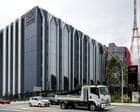
Sydney is currently the site of a quiet, high-stakes land grab that pits the global digital infrastructure boom against the basic needs of a growing city. Local councils across Western Sydney and the inner-city fringes are sounding alarms over a wave of massive datacentre developments that threaten to monopolize the power grid, stall critical housing projects, and fundamentally alter the livability of residential neighborhoods. At the heart of this conflict is a simple, brutal math: a single modern hyperscale facility can consume as much electricity as tens of thousands of homes, leaving a shrinking pool of resources for schools, hospitals, and apartments.
The tension has reached a boiling point in the corridors of Blacktown and Lane Cove, where local representatives are finding themselves outmatched by the sheer scale of international capital. This is not just a localized zoning dispute. It is a fundamental clash between the global demand for cloud computing and the local right to a functioning urban environment.
The Grid Crisis Hidden in Plain Sight
For years, the promise of the digital economy was one of weightless growth. We were told the cloud was ethereal. The reality on the ground in Western Sydney is anything but light. These facilities are massive concrete bunkers filled with heat-generating hardware that requires constant, intensive cooling and a non-stop supply of high-voltage electricity.
When a tech giant proposes a new 100-megawatt facility, they aren't just asking for a building permit. They are claiming a massive slice of the existing electrical capacity. In areas like the Eastern Creek industrial zone, the concentration of these facilities is so high that the local substations are hitting their limits. If the grid is saturated by server farms, the next planned residential high-rise or the next expansion of a local hospital simply cannot get the power it needs to operate.
The math is unforgiving. If a datacentre takes the remaining capacity of a local node, the cost of upgrading that infrastructure—often running into the hundreds of millions—falls into a murky territory of negotiation. Frequently, it is the community that waits while the infrastructure is reinforced, or worse, the housing development is shelved because the "power tax" makes the project unviable.
Housing Targets vs Hardware Warehouses
Australia is in the grip of a housing shortage that has moved past "concern" and into "emergency." The New South Wales government has set ambitious targets to increase density and affordability, particularly around transport hubs. However, you cannot build 50,000 new homes if the local energy network is already pledged to a cluster of blinking lights in a windowless warehouse.
Local councils are reporting a growing trend where developers of residential projects are being told that their connection to the grid will be delayed by years. Meanwhile, datacentres often secure their "load" years in advance, effectively camping on the capacity. This creates a perverse incentive where industrial land, which could be repurposed for mixed-use or high-density living, is locked away by a low-employment industry that provides almost no benefit to the immediate streetscape.
A datacentre might occupy ten hectares of land but employ only thirty people. Compared to a manufacturing hub or a commercial office block, the economic density is incredibly thin. We are trading away the physical space for our citizens to live in exchange for being the "server room" of the Asia-Pacific, with very little of that wealth trickling down to the local hardware store or cafe.
The Health Cost of the Heat Island
Beyond the invisible drain on the grid, there is the very tangible issue of heat and noise. Datacentres are essentially giant radiators. The cooling systems required to keep servers from melting down involve massive arrays of fans and chillers that run 24 hours a day, seven days a week.
Acoustic Pollution
For residents living on the periphery of these industrial zones, the noise is a constant, low-frequency hum. It is a sound that doesn't stop. Traditional industrial neighbors—like warehouses or logistics hubs—usually go quiet at night. Datacentres do not. This persistent acoustic load has been linked in numerous urban studies to increased stress levels and sleep disruption. When councils approve these sites near residential boundaries, they are often using outdated noise modeling that fails to account for the way low-frequency vibrations travel through modern suburban architecture.
Thermal Exhaust
Then there is the heat. In a region like Western Sydney, which already suffers from extreme summer temperatures and a lack of canopy cover, the addition of massive heat-rejecting infrastructure is a genuine public health concern. These buildings do not just consume energy; they dump waste heat directly into the local atmosphere. In a heatwave, a cluster of datacentres can contribute to a localized "heat island" effect, raising the ambient temperature for surrounding streets by several degrees. This isn't a minor inconvenience. It is a factor that increases the risk of heatstroke for the elderly and puts even more strain on the residential air conditioning systems that are already struggling with high power prices.
Water Consumption and the Hidden Scarcity
While electricity dominates the headlines, the water usage of these facilities is the next looming scandal. Many older or less efficient datacentres use evaporative cooling systems. In peak summer, a large facility can go through millions of liters of potable water every day to keep its systems cool.
In a country defined by its cycles of drought, using drinking-quality water to cool servers that are processing global advertising data or high-frequency trading algorithms is a hard sell to a public that has lived through Level 4 water restrictions. Some newer facilities are moving toward "closed-loop" systems or air-cooling, but the legacy of existing approvals means many thirsty giants are still planned for the Sydney basin. The question of who gets priority during the next inevitable drought—the local parks and residents or the international server farm—remains unanswered by current policy.
The Regulatory Vacuum
The primary reason councils are fearful is that they feel powerless. Under current NSW planning laws, many of these large-scale projects are classified as State Significant Development. This means the local council, the body most in tune with the immediate impacts on their streets, is often sidelined. The decision-making power moves to a state level where the "macro" benefits of being a regional tech hub often outweigh the "micro" misery of the people living next door.
There is a distinct lack of a cohesive "Datacentre Strategy" that mandates where these buildings should go. Instead of being funneled toward remote areas with dedicated renewable energy sources, they are being allowed to cluster in suburban Sydney because it is cheaper for the providers to hook into the existing urban fiber and power networks.
Reclaiming the Urban Balance
The solution isn't to ban datacentres. We are all users of the services they provide. The solution is to stop treating them as "just another warehouse." They are a unique class of high-impact infrastructure that requires a unique regulatory framework.
First, the "first-come, first-served" approach to power allocation must end. There needs to be a reserved capacity for residential and essential services that cannot be traded away to industrial users. If a datacentre wants to set up shop in a power-constrained area, they should be required to bring their own energy to the table—whether that’s through massive on-site battery storage or off-site renewable investment that adds new capacity to the grid rather than just siphoning off what’s left.
Second, the planning process must mandate strict "Heat and Noise" offsets. If a facility is going to increase the local ambient temperature, the developer should be on the hook for massive tree-planting programs or the installation of cooling infrastructure in the surrounding community. We need to stop allowing global tech firms to externalize their costs onto the lungs and nerves of Sydney residents.
The current trajectory is unsustainable. If we continue to prioritize the "Cloud" over the cul-de-sac, we will end up with a city that is digitally connected but physically unlivable. Sydney needs to decide if it is a place for people to reside or merely a place for processors to hum.
State planning authorities must immediately reclassify datacentre power requirements as secondary to residential zoning.