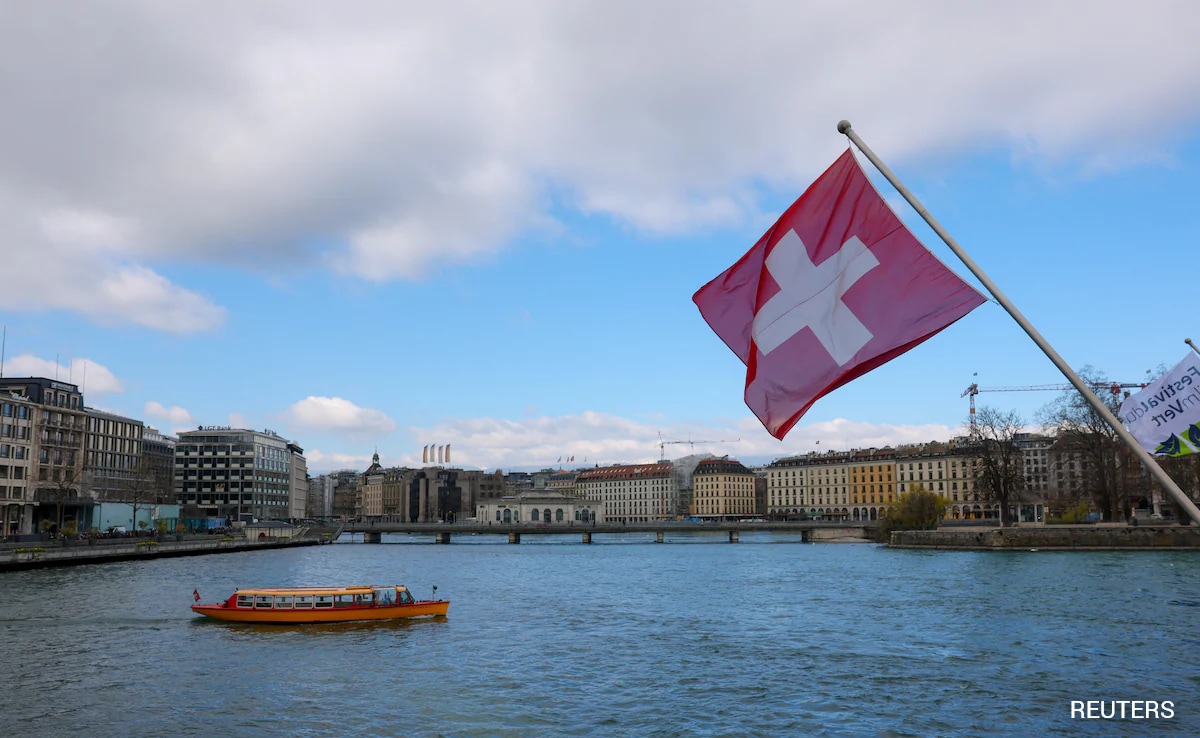
Switzerland is hitting a wall. You can feel it on the packed S-Bahn trains in Zurich and see it in the skyrocketing rents in Geneva. Now, a massive chunk of the Swiss public wants to pull the emergency brake. A new survey shows a clear majority of Swiss voters support the "No to 10 Million" initiative, a radical plan to cap the national population before it hits double digits. It’s not just a fringe movement anymore. It’s a mainstream roar.
Most people think Switzerland is just about chocolate and secretive banks. They’re wrong. Right now, the country is the front line of a global debate about how much growth a small nation can actually handle. The initiative, pushed primarily by the Swiss People’s Party (SVP), aims to keep the permanent resident population under 10 million until 2050. If you look at the numbers, we’re already at about 9 million. That doesn't leave much breathing room.
This isn't just about xenophobia or "keeping people out." It’s about infrastructure, ecological limits, and the very identity of the Swiss Confederation. When you pack more people into a mountainous country with limited buildable land, things break. Prices go up. Nature gets paved over. The Swiss are realizing that "endless growth" is a fairy tale that ends in a nightmare of concrete.
Why the 10 Million Limit is Winning Hearts
The Swiss don't do things by halves. When they get worried, they organize. The 20 Minuten/Tamedia survey found that 54% of respondents back the initiative. That’s huge. In the world of Swiss direct democracy, a lead like that this early in the game is a massive signal to the federal government in Bern. People are tired of seeing their quality of life dip while GDP numbers look "good" on a spreadsheet.
I’ve looked at the data from the Federal Statistical Office, and the trajectory is steep. Switzerland has one of the highest immigration rates in Europe relative to its size. While the economy needs workers, the average citizen is looking at their commute and their grocery bill and saying, "Enough."
The initiative isn't just a suggestion. It’s a legal framework. If the population hits 9.5 million, the government has to start taking measures. If it hits 10 million, the Swiss would be forced to tear up international agreements, including the free movement of persons with the European Union. That’s the "nuclear option." It’s bold, it’s risky, and a majority of the country seems to think it’s necessary.
The Cost of Staying Small
You can’t just shut the gates without consequences. Critics of the initiative, mostly from the business sector and the Green Liberal parties, are terrified. They argue that Switzerland’s wealth is built on foreign talent. From the scientists at Novartis to the people cleaning the hotels in Interlaken, the country runs on labor it doesn't produce domestically.
The Swiss economy has a massive "help wanted" sign permanently taped to its front door. If the population is capped, who does the work? Labor shortages lead to wage-price spirals. It could make the already expensive Swiss lifestyle completely unaffordable for the middle class.
There's also the EU problem. Switzerland isn't an island, even if it acts like one. The "Bilateral I" agreements with Brussels are a package deal. If the Swiss stop free movement to control their population, the EU might pull the plug on research cooperation, student exchanges, and trade perks. It’s a high-stakes game of chicken. The SVP knows this. They don't care. They think the sovereignty of the Swiss border is worth the economic friction.
Housing and the Concrete Jungle
Let’s talk about the real reason your rent in Lausanne is insane. It’s supply and demand. Switzerland is tiny. You can’t build on a glacier, and you can't build on a vertical cliff side. That leaves the Plateau, which is already disappearing under a layer of asphalt.
Environmentalists are torn. On one hand, more people means more carbon, more waste, and less biodiversity. On the other hand, the "No to 10 Million" crowd isn't exactly the Fridays for Future demographic. It’s a strange alliance. You have traditional conservatives wanting to preserve the "Heimat" and eco-conscious citizens wanting to stop urban sprawl. They’ve found common ground in the idea that 10 million is the hard limit for the Swiss ecosystem.
Breaking Down the Survey Results
The Tamedia poll didn't just show a "yes" or "no." It showed a deep divide in how people view the future. Interestingly, support isn't just coming from the rural cantons. Even in urban centers, the "yes" side is gaining ground.
- SVP Supporters: Nearly 100% in favor. No surprise there.
- FDP (The Liberals): Surprisingly split. The pro-business wing hates the idea, but the base is worried about social cohesion.
- The Left: Mostly against it, citing human rights and the need for a diverse workforce, but even here, the "no" isn't as firm as it used to be.
The sentiment is shifting because the problems are visible. When you can't find a seat on the train for the third day in a row, you stop caring about what the Chamber of Commerce says about "economic vitality." You just want to sit down.
What Happens if the Initiative Passes
If this goes to a national vote—and it will—and it passes, the Swiss government will be in a bind. They’ll have to renegotiate with an EU that is already tired of Swiss "cherry-picking."
The first step would be a tightening of family reunification rules. Then, a crackdown on asylum seekers. Finally, the hard quotas for workers from the EU. It would be a fundamental shift in how Switzerland interacts with the world. It’s a pivot from "global hub" back to "managed alpine fortress."
Don't think for a second that this is just a Swiss quirk. Countries across the West are watching. If the wealthiest, most stable country in Europe decides it’s full, it gives permission for everyone else to say it too. It’s a challenge to the very idea that a nation must grow to survive.
Steps for the Concerned Resident
If you’re living in Switzerland or planning to move there, you can’t ignore this. The "10 million" mark isn't some distant target. At current rates, we hit it well before 2040.
- Watch the Parliament: The Federal Council will likely come up with a "counter-proposal." They’ll try to offer a "lite" version of the cap to satisfy voters without blowing up the EU treaties.
- Follow the Housing Market: If the initiative gains more momentum, expect a rush on property. If people think the gates are closing, they’ll want to get settled now.
- Learn the Local Language: Integration is the second half of this debate. The push for a cap is partly fueled by a feeling that the "Swiss way of life" is being diluted. Showing you’re part of the culture goes a long way in de-escalating the tension.
The debate over the 10 million cap is really a debate about what kind of country Switzerland wants to be. Is it a high-speed economic engine or a preserved mountain sanctuary? You can't have both. The Swiss are about to choose, and they seem to be leaning toward the sanctuary.
Expect the rhetoric to get louder. The SVP has already collected the necessary signatures. The vote is coming. It’s time to decide if the "Swiss Miracle" can survive a hard limit on its size. If you think the status quo is sustainable, you’re not paying attention to the people on the street. The majority has spoken, and they want their space back.