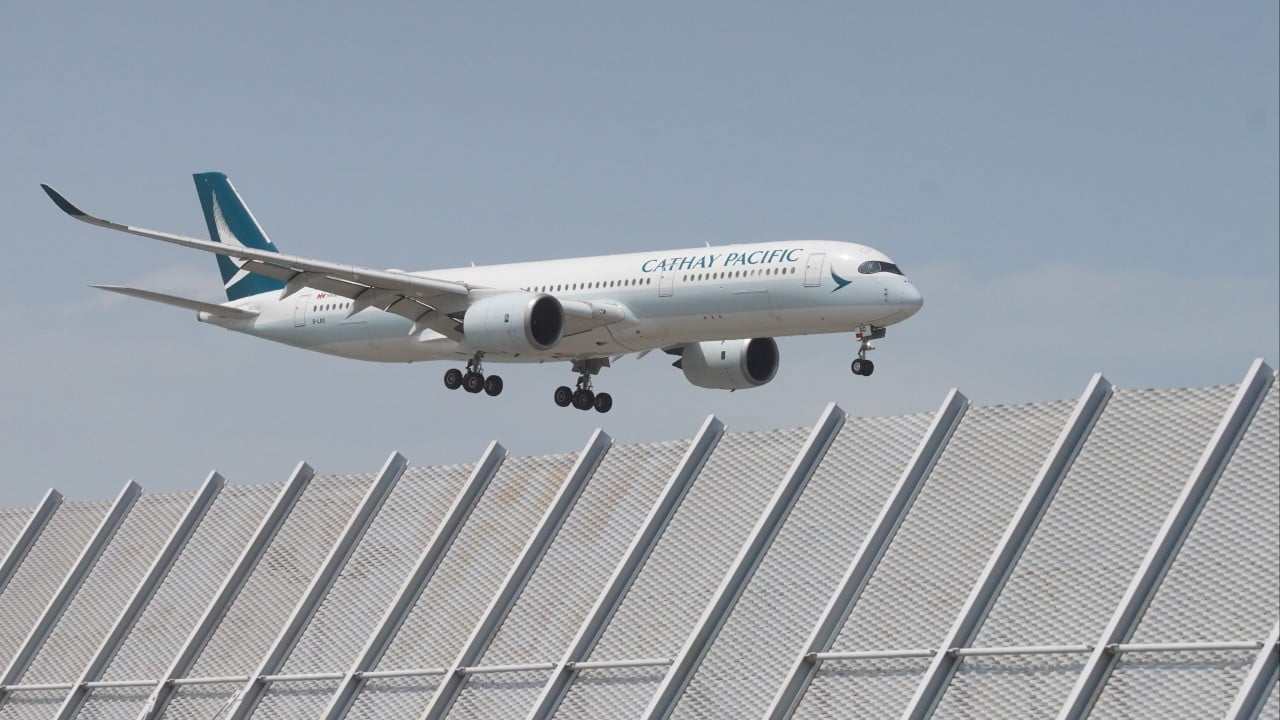
Swire Pacific has cashed in a portion of its chips, offloading a slice of its Cathay Pacific stake for HK$1.8 billion. While the surface-level narrative suggests a simple need for working capital, the maneuver signals a deeper tactical shift in how one of Hong Kong’s last great hongs manages its most volatile asset. This isn’t a retreat or a vote of no confidence. It is a calculated harvest. After years of pouring billions into a grounded airline during the pandemic, Swire is finally extracting value now that Cathay is back in the black and paying dividends.
The sale of roughly 116 million shares reduces Swire’s holding from 45% to approximately 43.2%. On paper, the HK$1.8 billion windfall bolsters a balance sheet that has seen significant pressure from a sluggish property market and the capital-intensive demands of its beverages and aviation divisions. But for those watching the boardroom, the timing is the real story. Cathay Pacific recently resumed dividend payments and bought back the HK$19.5 billion in preference shares held by the Hong Kong government. Swire is seizing the moment of peak liquidity to rebalance its own books.
The Cost of Loyalty and the Price of Recovery
To understand why Swire is selling now, one has to look back at the abyss of 2020. Cathay Pacific was burning through cash at a rate that would have incinerated a lesser carrier. Swire, alongside Air China and the local government, acted as the backstop. They didn't just support the airline; they anchored it. That loyalty came at a massive opportunity cost. While other conglomerates were pivoting toward high-growth tech or defensive infrastructure, Swire was tied to a fleet of parked planes in the Australian desert.
The recovery has been sharp. Cathay reported a profit of HK$9.8 billion for 2023, a staggering swing from the HK$6.6 billion loss the year prior. This turnaround transformed Cathay from a liability into a liquid asset. By selling a 1.8% stake, Swire gains immediate liquidity without losing its grip on the steering wheel. It remains the controlling shareholder, maintaining a comfortable margin over Air China’s approximately 30% stake.
Reallocating the War Chest
Where does the HK$1.8 billion go? Swire is currently navigating a complex period for its property arm, Swire Properties. The commercial real estate market in Hong Kong and Mainland China is facing a structural reset. Vacancy rates in Grade A office towers are at historic highs, and retail rents are no longer the guaranteed cash machines they once were. Swire is committed to a HK$100 billion investment plan for its property division over the next decade.
The capital from this share sale likely feeds into this long-term strategy. Swire Properties is aggressively expanding in Mainland China—specifically in Xi’an, Sanya, and Shanghai—while doubling down on its flagship Taikoo Place development in Hong Kong. In the eyes of Swire’s board, a dollar invested in a premium shopping mall or a prime office hub may offer more stable long-term returns than that same dollar tied up in an airline stake that exceeds what is necessary for control.
The Air China Tension
The elephant in the room is always Air China. The relationship between Swire and the Beijing-controlled national carrier is a marriage of necessity. Air China holds roughly 29.99% of Cathay. Under Hong Kong’s takeover rules, hitting 30% triggers a mandatory general offer. Air China has shown zero appetite for that level of financial commitment, yet it remains the logical eventual suitor if Swire ever truly walked away.
Swire’s small sale does not bridge the gap for Air China. It merely shifts the math of the minority float. However, it does highlight a shift in power dynamics. For years, Swire was the protector of the brand and its British heritage. Now, the airline is a high-performing financial instrument. This sale demonstrates that Swire views Cathay as an investment to be optimized, not an heirloom to be guarded at any cost.
Dividends as a Double-Edged Sword
Cathay Pacific’s return to the dividend registry is a milestone. It paid its first interim dividend since 2019 earlier this year. For Swire, this provides a recurring stream of income. So why sell shares and sacrifice future dividend payouts on that 1.8%?
The answer lies in the cost of debt. Interest rates have remained higher for longer than many anticipated. While the Hong Kong Dollar is pegged to the U.S. Dollar, the borrowing costs for major conglomerates have risen sharply since the zero-rate era. Raising HK$1.8 billion through equity rather than debt is a shrewd move for a company looking to keep its gearing ratios in check. It allows Swire to pay down high-interest debt or avoid new borrowing for its property projects.
A Signal to the Market
Investors often view a stake sale by a major parent company as a bearish signal. In this case, the market reaction was muted, suggesting that the move was priced in or understood as a standard treasury operation. Swire is effectively saying that 43% ownership is just as good as 45%.
The move also increases the "free float" of Cathay shares. This is a technical detail that matters to institutional investors. A larger float often leads to better liquidity and more accurate price discovery. By trickling these shares into the market, Swire might actually be helping Cathay’s long-term stock performance by making it easier for large funds to enter and exit positions without causing massive price swings.
The Operational Reality of Cathay Today
Cathay Pacific is not the same airline it was before the pandemic. It has a leaner workforce, a simplified fleet, and a more aggressive focus on its low-cost wing, HK Express. The cargo division continues to be a massive profit driver, benefiting from the e-commerce boom out of South China.
Swire knows that the "easy" gains of the post-reopening surge have been captured. The airline industry is now entering a phase of normalization. Fuel prices are volatile, and competition from Mainland Chinese carriers—who are adding international capacity at a rapid clip—is intensifying. Swire’s decision to take some money off the table now reflects a pragmatic view of the aviation cycle. They are selling into strength.
Strategic Divergence
Historically, Swire was a polymath conglomerate. It did everything from shipping to sugar. Today, it is narrowing its focus. The sale of Swire Coca-Cola’s U.S. operations for nearly US$4 billion in 2023 was the first major signal. That move was about refocusing on the Asia-Pacific region and the core beverage markets of China and Southeast Asia.
Selling a portion of the Cathay stake is part of the same playbook. Swire is becoming more agile. It is no longer interested in being a passive holder of massive, static positions. It is actively managing its portfolio to ensure that capital is always flowing toward its highest-conviction bets.
Managing the Hong Kong Identity
There is a political layer to this transaction that cannot be ignored. Cathay Pacific is the flag carrier of Hong Kong, but its identity is inextricably linked to its British management and Swire’s historic presence. By maintaining a 43% stake, Swire remains the clear leader.
However, the gradual reduction of exposure allows Swire to insulate itself from future geopolitical shocks. If the aviation sector becomes a focal point for further regional friction, Swire’s total financial vulnerability is marginally lower. It is a subtle de-risking strategy that doesn't compromise their operational control or their seat at the table.
The Bottom Line for Stakeholders
For the individual investor in Cathay Pacific, Swire’s sale is a non-event in terms of operations. The planes will fly, the routes will expand, and the management team remains in place. For Swire Pacific shareholders, it is a sign of fiscal discipline. It shows a management team that isn't sentimental about its holdings.
The transaction highlights a broader trend in the Hong Kong business community: the transition from survival to optimization. Swire isn't selling because they need to keep the lights on. They are selling because they found a better use for HK$1.8 billion than letting it sit in an airline that has already delivered its primary recovery gains.
Keep a close eye on the Swire Properties reports in the coming two quarters. If that HK$1.8 billion is immediately deployed into a new land premium or an acquisition in the Greater Bay Area, the logic of this trade will be undeniable. Swire is simply trading air for land.
Would you like me to analyze the latest capital expenditure reports for Swire Properties to see where this cash is likely being deployed?


