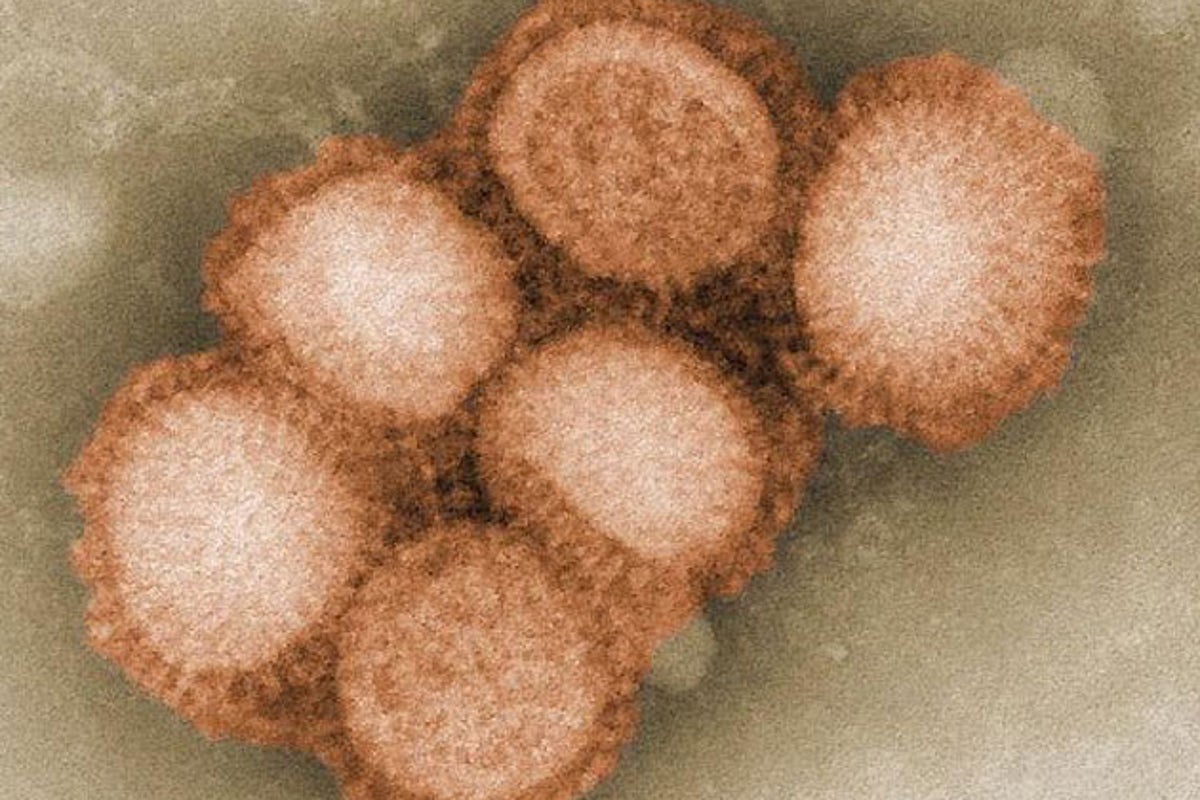
The headlines are predictable. A single farm worker in Spain tests positive for a variant of H1N1. The word "suspected" is doing the heavy lifting in every lead paragraph. Media outlets start dusting off the 2009 pandemic playbook. Global health authorities issue statements that say everything and nothing simultaneously.
Stop falling for the cycle.
Every time a "suspected human-to-human transmission" report hits the wires, the public is led to believe we are one sneeze away from a global shutdown. This isn't science; it’s narrative management. If you want to understand what is actually happening in the barns of Spain or the labs of the CDC, you have to stop looking at the virus and start looking at the incentives.
The Myth of the Jump
The prevailing consensus suggests that every time a virus moves from a pig to a human, we are witnessing a freak biological accident that threatens civilization. This is fundamentally wrong.
Zoonotic "spillover" isn't a rare event. It’s a constant background noise. In rural agricultural hubs, humans and livestock have been swapping genetic material for centuries. Most of these events are biological dead ends. The virus enters a human host, realizes it doesn't have the right keys to the lock for efficient replication, and dies out.
The Spain case is being framed as a terrifying "suspected transmission" because two people on the same farm got sick. Let’s look at the logic that the mainstream reports ignore:
- Shared Exposure vs. Serial Transmission: If two people work in the same dust-filled barn with the same group of infected swine, they are likely to get sick from the pigs, not each other. Labeling this as "human-to-human" before sequencing proves a mutation for human adaptation is intellectually dishonest.
- Viral Fitness Penalties: Evolution isn't free. When a virus adapts to move between humans, it often loses its "fitness" or virulence in the process. The "deadlier and more contagious" trope is a Hollywood invention. In reality, $R_0$ (the basic reproduction number) and pathogenicity often have an inverse relationship in early-stage zoonosis.
The Surveillance Trap
We are finding more cases because we are looking harder, not because the world is getting more dangerous.
I’ve watched public health budgets balloon based on "preparedness" for events that have a statistical probability lower than a meteor strike. When Spain reports a case, it isn't necessarily because the virus has changed; it’s because the diagnostic sensitivity has reached a point where we can detect a fragment of viral RNA in a person who has nothing more than a mild cough.
We are over-diagnosing the "threat" while under-evaluating the actual risk. By the time a "suspected" transmission is flagged, the window for containment has usually passed anyway, yet we maintain this theater of urgency to justify the existence of massive surveillance infrastructures.
The 2009 Ghost
The industry is still haunted by the 2009 H1N1 pandemic. That year was a textbook example of how to overreact. The WHO declared a Phase 6 pandemic—the highest level—for a virus that turned out to be less lethal than many seasonal flu strains.
Governments spent billions on stockpiling vaccines and antivirals like Tamiflu, much of which ended up in incinerators after expiring. The "contrarian" take then, which has since been proven by data, was that the panic was a windfall for pharmaceutical giants and a credibility disaster for public health.
When you see reports of a "suspected" case today, you are seeing a system trying to avoid being blamed for missing "The Big One." It’s defensive medicine on a global scale. They would rather terrify 7 billion people and be wrong than stay calm and be blamed for a single localized outbreak.
Why "Suspected" Means Nothing
In the world of epidemiology, "suspected" is a junk term used to bridge the gap between a lack of data and a deadline for a press release. To prove human-to-human transmission, you need more than two sick people in proximity. You need:
- Phylogenetic Evidence: A clear genetic trail showing the virus mutated specifically to bind to human upper respiratory receptors ($\alpha 2,6$ linked sialic acids).
- Contact Tracing Integrity: Absolute certainty that the "secondary" case had zero contact with the original animal source. In a farm environment, that certainty is impossible.
The Spanish health authorities know this. The WHO knows this. But "Farmers Exposed to Pig Flu" doesn't get the same funding or clicks as "Human Transmission Suspected."
Stop Worrying About the Virus, Start Worrying About the Response
The real danger in these reports isn't the H1N1 variant. It’s the policy creep that follows.
Every "suspected" outbreak is used as a stalking horse for:
- Mandatory Livestock Culling: Destroying the livelihoods of small farmers based on "precautionary" models that are frequently flawed.
- Centralized Health Surveillance: Pushing for digital health passports and tracking systems that never seem to go away once the "emergency" subsides.
- Resource Misallocation: Diverting funds from actual killers—like heart disease, basic sanitation, and standard seasonal flu—into the black hole of "pandemic prevention" for hypothetical threats.
The Brutal Reality of Immunity
We have a massive blind spot regarding "Original Antigenic Sin." This is the phenomenon where your first exposure to a flu virus shapes your immune response for life. Most of the adult population has some level of cross-reactive immunity to H1N1 variants because we’ve been living with them since the 1918 Spanish Flu descendants took over the world.
A new swine flu variant isn't entering a "naive" population. It’s entering a population that has been battling H1-type viruses for over a century. Our immune systems aren't as helpless as the "suspected transmission" articles want you to believe.
The Strategy for the Sane
If you're reading these reports and feeling a sense of dread, you're the victim of a refined psychological operation. Here is how you should actually interpret the news out of Spain:
- Ignore the Word "Suspected": If it isn't "confirmed and sustained," it’s noise.
- Check the Severity: Are people dying, or are they just testing positive? A "case" is not an "illness." In the Spanish report, the individuals had mild symptoms. That’s not a pandemic; that’s a Tuesday.
- Follow the Money: Look at which diagnostic companies and vaccine manufacturers see a stock bump the day these reports are released.
The industry wants you in a state of perpetual "preparedness" because a prepared population is a compliant and profitable one. They treat every viral flicker like a forest fire to ensure the fire department’s budget never gets cut.
We are being sold a version of biology where every mutation is a threat and every sneeze is a catastrophe. It’s a sanitized, terrified view of the world that ignores the reality of how humans and viruses have co-existed for millennia.
The Spanish "outbreak" isn't a warning sign of a new pandemic. It’s a reminder that the public health machine is bored and looking for a reason to flex its muscles. Don't give them the satisfaction of your anxiety.
Stop reading the headlines and start reading the data. Or better yet, look at the pigs—they’ve seen this movie before, and they know how it ends.
Turn off the alerts. Go outside. The world isn't ending; the news cycle is just hungry.