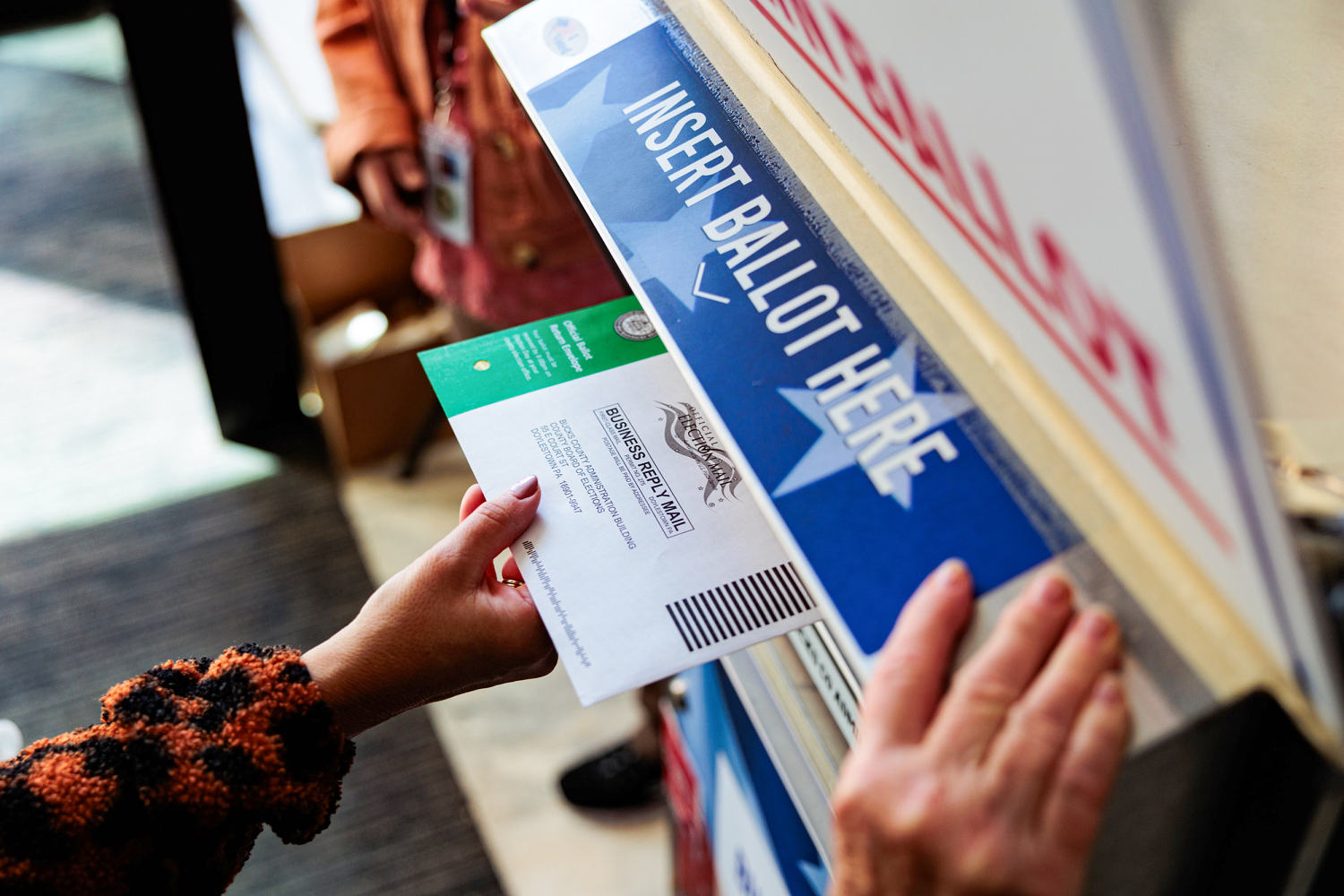
The Supreme Court is staring down a case that could fundamentally change how you vote this November. It's not just about some obscure legal technicality in Mississippi. It's about whether your ballot counts if the mail runs slow. On March 23, 2026, the justices began hearing oral arguments in Watson v. Republican National Committee. The core question is simple. Does "Election Day" mean the day you hand over your ballot, or the day the government receives it?
If you live in one of the 14 states that currently allow "grace periods" for mail-in ballots, this case is a big deal. For years, states like California, New York, and Illinois have counted ballots postmarked by Election Day even if they show up a few days late. Republicans and the Libertarian Party of Mississippi are suing to stop that. They argue that federal law sets one specific day for the election, and letting ballots "trickle in" afterward is illegal. Meanwhile, you can find related events here: The Calculated Silence Behind the June Strikes on Iran.
The Election Day Deadline Trap
The legal fight centers on three federal laws passed between 1845 and 1914. These statutes established the Tuesday after the first Monday in November as the official day for federal elections. The challengers, backed by the Trump administration, claim this creates a hard "receipt deadline." In their view, if an official doesn't have your ballot in hand by the time polls close on Tuesday, that's it. You're out of luck.
This isn't just a theoretical debate. During the 2024 election in Washington state alone, 127,000 ballots arrived after Election Day but within the legal grace period. If the Fifth Circuit’s ruling is upheld, every single one of those votes would be trashed in future cycles. Imagine doing everything right—requesting your ballot, filling it out, and getting it to the post office on Monday—only to have your voice silenced because of a logistics delay you can't control. To explore the complete picture, we recommend the detailed article by Associated Press.
Who Loses if Grace Periods Vanish
The impact isn't distributed equally. Critics of the lawsuit point out that certain groups rely heavily on these extra few days.
- Military and Overseas Voters: Soldiers stationed abroad often face unpredictable mail service. 15 states have special, more forgiving deadlines for them. A broad ruling could jeopardize those protections too.
- Rural Communities: If you’re miles from the nearest post office or in a state like Alaska where weather stops mail planes, a strict Tuesday deadline is a massive hurdle.
- The Elderly and Disabled: For those who can’t easily get to a polling place or a drop box, the mail is a lifeline.
The Republican National Committee argues that post-election counting "undermines trust" and leads to "chaos" when results flip days after the polls close. They want a definitive end to the cycle on Tuesday night. But election officials warn that forcing states to change their rules just months before the 2026 midterms will cause massive confusion.
The Fifth Circuit Shocker
How did we get here? A three-judge panel from the Fifth Circuit Court of Appeals—all Trump appointees—stunned legal experts by ruling that Mississippi’s five-day grace period violated federal law. They basically said that "holding" an election includes the receipt of the ballots.
Most lower courts had previously disagreed, arguing that "election" refers to the act of the voter choosing, not the paperwork being filed. Senior U.S. District Judge Louis Guirola Jr. initially upheld Mississippi's law, noting that Congress set a national day to prevent voters from being influenced by results in other states, not to stop the mail. The Supreme Court now has to decide which interpretation wins.
States Currently Allowing Post-Election Receipt
- California: Accepts ballots postmarked by Election Day if received within 7 days.
- New York: Allows a 7-day window.
- Mississippi: (The state in the crosshairs) Allows 5 business days.
- Washington: Allows nearly 3 weeks for ballots to arrive if postmarked on time.
- Texas: A very short 1-day grace period.
The 2026 Midterm Impact
We expect a decision by late June 2026. That timeline is intentional. It gives states just enough time (barely) to rewrite their playbooks before the November midterms. If the Supreme Court sides with the RNC, we’re going to see a mad dash to educate voters. "Postmarked by" will no longer be the gold standard. Instead, the new mantra will be "get it in early or don't bother."
Four Republican-led states—Ohio, Kansas, North Dakota, and Utah—already moved to eliminate grace periods last year. They aren't waiting for the justices to tell them what to do. They’re tightening the screws now.
What You Should Do Now
Don't wait for the Supreme Court to settle this if you plan on voting by mail this November. The safest move is to act as if the grace period doesn't exist.
- Request your ballot early: As soon as your state allows, get that paperwork in.
- Use a drop box: If your county has them, use them. It bypasses the postal service entirely and ensures your ballot is "received" the moment you drop it.
- Mail it a week early: If you must use the mail, don't wait until Monday. The USPS is reliable, but it isn't perfect.
- Track your ballot: Most states now have online portals where you can see when your ballot has been received and processed.
The "Election Day" meaning is about to get a lot narrower. Whether you think that’s a win for "election integrity" or a blow to "voter access," the reality is that the margin for error is shrinking. If you want your vote to count in 2026, you've got to play by the strictest possible interpretation of the clock.