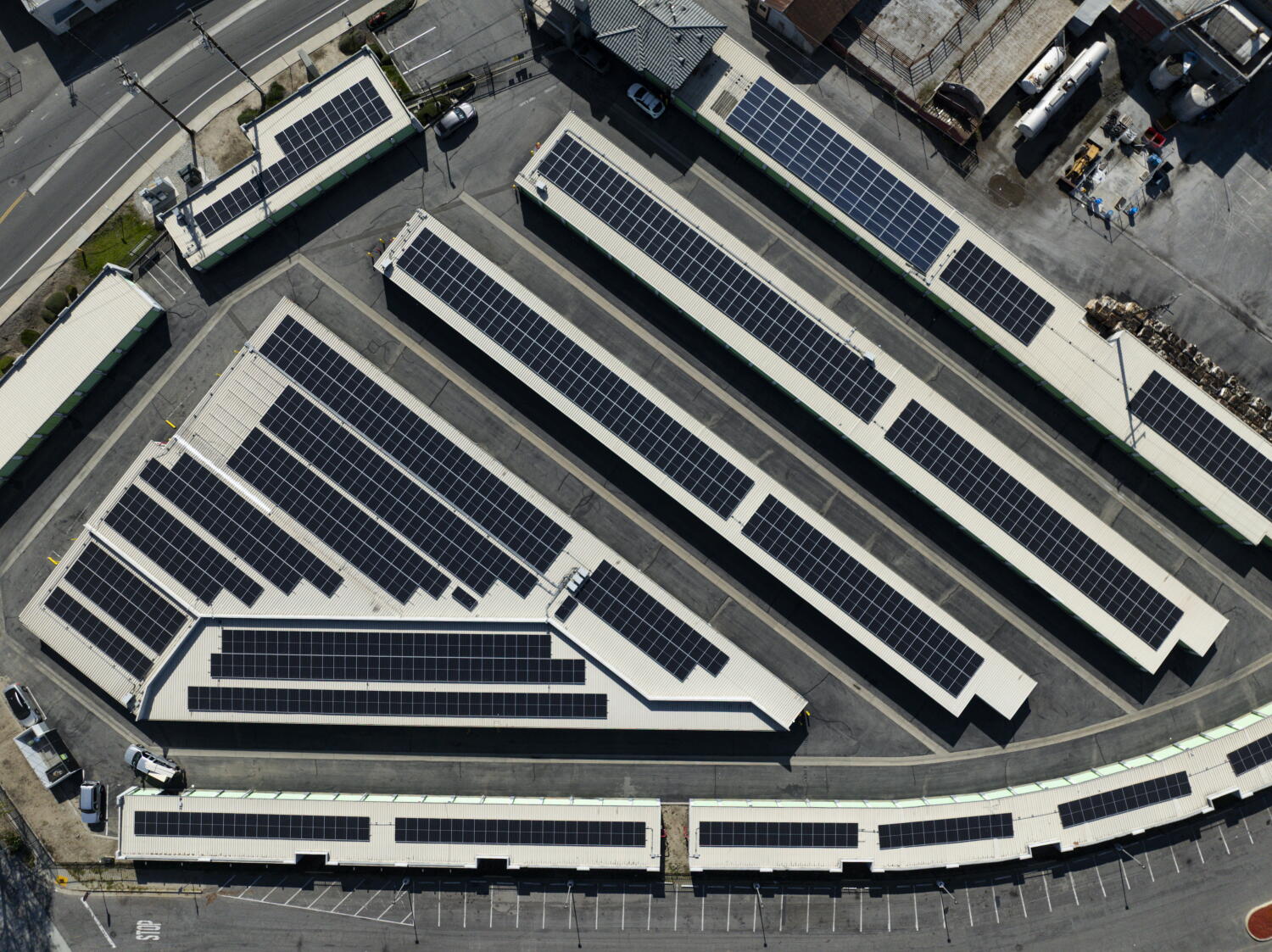
The kitchen window faces east. Every morning at precisely 6:15, a hard, white slab of California sunlight slices across the laminate countertop, hits the edge of the coffee maker, and fills the small apartment with a warmth that has nothing to do with the thermostat. It is clean energy. It is free. It arrives without a bill, without a surcharge, and without a bureaucratic hurdle.
Except you cannot touch it.
If you own the roof above your head, that light is currency. You call an installer, nail silicon wafers to your shingles, and watch the utility meter spin backward while your monthly overhead shrivels. You become a small-scale energy baron of your own suburban dominion.
If you rent, however, that light is merely a decorative feature. It warms the linoleum, it wakes you up, but it belongs to someone else. More accurately, the right to capture it belongs exclusively to the person whose name is on the property deed.
For decades, millions of people who rent apartments, duplexes, and townhomes have lived in the structural shadow of the clean energy transition. They watch the climate bills arrive. They hear the endless political speeches about green futures and carbon footprints. And then they pay their electricity bills—bills that seem to climb every summer as the grid strains under the weight of heatwaves—while knowing they are locked out of the one technology specifically designed to lower those costs.
The division is absolute. Property owners get the savings. Renters get the bill.
Consider a hypothetical renter we will call Marcus. Marcus lives in a modest second-floor apartment in a sprawling complex near Sacramento. He is the kind of person who reads every line of his utility statements, not out of professional interest, but out of survival. He turns off lights when he leaves a room. He bought blackout curtains to fight the July heat. He does everything right according to the gospel of personal conservation.
Yet, last August, his power bill spiked by forty percent. The grid was working overtime. Marcus was working overtime just to pay for it.
Meanwhile, three miles away, a neighborhood of single-family homes gleamed in the midday glare, their roofs armored in dark, absorbent panels. Those homeowners were effectively freezing their utility costs for the next twenty-five years. Marcus was paying for the infrastructure that kept everyone else cool, all while his own landlord had zero financial incentive to install solar panels. Why should they? The landlord does not pay the electric bill; Marcus does. It is a textbook case of split incentives, an economic stalemate where the person who pays for the upgrade cannot make it, and the person who can make the upgrade has no reason to pay for it.
For a long time, this was simply accepted as the gravity of renting. You trade ownership for flexibility. You accept that you cannot paint the walls, you cannot remodel the kitchen, and you certainly cannot wire the roof into a photovoltaic array.
But gravity is malleable.
Right now, sitting on the desk of the governor, two specific legislative bills are waiting for a signature that could crack this divide wide open. These bills are not grand, sweeping manifestos about saving the planet. They are dry, technical pieces of policy machinery designed to do one remarkably simple thing: make solar power accessible to renters.
One of the measures focuses on expanding community solar programs—allowing people to subscribe to a shared off-site solar farm and receive direct credits on their monthly utility bills, exactly as if the panels were mounted directly above their living rooms. The other targets multi-family housing regulations, smoothing out the administrative friction that prevents apartment building owners from sharing solar benefits among their tenants through virtual net metering.
These are not household-name policies. They do not get debated on prime-time cable news. They live in the unglamorous basement of state government, buried under amendments, fiscal impact reports, and bureaucratic jargon.
Yet their implications are seismic.
To understand why, you have to look past the kilowatt-hours and examine the geography of modern housing. More than a third of the population in states like California does not own a home. They rent. They are young professionals starting out, fixed-income seniors, working-class families, and essential workers. By definition, a clean energy transition that leaves renters behind is not a transition at all. It is a luxury club with a green coat of paint.
When clean energy is restricted to homeowners, something insidious happens. The cost of upgrading the grid gets distributed across all ratepayers, while the direct financial savings of solar generation accrue exclusively to property owners. In plain terms, renters end up subsidizing the transition for people who are already financially secure enough to own real estate. It is a regressive tax disguised as a utility structure.
The bills on the desk attempt to invert this dynamic. They recognize a fundamental truth that lawmakers have historically ignored: energy equity is housing equity.
Skeptics, of course, point to the friction. They talk about grid capacity, utility pushback, and the complex mechanics of crediting multi-family tenants without destabilizing local power companies. These are real concerns. The electrical grid is an ancient, delicate beast, held together by copper, transformers, and decades of legacy code. You cannot simply plug a million new rooftop arrays or community subscriptions into the system overnight without causing friction.
Furthermore, landlords worry about administrative nightmares. Who manages the solar credits when a tenant moves out in the middle of October? How are the savings divided if one apartment uses three times as much power as the unit next door?
These are valid engineering and logistical puzzles. But they are puzzles with answers, not permanent walls. The technology to track energy credits dynamically already exists. Software companies manage complex billing splits for commercial office buildings every day. Applying that same infrastructure to residential renters is an engineering challenge, not an impossibility.
The real barrier has never been technological. It has been political will and imagination.
Imagine, for a moment, what changes if these bills become law.
Marcus gets a notification in his tenant portal. It is not another rent increase or a notice about parking enforcement. It is an invitation to opt into a local community solar subscription through his utility provider. It takes three minutes to fill out online.
Next month, his electricity bill drops by thirty dollars. It is not a fortune, but in the calculus of a tight monthly budget, thirty dollars is breathing room. It is groceries. It is a saved diagnostic fee for his car. More importantly, it is the quiet, undeniable realization that the sun is working for him, too.
Multiply Marcus by two million. Suddenly, you have millions of households suddenly liberated from the baseline volatility of fossil-fuel-driven electricity markets. You have neighborhoods where renters are no longer economically penalized for their housing status.
This is what happens when policy catches up with reality.
For decades, we treated energy policy as an adjunct of real estate. If you owned the dirt, you owned the sky above it and the energy that fell from it. If you rented the dirt, you were merely a transient consumer, expected to pay whatever price the market demanded for the basics of modern life.
That mindset belongs to a different century. In an era defined by climate instability and skyrocketing cost-of-living pressures, energy access cannot remain tethered to property deeds. It has to be treated as a public utility in the truest sense—something fundamental, shared, and accessible.
The governor’s pen hovers over papers that will decide whether this shift remains an idealistic talking point or becomes enforceable law. The arguments have been made. The economic models have been audited. The lobbyists have had their say.
Outside, the morning sun continues its slow, indifferent crawl across the city, washing over apartment complexes and suburban estates alike, illuminating a world divided not by light, but by who is allowed to catch it.