The Kinetic Penetration Ceiling
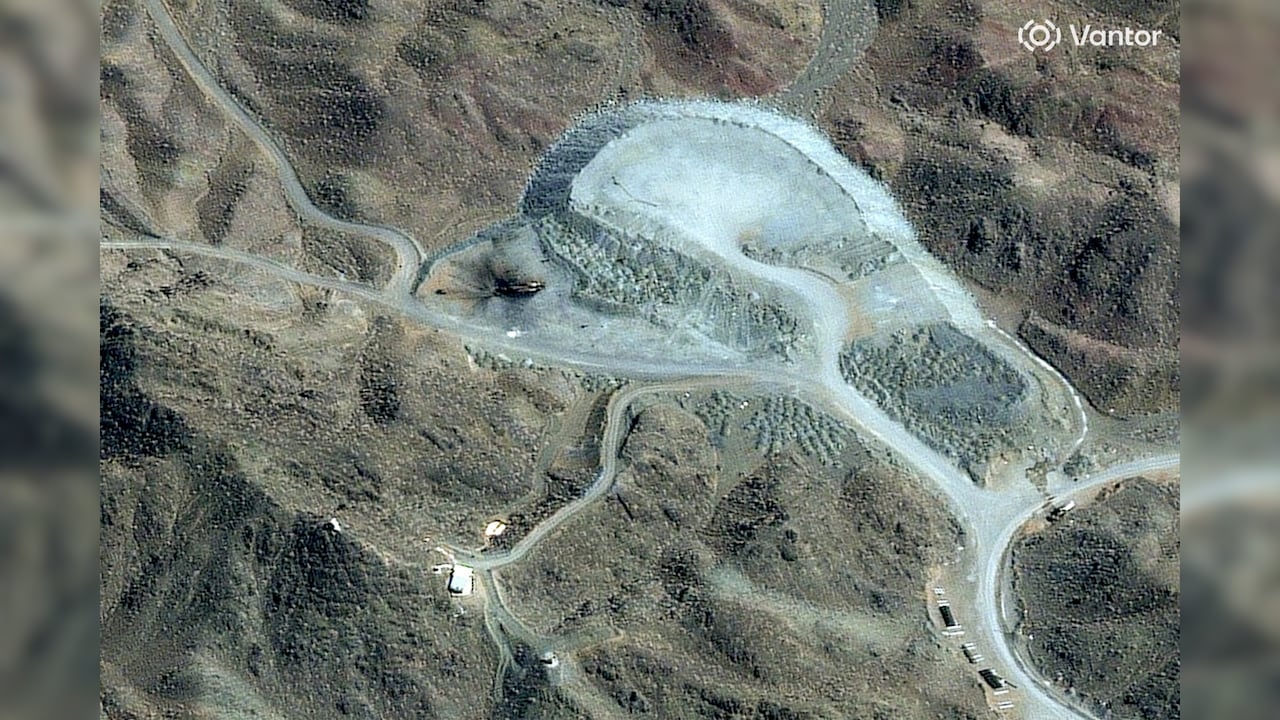
Evaluating the viability of conventional air-delivered munitions against subterranean infrastructure requires analyzing material dynamics, terminal ballistics, and structural geology. The technical discussion surrounding deeply buried nuclear enrichment facilities—such as Iran's Pickaxe Mountain complex near Natanz or the Fordow Fuel Enrichment Plant—often relies on simplified assumptions regarding kinetic energy transfer.
Conventional air-to-surface kinetic penetrators operate under absolute physical constraints dictated by structural mass, collision velocity, and target material strength. The assertion that tactical or strategic aerial bombardment can systematically neutralize facilities buried beneath 80 to 100 meters of reinforced overburden misunderstands terminal ballistics and structural resistance. Evaluating subterranean strike capabilities requires analyzing three core variables: kinetic delivery mechanics, geological medium attenuation, and the physical limits of sequential precision targeting. For a closer look into this area, we suggest: this related article.
Mechanical Breakdown of Penetration Energetics
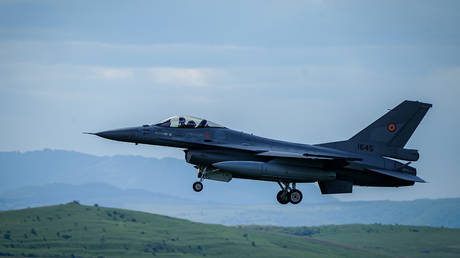
The primary weapon system designed for hardened underground targets is the GBU-57A/B Massive Ordnance Penetrator (MOP). Weighing approximately 30,000 pounds (13,600 kg) with an outer diameter of 31.5 inches (80 cm), its performance is governed by the Young Penetration Equation for hard media.
$$S = 0.0008 \cdot \frac{W}{A} \cdot (V - 100) \cdot K_p$$ For further background on this topic, in-depth analysis can be read at USA Today.
Where:
- $S$ represents depth of penetration.
- $W$ is total projectile weight.
- $A$ is cross-sectional area.
- $V$ is impact velocity.
- $K_p$ is the penetrability index of the target medium.
                    PENETRATION DYNAMICS (GBU-57 MOP)

  +-----------------------------------------------------------------+
  | Projectile Weight (W): ~30,000 lbs (13,600 kg)                  |
  | Cross-Sectional Area (A): ~31.5 in Diameter                      |
  | Impact Velocity (V): Terminal Transonic                         |
  +-----------------------------------------------------------------+
                                  |
                                  v
  +-----------------------------------------------------------------+
  | GEOLOGICAL RESISTANCE MATRIX                                    |
  | - Soil / Weak Earth: High Depth Potential (~60m / 200ft)        |
  | - Igneous / Dolomite Rock: Compressive Resistance Shift         |
  | - Reinforced Concrete: Mass Structural Degradation              |
  +-----------------------------------------------------------------+
                                  |
                                  v
  +-----------------------------------------------------------------+
  | EFFECTIVE HARD-ROCK LIMITATION: 20m - 40m MAXIMUM              |
  +-----------------------------------------------------------------+
When evaluated against high-compressive-strength media—such as intact basalt, granite, or reinforced concrete exceeding 10,000 PSI—the terminal energy dissipates rapidly via friction, thermal transfer, and structural deformation of the casing.
Penetration Thresholds by Medium
- Unconsolidated Soil/Sediment: ~60 meters (200 feet) maximum depth.
- Reinforced Concrete: ~8 to 10 meters (26 to 33 feet) per warhead.
- Hard Igneous/Metamorphic Rock (Dolomite, Basalt): ~20 to 30 meters maximum depth.
Where the overburden consists of layered metamorphic rock reinforced with underground concrete linings, a single GBU-57 cannot reach depths exceeding 60 meters. Facilities buried beneath 80 to 100 meters of mountain overburden remain mathematically out of reach for a single kinetic warhead.
The Co-axial Sequential Impact Dilemma
A common theoretical workaround to the single-weapon depth limit is the "sequential precision strike" or "same-hole double-tap" strategy. This hypothesis posits that dropping multiple GBU-57 penetrators onto the exact same surface coordinates allows subsequent munitions to travel through the path cleared by previous warheads, multiplying penetration depth.
This assumption fails under real-world physical and structural parameters:
Structural Collapse and Borehole Deviation
When the initial warhead detonates at its maximum penetration depth (e.g., 30 meters), it creates a crater and disrupts the surrounding rock matrix. This detonation does not leave a clean, open cylinder. It produces a dense debris field of fractured, re-compacted rock, rubble, and concrete slag.
Deflection and Angle of Attack Anomalies
Subsequent incoming warheads entering a crater filled with asymmetric debris face uneven resistance across their nose cones. This structural asymmetry causes yaw, pitching moments, or trajectory deflections. A minor angle deviation of 2 to 3 degrees upon secondary impact causes the penetrator to veer away from the primary channel, striking intact rock laterally rather than deepening the original hole.
                           SEQUENTIAL STRIKE FAILURE

       Bomb #1 (Initial Impact)               Bomb #2 (Follow-up Impact)

               |   |                                  |   |
               |   |                                  |   |
               v   v                                  v   v
        +-----------------+                    +-----------------+
        |  Surface Layer  |                    |  Surface Layer  |
        +-----------------+                    +-----------------+
        |                 |                    | \ Debris Field /|
        |  Intact Rock    |                    |  \   & Slag   / |
        |                 |                    |   \          /  |
        +-----------------+                    +-----\------/----+
        |  Detonation     |                    | Imbalance Forces|
        |  Zone           |                    | Divert Trajectory
        +-----------------+                    +-----------------+
                |                                      \
                v                                       v
         Creates Disrupted                      Veers into Unbroken
         Rubble & Cavity                        Rock Mass (No Extra Depth)
Sensor and Fuse Premature Triggering
Modern bunker-busting munitions utilize smart delay fuses (such as the Hard Target Smart Fuse) designed to count void spaces or measure deceleration profiles. Traversing a high-density, chaotic blast cavity filled with shattered granite triggers early fuse activation, causing the secondary warhead to detonate prematurely within the debris field rather than deeper down.
Vulnerability Vectors: Functional Defeat Over Physical Destruction
Attempting to physically crush an underground enrichment hall protected by tens of meters of solid rock is an inefficient application of airpower. Military strategy shifts from physical destruction to functional defeat when dealing with hardened subterranean structures.
Deeply buried facilities function as closed, isolated ecosystems. They cannot operate independently of surface infrastructure. Neutralizing these sites requires targeting critical support systems rather than attempting to breach the rock overburden itself.
+-------------------------------------------------------------------------+
|                  FUNCTIONAL DEFEAT MECHANISMS                          |
+-------------------------------------------------------------------------+
                                    |
     +------------------------------+------------------------------+
     |                              |                              |
     v                              v                              v
+------------------+      +------------------+      +------------------+
| ENVIRONMENTAL    |      | POWER & METROLOGY|      | LOGISTICAL       |
| ISOLATION        |      | INSTABILITY      |      | SEVERANCE        |
|                  |      |                  |      |                  |
| - HVAC Sinking   |      | - Frequency Drift|      | - Tunnel Port    |
| - Filter Clogging|      | - Transformer    |      |   Collapse       |
| - Overpressure   |      |   Destruction    |      | - Material Flow  |
|   Asphyxiation   |      | - Rotor Shearing |      |   Stoppage       |
+------------------+      +------------------+      +------------------+
1. Environmental Isolation (HVAC and Filtration Severance)
High-performance gas centrifuges (such as the IR-2m, IR-4, or IR-6) generate significant thermal output and require continuous environmental control. Ventilation shafts, intake plenums, and exhaust ports represent critical structural vulnerabilities.
Thermobaric or high-explosive ordnance directed at external HVAC manifolds collapses air intake networks. Deprived of active temperature regulation and overpressure filtration, internal ambient temperatures rise rapidly, forcing a shutdown of enrichment operations to prevent equipment failure.
2. Power and Metrology Instability
Uranium enrichment via gas centrifuge cascades requires precise electrical frequency stability. Centrifuge rotors spin at speeds exceeding 60,000 RPM, held near structural limits. Minor fluctuations in frequency or abrupt power interruptions introduce harmonics that cause catastrophic rotor contact with the outer casing.
Severing external power feeds, destroying backup diesel generation plants, or targeting step-down transformer stations disrupts the power grid. Even if emergency uninterruptible power supplies (UPS) activate, the mechanical shock of nearby detonations transmits seismic energy through the mountain matrix, causing precision alignment errors across active cascades.
3. Logistical Severance
Subterranean sites require a steady inflow of chemical feedstocks (e.g., Uranium Hexafluoride, $UF_6$) and a continuous exit path for enriched product and depleted tails. Precision strikes targeting portal adits, access tunnels, and transport infrastructure seal personnel and materials inside. Trapping a facility behind collapsed portal entrances halts production regardless of whether the internal centrifuge halls remain intact.
Operational Reality
The physics of subterranean kinetic penetration set a hard limit on what air strikes can achieve against ultra-deep facilities. Munitions like the GBU-57 MOP remain effective against target depths up to 40-60 meters depending on target geology, but deep mountain massifs exceed this physical envelope.
Planners should not rely on sequential kinetic strikes to bore through solid rock formations. Strategy must pivot from structural destruction to systematic functional interdiction—targeting portal access, power regulation, and thermal management. Disruption of these external dependencies neutralizes the operational output of deep underground installations without requiring a physical breach of the mountain.