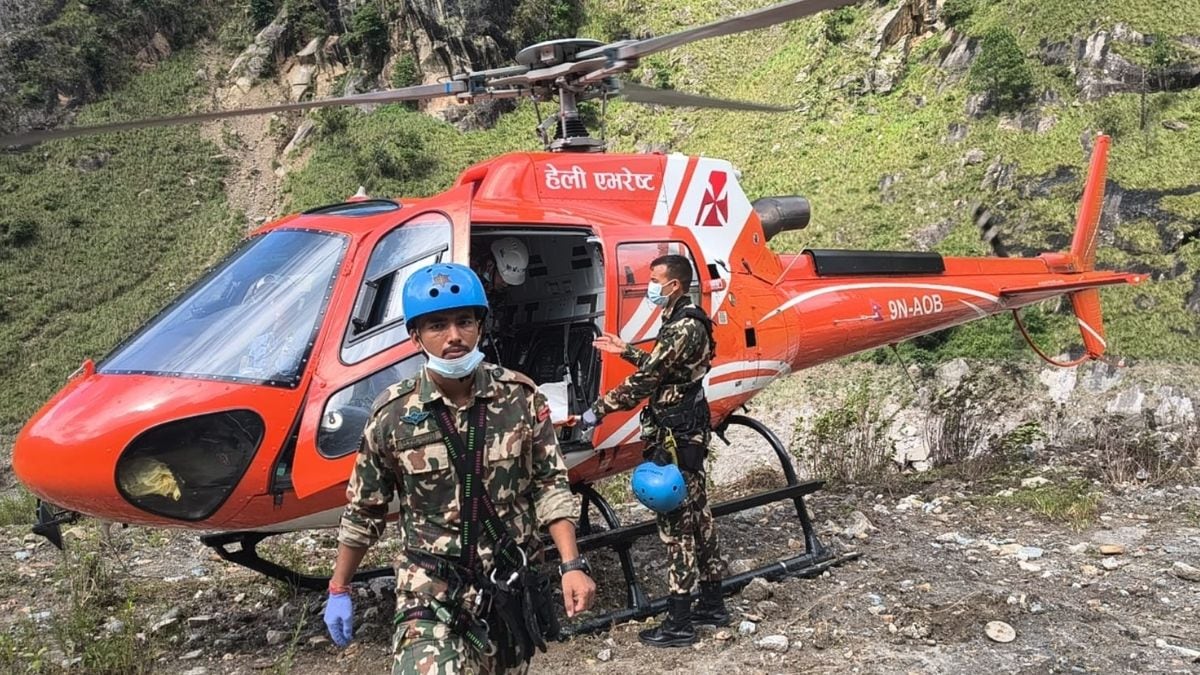
Subsurface rescue operations in mountainous river corridors follow rigid physical constraints dictated by fluid dynamics, geotechnical stability, and human hypoxia thresholds. When catastrophic flash floods breach Himalayan river basins, high-velocity slurry composed of liquefied rock, glacial silt, and organic debris fills subterranean excavation chambers. The resulting obstruction creates a closed hydraulic and pneumatic system where standard search protocols fail. Evaluating the operational deployment of specialized engineering units requires examining the mechanical variables that govern subterranean survivability and extraction efficiency.
The Hydraulic Mechanics of Subsurface Silt Ingress
The primary vector of lethality in hydropower tunnel inundations is not hydrostatic pressure from clear water, but the rheological properties of high-density debris flows. When floodwaters intersect an inclined or horizontal tunnel network, the kinetic energy of the surge converts into sediment deposition. As velocity drops inside the confined geometry of a bore, suspended bedload drops out of solution, forming compacted plug deposits.
[Flash Flood Wave] --> [Kinetic Energy Conversion] --> [Velocity Decay in Bore] --> [High-Density Muck Plug Formation]
This muck plug exhibits non-Newtonian shear strength. Unlike water, which can be pumped using standard centrifugal or submersible dewatering assets, dense silt requires mechanical displacement or high-pressure fluidization.
- Particle Size Gradation: The slurry contains a heterogeneous mix ranging from boulder-sized clasts to colloidal clay particles, creating interlocking matrices that jam mechanical excavation buckets.
- Pore-Pressure Dynamics: Trapped water behind and within the plug generates localized pore pressure, risking secondary structural collapses of tunnel shotcrete linings and unsupported rock faces.
- Atelectasis and Air Pockets: Survival inside a blinded tunnel depends entirely on trapped pneumatic pockets. As ambient temperatures shift and organic decay or respiration consumes oxygen, carbon dioxide accumulation outpaces natural diffusion rates, turning air pockets into hypoxic traps within hours.
Tactical Variables in Cross-Border Disaster Logistics
Deploying foreign specialized engineering detachments into a disaster zone introduces friction across command hierarchies, regulatory frameworks, and asset compatibility. Transnational disaster response follows a strict efficiency frontier defined by response latency versus asset specificity.
- Reconnaissance Latency: Initial deployment phases prioritize aerial and on-site optical reconnaissance to map structural integrity before heavy personnel commit to subterranean environments. Without precise volumetric assessments of internal blockages, extraction teams risk being trapped by secondary collapses.
- Equipment Payload Constraints: Mountainous operational zones lacking arterial road connectivity due to washed-out bridges require modular, air-portable hardware. Heavy excavation machinery cannot be deployed until temporary bridging infrastructure, such as modular steel span systems, restores route load-bearing capacities.
- Interoperability Frictions: Joint security forces operating under multi-agency command structures must synchronize communication protocols, medical triage standards, and forensic identification procedures. Varied jurisdictional mandates between domestic military units and international technical cadres often create administrative bottlenecks during the critical golden hours of rescue operations.
The Operational Decay Curve of Subsurface Survival
Survival probability in subterranean entrapment scenarios decays exponentially, dictated by the metabolic requirements of trapped individuals and the physical state of their immediate microenvironment.
100% |  \
     |   \  (Survivability Curve)
     |    \
     |     \________
  0% +-----------------
     0h   24h   48h   72h+ (Elapsed Time)
The limiting factors shift systematically as time progresses:
- Hours 0 to 24: Acute trauma management, escaping immediate asphyxiation, and locating uncompromised pneumatic pockets. Survivors rely on immediate self-evacuation or rapid breaching of low-debris adits.
- Hours 24 to 72: Hypothermia mitigation and dehydration management. Subterranean ambient temperatures in Himalayan tunnels remain low, accelerating core body heat loss for individuals soaked in glacial runoff.
- Beyond Hour 72: Transition from rescue operations to forensic recovery. Metabolic exhaustion, hypercapnia, and absolute dehydration establish a hard biological ceiling for live extractions, shifting engineering priorities toward structural shoring and controlled muck removal to preserve remains.
Strategic Execution Protocol
To optimize subsurface extraction outcomes in high-altitude hydrological infrastructure, disaster management authorities must decouple structural engineering assessments from surface-level political triage. Standard operating procedures must mandate the immediate pre-positioning of modular trenching assets, lightweight pneumatic boring probes, and continuous atmospheric monitoring sensors at all active subterranean construction sites within high-risk seismic and glacial zones. Technical response units must prioritize hydraulic dredging over manual debris clearance to minimize structural destabilization of tunnel portals.
Hundreds rescued from tunnel in Nepal
This video illustrates the physical realities and on-ground recovery operations inside flood-affected subterranean hydropower infrastructure in the region.