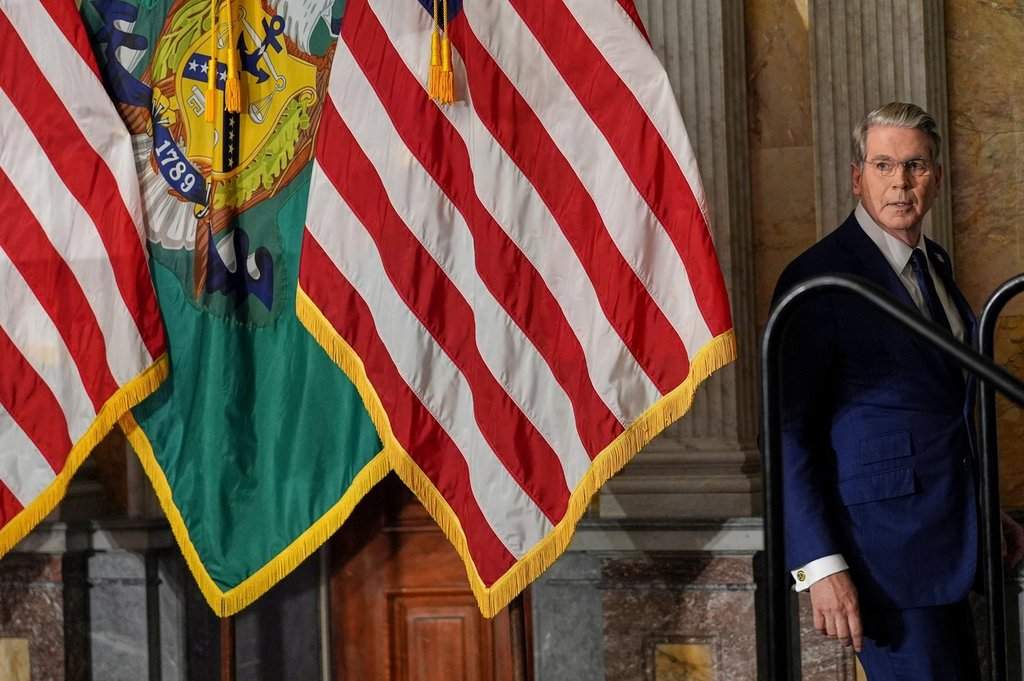
Geoeconomic warfare relies on the systematic closure of institutional channels, transforming trade networks into points of structural failure. The United States Treasury Department under Treasury Secretary Scott Bessent has initiated a calibrated escalation termed Operation Economic Outcast. This campaign targets the financial, technological, and logistical infrastructure sustaining the Iranian state. Evaluating this strategy requires moving past rhetorical declarations to examine the underlying financial architecture, the enforcement vectors of secondary sanctions, and the systemic friction points that dictate whether financial isolation can achieve its stated objectives.
The Five Structural Pillars of Coercive Asphyxiation
The framework deployed by the Treasury isolates five non-oil sectors designated as critical survival nodes for the Iranian economy: digital assets, advanced technology, aviation, gold, and shipping. Each sector serves a distinct functional purpose within a sanctioned economy, requiring specific countermeasures from regulatory authorities.
The digital asset vector represents a decentralized bypass mechanism. As traditional correspondent banking relationships closed, Iranian entities increasingly integrated cryptocurrencies to settle cross-border transactions, clear payments for regional proxies, and move capital past formal SWIFT monitoring systems. By targeting digital asset service providers and exchange houses, the policy attempts to choke off the velocity of decentralized liquidity.
Technology and aviation sectors share a logistical dependency. Advanced technology imports feed domestic military and missile programs, while aviation assets—specifically cargo fleets—function as physical transit corridors for moving hard currency, sensitive components, and combatants. Restricting these sectors disrupts the operational mobility of the state apparatus, forcing reliance on degraded overland and maritime alternatives.
Gold and shipping constitute the monetary anchor and physical distribution channels. Gold transactions act as an inflation hedge and a medium for stabilizing the depreciating rial as formal foreign exchange reserves dwindle. Meanwhile, the shipping sector, heavily reliant on shadow fleets and ship-to-ship transfers, provides the tonnage required to monetize hydrocarbon assets despite maritime blockades.
The Enforcement Vector and Secondary Sanctions Mechanics
The operational efficacy of Operation Economic Outcast hinges on secondary sanctions. Primary sanctions restrict United States persons and entities from interacting with designated targets. Secondary sanctions project extraterritorial jurisdiction, penalizing foreign firms and third-country financial institutions for conducting specified transactions with Iran, regardless of whether any United States nexus exists.
This mechanism creates a profound compliance dilemma for international actors. Financial institutions and corporations domiciled in major trading hubs—including China, the United Arab Emirates, and Singapore—face a binary optimization problem. They must weigh the marginal utility of commercial engagement with Iran against the catastrophic cost of losing access to the United States dollar clearing system.
When the Treasury designates front companies, broker networks, and shadow-fleet tankers (such as the recent blacklisting of nearly sixty entities across multiple jurisdictions), it increases transaction friction. Insurance rates spike, maritime registries drop compliant vessels, and intermediary banks demand rigorous compliance audits. Even if trade does not drop to absolute zero, the exponential rise in transaction costs degrades profit margins for intermediaries, compressing the hard currency inflows available to the target state.
Friction Points and Systemic Limitations
Despite the breadth of these measures, historical precedent demonstrates that highly sanctioned regimes develop structural resilience. Several systemic constraints limit the velocity and impact of external financial pressure.
The primary limitation involves great power divergence. Enforcement depends heavily on the cooperation of major consumer nations, particularly China, which remains the primary importer of Iranian crude oil. If third-country governments absorb diplomatic blowback or establish alternative bilateral clearing arrangements insulated from Western jurisdictions, the coercive pressure loses its absolute coverage. Threatening universal compliance risks triggering broader systemic friction in global financial markets, creating a self-imposed ceiling on how aggressively regulators can target systemically important foreign institutions.
Furthermore, decades of continuous isolation have allowed Tehran to optimize alternative trade routes, informal hawala networks, and decentralized transshipment hubs. While these channels operate at a higher cost and lower efficiency than formal institutional banking, they possess high elasticity. They contract under intense surveillance but adapt and re-emerge under new corporate shells.
The immediate domestic indicator of this pressure—the depreciation of the rial and severe inflation—reflects systemic stress, yet financial impoverishment does not automatically translate into behavioral modification or political concessions. Authoritarian security structures are intentionally designed to shift the burden of economic contraction onto the broader populace while insulating the ruling elite and military apparatus from absolute resource deprivation.
Target financial institutions and third-country intermediaries must immediately conduct end-to-end exposure audits across digital asset rails, maritime logistics chains, and precious metal trading desks, as compliance grace periods compress and enforcement thresholds reach maximum velocity.