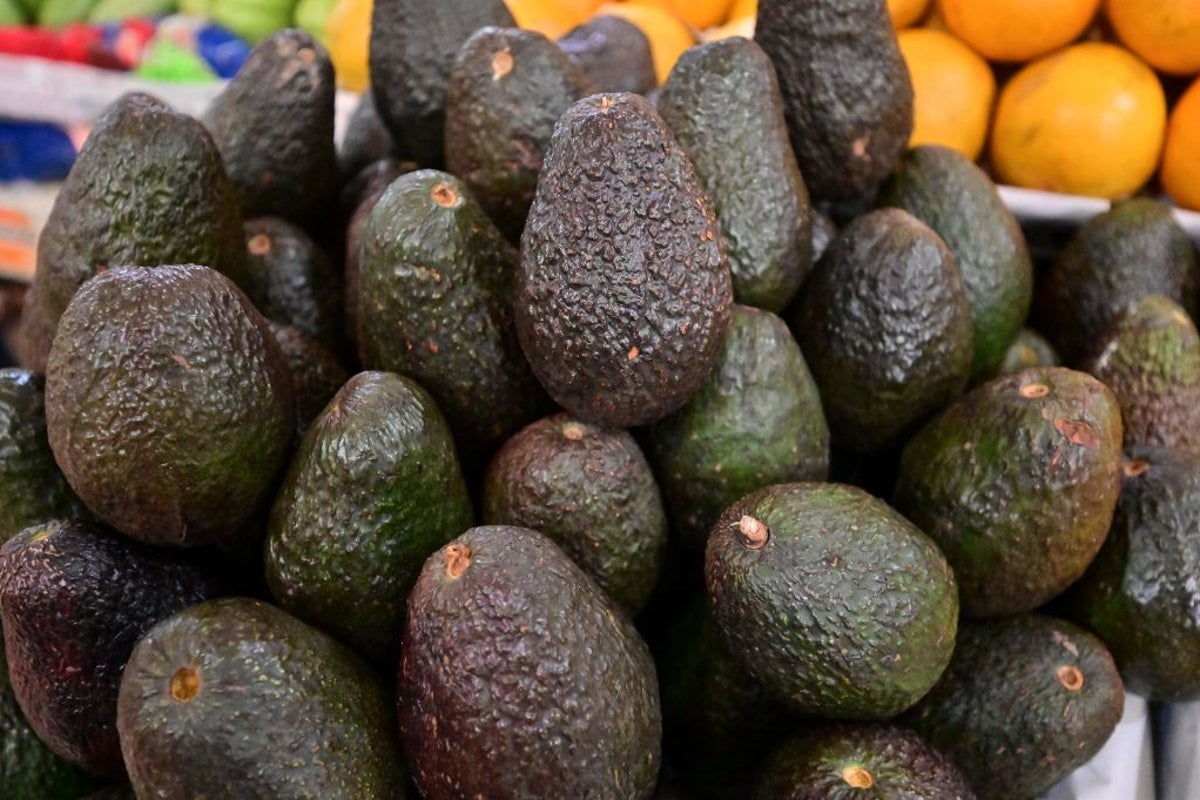
Supply chain vulnerability in perishable cross-border trade stems from a dangerous structural reliance on single-node municipal security guarantees. When federal authorities suspended avocado inspections in Michoacán following a localized threat against agricultural inspectors, the operational reality of global agricultural logistics was laid bare.
Agribusiness operators treat sourcing regions as continuous inventory pipelines, ignoring the localized political economies that govern production zones. A disruption in Michoacán does not merely delay a truckload of produce; it triggers a cascade of inventory depletion, price volatility, and contractual strain across North American distribution networks.
Deconstructing this event requires analyzing three distinct systemic friction points: regulatory jurisdiction dependencies, cartel taxation and security overhead, and inventory buffer constraints inherent to fresh produce logistics.
The Regulatory Bottleneck
The operational mechanics of importing avocados from Mexico into the United States rely entirely on physical inspection protocols administered by the United States Department of Agriculture Animal and Plant Health Inspection Service. These inspectors are stationed directly in the production fields and packing facilities of Michoacán to certify pest freedom, primarily concerning the avocado seed moth.
The structural flaw in this model is the absolute centralization of authority. Phytosanitary clearance cannot be delegated to local Mexican authorities or private third-party certifiers without renegotiating international trade agreements. Consequently, when the safety of federal inspectors is compromised, the inspection pipeline stops entirely.
This creates an immediate binary state: either inspectors are physically present in the orchards, or legal export operations halt. There is no intermediate operational buffer.
Supply chain managers frequently miscalculate this risk, treating regulatory presence as a permanent environmental condition rather than a volatile variable subject to localized security conditions. When inspections resume after a suspension, a massive backlog forms at the packing facilities. This surge overwhelms cold storage capacity, leading to accelerated fruit ripening, higher rates of spoilage, and compressed margins for exporters who must clear inventory before quality degrades.
The Economics of Localized Security and Extortion
Michoacán produces the vast majority of Mexican avocados exported to the United States, generating billions of dollars in economic value. This capital concentration attracts sophisticated criminal organizations that operate as shadow governance structures within the region.
Extortion, protection rackets, and cargo hijacking function as operational taxes levied against growers and packing houses. While multinational corporations and large exporters absorb these costs as an invisible line item in their cost of goods sold, small-scale independent farmers bear the brunt of the volatility.
The security scare that triggers a United States Department of Agriculture suspension is rarely an isolated incident; it is usually the tipping point where overt violence breaches the threshold of acceptable risk established by diplomatic and security advisors. When criminal factions dispute territory or attempt to extort inspection personnel directly, the geopolitical risk profile shifts instantly.
The economic consequence is asymmetric. Growers face immediate cash flow freezes as harvested fruit sits uncertified in packing houses. Because fresh avocados cannot be stored indefinitely without controlled atmosphere infrastructure, farmers face a strict expiration timeline. The longer the security suspension lasts, the lower the bargaining power of the producer, who must eventually accept distressed pricing or total crop loss.
Inventory Buffer Failures and Market Transmission
The immediate consequence of an inspection halt is a supply contraction in the destination market. Because fresh avocados have a limited shelf life, domestic retailers and wholesale distributors maintain lean inventories optimized for just-in-time delivery models.
When the pipeline from Michoacán dries up, distributors cannot easily pivot to alternative sourcing regions. While secondary producers like Jalisco possess export authorization, their total volume capacity is insufficient to instantly substitute for the vast output of Michoacán. Furthermore, shifting supply chains requires pre-existing supplier relationships, logistics routing adjustments, and new phytosanitary scheduling.
This structural inflexibility causes rapid price spikes in wholesale markets. Importers operating on fixed-price supply contracts with major supermarket chains absorb heavy losses, as they must procure spot-market inventory at inflated prices to fulfill contractual delivery obligations. Conversely, well-capitalized distributors with diversified regional sourcing strategies capture disproportionate market share during these disruptions.
The retail tier responds to supply contraction through dynamic pricing adjustments and rationing. Consumers experience immediate price inflation at the grocery shelf, which temporarily suppresses demand elasticity. However, because avocado consumption patterns are deeply entrenched in North American consumer behavior, demand destruction is minimal, ensuring that price volatility remains severe until the inspection pipeline normalizes.
Operational Redundancy Strategies for Importers
Mitigating the systemic risk exposed by cross-border security scares requires abandoning the assumption of continuous pipeline flow. Procurement strategies must be restructured around resilience rather than pure cost minimization.
Geographic diversification must move beyond opportunistic spot buying. Importers need to contractually anchor baseline volume across multiple sovereign jurisdictions, establishing permanent supply lines in secondary Mexican states and alternative international producers such as Peru or Colombia. While shipping costs from South America introduce logistical friction, the price premium acts as an insurance policy against single-point-of-failure disruptions in central Mexico.
Packing facilities must invest in localized cold-chain extension technologies. By deploying advanced controlled-atmosphere storage closer to the point of harvest, exporters can extend the viable window of harvested fruit during sudden administrative shutdowns, dampening the panic selling that characterizes the initial days of an inspection suspension.
Supply chain architectures must integrate real-time geopolitical risk monitoring into enterprise resource planning software. Tracking municipal security indices, labor disputes, and federal agency threat assessments allows logistics operators to proactively adjust inventory buffers before a formal border closure is announced by regulators.
Strategic Operational Playbook
Quantify Single-Source Exposure: Audit current procurement portfolios to determine the exact percentage of volume originating from high-risk municipalities in Michoacán. Establish a maximum threshold of dependency, ideally capping single-region exposure at fifty percent of total inventory.
Establish Pre-Vetted Secondary Corridors: Finalize standing logistical agreements and phytosanitary pre-clearance protocols with emerging export regions to ensure rapid volume redirection during a primary suspension event.
Restructure Contractual Risk Allocation: Renegotiate supplier and retail contracts to include force majeure clauses explicitly covering security-related government inspection suspensions, protecting margins from spot-market price spikes.
Deploy Dynamic Buffer Stock Modeling: Adjust warehouse inventory holding algorithms to account for a rolling ten-day supply disruption window, maintaining strategic safety stock in regional distribution centers outside primary import corridors.