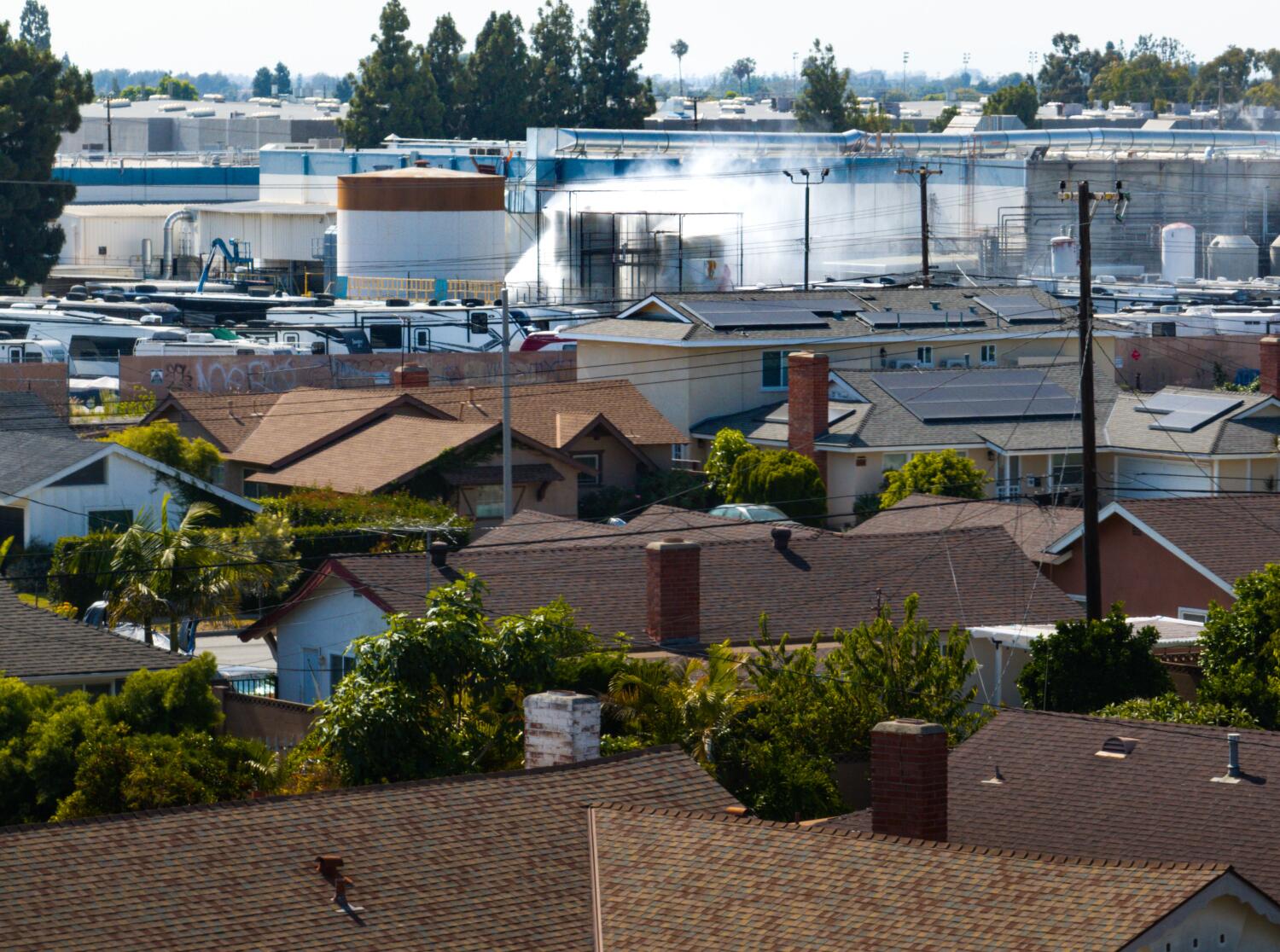
The convergence of private operational risk and public fiscal liability establishes a complex friction point when hazardous materials infrastructure fails within high-density municipal zones. The recent demand by Orange County Counsel for $4.07 million from GKN Aerospace Transparency Systems Inc.—following a near-catastrophic thermal runaway event at its Garden Grove facility—serves as a primary case study in externalized risk containment. When a private industrial operator suffers a critical systemic failure, the immediate financial burden shifts to municipal emergency frameworks. The subsequent legal and financial recovery mechanisms represent an attempt by public entities to correct this market failure and internalize the costs of private operational negligence.
Understanding the economic and structural dimensions of this incident requires decoupling the immediate tactical emergency from the long-term institutional liability. Municipalities are increasingly refusing to absorb the friction costs of industrial disruptions, utilizing statutory cost-recovery mechanisms to insulate public funds from private compliance failures.
The Mechanics of Thermal Instability: Deconstructing the Failure Mode
Evaluating the systemic breakdown at the Garden Grove facility requires a precise understanding of the chemical asset under management. The event centered on a 34,000-gallon chemical storage tank containing approximately 7,000 gallons of methyl methacrylate (MMA). MMA is a volatile, highly flammable monomer utilized in the synthesis of acrylic plastics.
The primary hazard vector associated with bulk MMA storage is self-heating via uncontrolled exothermal polymerization. Under standard operating conditions, stabilizers and active cooling systems suppress the chemical's natural tendency to polymerize. The core vulnerability at the GKN facility manifested as a mechanical or electrical failure within the tank’s dedicated cooling infrastructure.
[Cooling System Failure]
       │
       ▼
[Unchecked Exothermic Reaction]
       │
       ▼
[Volatilization & Vapor Generation] ──► [Internal Pressure Spike] ──► [Structural Expansion / Bulging]
                                                                                │
                                                                                ▼
                                                                     [BLEVE Risk Vector]
When active cooling ceases, the temperature of the monomer climbs, accelerating the exothermic reaction rate in a compounding feedback loop. This thermal runaway volatilizes the liquid, generating significant vapor pressure within the closed vessel. The physical evidence of this progression at the facility was observed via the structural bulging and off-gassing of the tank.
The structural failure mode of highest consequence in this scenario is a Boiling Liquid Expanding Vapor Explosion (BLEVE). A BLEVE occurs when a pressurized vessel holding a liquid above its boiling point undergoes a catastrophic structural failure. The instantaneous drop in pressure causes the liquid to flash boil, expanding exponentially and generating a destructive blast wave alongside intense thermal radiation. The containment strategy deployed by emergency personnel was dictated entirely by the thermodynamics of the vessel; cooling the outer shell with water monitors was required to suppress the skin temperature until an structural anomaly—a localized crack—relieved the internal pressure without triggering an explosive breach.
Quantifying the Externalized Municipal Cost Function
The fiscal response to an industrial emergency of this magnitude extends far beyond the hourly wages of local first responders. The multi-jurisdictional deployment required to manage a nine-square-mile exclusion zone yields a complex cost structure that public entities must aggressively tabulate. The current financial demands issued by Orange County outline a clear cost function distributed across multiple operational layers.
Primary Resource Deployment Outlays
The base layer of the cost function comprises direct emergency management expenses. The Orange County Fire Authority (OCFA) calculated its specific operational footprint at $2.8 million. This figure encompasses specialized hazardous materials teams, continuous atmospheric monitoring, structural cooling operations, and mutual aid coordination across neighboring municipal departments.
Inter-Agency Friction and Administrative Overhead
Beyond the direct tactical response, the county's formal demand letter specifies $4,071,305 in secondary operational expenses. This capital requirement is distributed across ten distinct public agencies that were redirected from core public duties to manage the secondary impacts of the evacuation. These expenses include traffic management infrastructure, law enforcement perimeter security, air quality monitoring by environmental regulators, and public health oversight.
Public Mitigation Funds vs. Corporate Indemnification
A third layer involves public capital deployed to absorb immediate community shock. Orange County supervisors allocated $500,000 in public discretionary funds to assist displaced residents who faced immediate financial strain during the five-day evacuation. This allocation highlights a fundamental tension: municipal governments must deploy capital to preserve local socio-economic stability while simultaneously positioning that expenditure as a reimbursable debt owed by the responsible corporation.
| Financial Dimension | Responsible Entity | Capital Quantum | Status |
|---|---|---|---|
| Direct Fire/Hazmat Response | Orange County Fire Authority | $2,800,000 | Pending Formal Recovery |
| Inter-Agency & Operational Capital | Orange County Public Agencies | $4,071,305 | Demanded via County Counsel |
| Discretionary Evacuation Support | Orange County Board of Supervisors | $500,000 | Advanced (Reimbursement Sought) |
| Voluntary Resilience Funding | GKN Aerospace (United Way) | $3,000,000 | Exhausted (6,000+ Applicants) |
| Voluntary Emergency Logistics | GKN Aerospace (Red Cross) | $1,000,000 | Deployed |
| Broader Community Initiatives | GKN Aerospace | $1,000,000 | Pledged |
The voluntary outlays committed by GKN Aerospace—totaling $5 million across the United Way, Red Cross, and general community funds—represent a parallel corporate strategy to mitigate reputational damage and cap civil liabilities. The rapid depletion of the $3 million United Way fund within a single week underscores a massive mismatch between the actual economic displacement suffered by 50,000 evacuated residents and the initial corporate capital deployed to address it.
Regulatory Asymmetry and Liability Architecture
The legal framework driving the county's recovery demand rests on establishing a clear causal link between historical regulatory non-compliance and the systemic asset failure. The formal correspondence from County Counsel highlights a well-documented trajectory of regulatory infractions at the Western Avenue site spanning more than a decade. This historical record changes the legal characterization of the event from an unforeseeable accident to a predictable operational outcome.
The concept of regulatory asymmetry explains why industrial operators may underinvest in redundant safety systems. When the civil penalties for minor environmental infractions or Cal/OSHA citations are lower than the capital expenditure required to completely overhaul aging infrastructure, operators face a perverse economic incentive to accept marginal risk.
This calculus shifts dramatically when a catastrophic near-miss occurs. The legal mechanism deployed by the county leverages California Health and Safety Code provisions that hold parties responsible for hazardous substance releases strictly liable for all government response costs. By documenting a pattern of historical non-compliance, the county builds an argument for negligence that strips the operator of standard liability protections, moving the conflict from standard administrative law into the realm of major tort liability and statutory restitution.
This legal pressure creates a structural bottleneck for the corporation. Admitting fault or paying municipal demands immediately simplifies the county's claims but establishes an unfavorable precedent for the numerous civil class-action lawsuits filed by residents and local business owners. Refusing to pay, however, forces the county into protracted litigation, further damaging the firm’s social license to operate within the municipality.
Strategic Risk Mitigation for Industrial Asset Managers
The systemic failure in Garden Grove offers critical operational lessons for industrial enterprises managing high-consequence chemical assets within urban limits. Avoiding catastrophic cost-recovery actions and preserving operational viability requires implementing structural redundancies that treat regulatory compliance as a baseline rather than an ultimate goal.
- Implement Decoupled, Passive Safety Infrastructure: Industrial cooling systems for highly reactive monomers must possess secondary and tertiary redundancies that operate independently of the primary facility grid. Gravity-fed inhibitor injection systems, which can neutralize polymerization reactions without electrical power, eliminate the single-point failure vulnerability of mechanical cooling loops.
- Establish Dynamic Risk-Pricing Models: Compliance budgets must account for the full economic cost of a maximum foreseeable loss scenario, including multi-city evacuations and municipal cost-recovery demands. When asset managers weigh the cost of updating a 34,000-gallon storage vessel against a potential $10 million-plus municipal and civil liability package, the financial justification for preventative capital expenditure becomes clear.
- Formulate Pre-Negotiated Municipal Indemnification Frameworks: Enterprises handling hazardous materials should develop pre-coordinated emergency response compacts with local jurisdictions. Establishing predefined cost-sharing and resource-deployment protocols prior to an incident reduces administrative friction, accelerates containment timelines, and limits the escalation of secondary inter-agency costs during an active emergency.
The final strategic reality for GKN Aerospace and Orange County hinges on the resolution of this $4.07 million demand. The county’s aggressive pursuit of full financial restitution establishes a clear precedent for the region: municipalities will no longer act as the unpaid insurers of private industrial risk. Operators failing to maintain structural control over hazardous assets will face swift, statutory financial clawbacks designed to fully insulate public funds from corporate operational deficits. The immediate path forward involves a rigorous, independent forensic engineering assessment of the failed asset to determine the precise root cause of the cooling failure, which will dictate the allocation of liability across equipment manufacturers, maintenance contractors, and internal plant operations.