The surge of Chinese Foreign Direct Investment (FDI) into Brazil, reaching $6.1 billion in the most recent fiscal cycle, represents a fundamental shift from speculative resource extraction to deep-tier infrastructure integration. This 33% year-on-year increase identifies Brazil as the primary global destination for Chinese capital, signaling a strategic hedge against G7-led decoupling. The capital is no longer chasing mere commodity arbitrage; it is financing the physical and digital architecture of a new South-South trade corridor.
The Bifurcation of Investment Flows
To understand the scale of this $6.1 billion figure, we must categorize the capital into two distinct operational buckets: Brownfield Consolidation and Greenfield Expansion. Historically, Chinese state-owned enterprises (SOEs) focused on the acquisition of existing assets—power plants and mining operations—to secure immediate supply chain stability. The current data reveals a transition toward Greenfield projects, where Chinese firms build new facilities from the ground up, particularly in high-technology manufacturing and renewable energy grids.
The logic behind this pivot rests on three structural pillars:
- Jurisdictional Neutrality: Brazil maintains a "non-aligned" foreign policy, providing a sanctuary for Chinese capital that faces increasing scrutiny or outright bans in the US and EU.
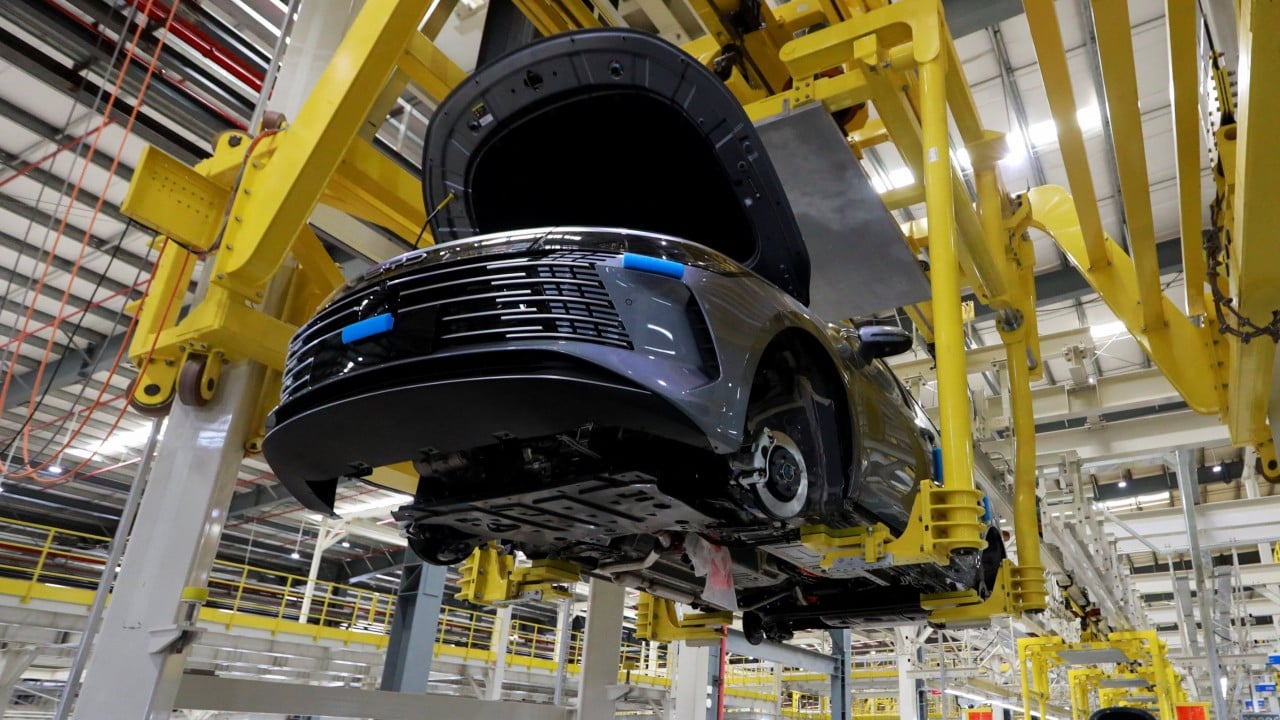
- Market Proximity: Localizing production in Brazil allows Chinese firms like BYD and GWM to bypass MERCOSUR trade barriers, treating Brazil as a manufacturing hub for the entire South American continent.
- Resource-to-Value Chain Integration: Rather than just exporting lithium or iron ore, Chinese firms are installing the processing plants and battery factories within Brazilian borders, capturing a higher percentage of the value chain.
The Energy Transition as a Geopolitical Lever
Energy accounts for the largest share of this $6.1 billion allocation. However, the internal composition of these investments has mutated. While petroleum remains a baseline requirement, the "New Three" industries—electric vehicles (EVs), lithium-ion batteries, and photovoltaic power—are the primary drivers of growth.
The investment in the electricity sector is not merely about power generation; it is about Grid Control. State Grid Corporation of China (SGCC) has secured massive transmission projects, including the 800kV ultra-high voltage (UHV) lines. These are not just utilities; they are the literal nervous system of Brazilian industrialization. By controlling the transmission, China ensures that the standards for Brazil’s future energy grid are aligned with Chinese technical specifications, creating a decades-long "vendor lock-in" effect.
The Cost Function of Localized Manufacturing
The decision to pour billions into Brazilian manufacturing sites—most notably the $1.1 billion BYD complex in Bahia—defies traditional low-cost labor logic. Brazil is not a low-wage environment compared to Southeast Asia. The move is a calculated response to the Cost of Exclusion.
- Tariff Avoidance: Brazil’s increasing import taxes on EVs make direct exports from China uncompetitive.
- Logistics Compression: Reducing the 11,000-mile maritime supply chain to a domestic trucking route mitigates the risk of Red Sea-style maritime disruptions or rising freight costs.
- Tax Incentives: The Brazilian government’s "Mover" program provides significant tax credits for companies that achieve specific decarbonization and local-content benchmarks.
This creates a self-reinforcing cycle. As Chinese firms meet local-content requirements, they gain access to BNDES (Brazilian Development Bank) financing, effectively using Brazilian capital to subsidize the expansion of Chinese industrial dominance.
Infrastructure and the Logistics Bottleneck
Brazil’s historical Achilles' heel is the "Custo Brasil"—the high cost of doing business caused by fragmented logistics. China’s $6.1 billion investment strategy addresses this via the Logistics-Infrastructure Feedback Loop.
Investment in port facilities (such as the Porto do Açu and Paranaguá terminals) and railway links serves a dual purpose. First, it reduces the landed cost of Brazilian soybeans and iron ore bound for China. Second, it creates a "right-of-way" for Chinese telecommunications and digital infrastructure. Where the railway goes, the fiber-optic cable follows. Huawei and other tech entities are the silent beneficiaries of these physical infrastructure plays, embedding 5G hardware into the very ports and rails financed by their SOE counterparts.
Quantitative Discrepancies and Reporting Lags
A critical analytical friction point lies in the delta between Announced Capital and Actualized Disbursement. The $6.1 billion figure often reflects signed MoUs (Memorandums of Understanding) and multi-year project approvals. The actual cash flow follows a "J-Curve" deployment:
- Phase I (Year 1-2): Regulatory clearing and land acquisition (Low capital intensity).
- Phase II (Year 3-5): Construction and machinery import (High capital intensity).
- Phase III (Year 6+): Operational scaling and reinvestment of local profits.
Currently, Brazil is entering the peak of Phase II for projects initiated during the 2021-2022 cycle. This suggests that the $6.1 billion is not a one-time spike but the beginning of a multi-year plateau of high-intensity capital expenditure.
The Risk Profile of the Brazil-China Nexus
Despite the bullish data, three systemic risks threaten the stability of these investments.
Currency Volatility and Inflation Risk: The Brazilian Real (BRL) is notoriously volatile. For Chinese investors, the "FX Translation Risk" means that even if a project is profitable in BRL, its value in CNY or USD may erode. This forces Chinese SOEs to utilize sophisticated hedging instruments or, more commonly, to demand "Take-or-Pay" contracts denominated in hard currency for energy projects.
Regulatory Instability: While the current administration is pro-investment, Brazil’s regulatory environment is characterized by "Legal Uncertainty." Environmental licensing in the Amazon and indigenous territories can stall projects for years, turning a high-yield investment into a stranded asset.
Geopolitical Blowback: As Brazil becomes a hub for Chinese manufacturing, it risks secondary sanctions or trade friction with the United States. If Brazil-made "Chinese" EVs start flooding the North American market via regional trade agreements, the US may apply pressure on Brasília to restrict Chinese FDI in sensitive sectors.
The Strategic Play for Market Participants
The $6.1 billion inflow is a signal that Brazil has moved from being a "commodity farm" to a "strategic bridgehead." For global investors and competitors, the move is no longer to compete with China on raw capital—Western firms cannot match the state-backed financing of the China Development Bank. Instead, the opportunity lies in the Ancillary Ecosystems.
The influx of Chinese hardware requires localized software, maintenance, specialized legal services, and ESG auditing that meets Western standards to keep these projects "bankable" for international co-investors.
Organizations must now view Brazil through the lens of a Dual-Standard Market. Companies that can bridge the gap between Chinese technical hardware and Western ESG/Regulatory compliance will capture the highest margins in this new corridor. The focus shifts from "Who owns the asset?" to "Who manages the complexity of the asset?" As China cements its position as the primary financier of the Brazilian industrial base, the real battle moves to the control of the operational data and the maintenance of the critical infrastructure built by this $6.1 billion surge.