International security architecture is fundamentally anchored on the principle of non-proliferation. When political figures pivot from strict denuclearization mandates toward the pragmatic accommodation of rogue nuclear stockpiles, the shift exposes deep fractures in global deterrence theory. Evaluating this shift requires stripping away diplomatic rhetoric and examining the underlying cost functions, systemic incentives, and security trade-offs governing state-level nuclear acquisition.
The Divergence of Non-Proliferation Logic
Standard geopolitical strategy treats nuclear proliferation as an existential systemic risk. The traditional framework relies on uniform deterrence: states without nuclear weapons must be systematically blocked from acquisition to prevent regional arms races and the degradation of global stability. You might also find this related coverage useful: The Economics of Exhaustion Why Western Defense Industrial Bases Fail.
However, de facto nuclear states present a distinct structural problem. Once a regime crosses the threshold of weaponization, integrates fissile material production into its domestic industrial base, and develops second-strike delivery systems, the cost function of forced rollback shifts dramatically.
- The Rollback Cost Curve: Attempting disarmament via military intervention carries catastrophic escalation risks, while economic coercion frequently drives the target regime further into isolation and technological self-sufficiency.
- The Acceptance Threshold: Pragmatic accommodation occurs when the transactional costs of maintaining a perpetual denial strategy outweigh the systemic costs of acknowledging a permanent breakout state.
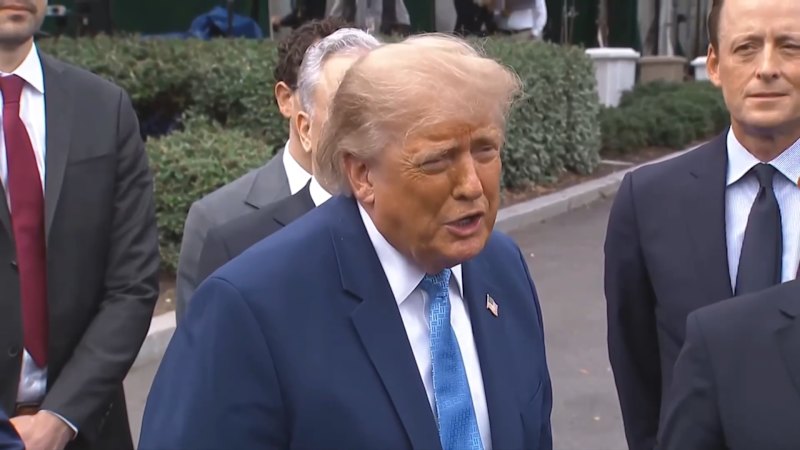
When leadership dismisses historical non-proliferation benchmarks in favor of personal diplomacy or managed coexistence, it signals a transition from an enforcement posture to a containment model. This transition fundamentally alters the security calculations of neighboring sovereign states. As highlighted in recent coverage by NBC News, the implications are widespread.
The Regional Spillover Effect
A security architecture that implicitly accepts a localized nuclear arsenal triggers rational defensive adaptations among regional allies. When Seoul or Tokyo evaluates an adversary holding a mature warhead inventory, standard alliance guarantees face severe credibility tests.
- The Assurance Deficit: If a superpower patron signals tolerance for a hostile nuclear neighbor based on bilateral rapport rather than multilateral security guarantees, allied capitals immediately question the reliability of extended deterrence.
- The Endogenous Defense Push: This deficit accelerates internal debates regarding indigenous nuclear latency or outright weaponization. The calculus shifts from maintaining a non-nuclear status to acquiring independent deterrent capabilities to match the adversary's force structure.
Consequently, the tolerance of one breakout state erodes the normative barriers across the broader security perimeter. The systemic consequence is not regional stabilization, but an elevated probability of cascading horizontal proliferation.
The Mechanics of Personalized Diplomacy
A critical vulnerability in contemporary diplomatic strategy is the substitution of institutional frameworks with personalized channels. Traditional statecraft relies on bureaucratic continuity, verifiable verification regimes, and multilateral consensus. Personal diplomacy, by contrast, operates on idiosyncratic variables: perceived mutual respect, direct communication lines, and tactical de-escalation of immediate provocations.
This approach introduces severe operational vulnerabilities. Personalized accords lack institutional durability. When leadership transitions occur or political priorities shift, agreements built on interpersonal rapport dissolve instantly, leaving behind an entrenched, modernised nuclear infrastructure that has gained legitimacy through prolonged diplomatic engagement.
Strategic Reality and Future Alignment
Managing a nuclear-armed adversary without a verifiable rollback mechanism requires acknowledging hard trade-offs. The pursuit of short-term de-escalation through the tacit acceptance of prohibited arsenals trades immediate tactical calm for long-term strategic instability.
Stabilizing regional security under these conditions demands a shift away from personality-driven optics toward rigorous, verifiable risk-reduction protocols. Without structural verification, any diplomatic accommodation functions merely as a strategic pause, allowing the proliferator to optimize its delivery systems while the international coalition fractures over diverging regional priorities.