Municipal capital projects intersecting with Indigenous land claims generate complex administrative, financial, and legal friction. When public infrastructure renewal coincides with unceded or contested territory assertions, standard project management frameworks break down. The debate surrounding the 25-metre Vancouver Aquatic Centre rebuild offers a textbook case study in how jurisdictional ambiguity, sovereign rights, and municipal asset management collide. Most public discourse reduces this friction to a binary conflict between community amenity delivery and Indigenous rights. That framing ignores the underlying structural mechanics governing land tenure, capital expenditure risk, and municipal governance in British Columbia.
Evaluating this situation requires shifting away from political rhetoric and examining the three primary variables dictating the trajectory of the project: jurisdictional overlapping, the mechanics of land claims in unceded territories, and municipal capital allocation constraints under public scrutiny.
Jurisdictional Overlapping and Asset Lifecycle Management
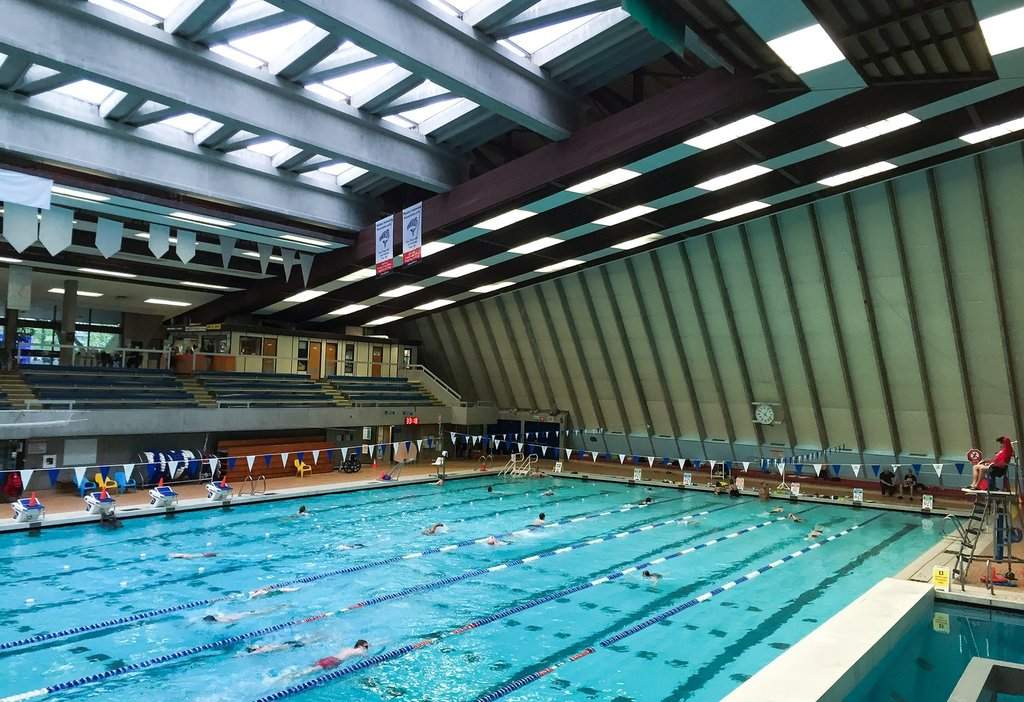
The Vancouver Aquatic Centre, situated at the south end of the Burrard Street Bridge, represents an aging municipal asset nearing the end of its operational lifecycle. Standard capital planning for municipal pools involves a straightforward depreciation schedule, engineering audits, and phased replacement budgeting. However, when an infrastructure asset occupies land subject to historical and legal claims by First Nations—specifically the xʷməθkʷəy̓əm (Musqueam), Sḵwx̱wú7mesh (Squamish), and səlilwətaɬ (Tsleil-Waututh) Nations—the traditional project lifecycle model ceases to function.
Municipalities operate under provincial legislative frameworks, specifically the Vancouver Charter in this instance. These charters grant cities the authority to manage local public spaces, parks, and recreational facilities. Conversely, Indigenous land claims are rooted in constitutional law, specifically Section 35 of the Constitution Act, 1982, alongside evolving case law concerning Aboriginal title and the Crown's duty to consult and accommodate.
This creates a dual-track authority structure. The Park Board holds operational jurisdiction over the park land, while the broader municipal government manages city-wide capital planning. Meanwhile, First Nations hold prior rights and title interests that predate municipal incorporation. When the Park Board chair identifies a rebuild proposal as a land claim issue rather than a standard capital upgrade, they are acknowledging a fundamental legal reality: municipalities cannot unilaterally alter, expand, or reconstruct infrastructure on contested or claimed land without risking legal injunctions, protracted litigation, or severe reputational and relational damage.
The operational bottleneck is not merely bureaucratic delay; it is a structural mismatch between municipal timelines and legal consultation mandates. Municipalities operate on fiscal year budgets, political election cycles, and urgent maintenance triggers due to aging concrete and mechanical systems. Indigenous governance structures and legal consultation processes operate on frameworks of consensus, comprehensive stewardship review, and the establishment of long-term economic reconciliation frameworks. Forcing a municipal timeline onto a rights-recognition process creates structural failure.
The Cost Function of Infrastructure Delays
In municipal finance, capital project costs scale non-linearly with time. Inflation in construction materials, labor shortages, and interim maintenance costs for aging facilities create a compounding penalty for every month a project remains stalled in administrative or legal limbo.
When a project is framed or impacted by land claim considerations, the financial modeling must account for unique risk premiums:
- Litigation and Negotiation Overhead: Legal counsel, specialized negotiators, and administrative engagement eat into capital allocations before a single pile is driven.
- Carrying Costs of Deferred Maintenance: Keeping an obsolete aquatic facility operational requires continuous patching of mechanical systems, increasing operational expenditures while generating zero long-term asset value.
- Opportunity Cost of Capital: Bond issues or capital reserves tied up in stalled projects cannot be redeployed to other municipal deficits, multiplying the municipal opportunity cost.
The Vancouver Park Board faces a tight fiscal corridor. Municipalities in British Columbia face statutory limits on debt accumulation and are heavily reliant on property tax adjustments or senior government grants to fund major capital projects. Introducing land claim negotiations late in the feasibility stage disrupts the cost-to-completion projection.
If the rebuild requires joint-venture agreements, revenue-sharing models, or land-swaps with local First Nations to satisfy title interests, the traditional procurement model is entirely invalidated. A traditional design-bid-build model must be replaced by a co-development model. Co-development fundamentally alters the cost function: initial transaction costs rise sharply, but long-term operational risk drops significantly because the risk of injunctions or downstream legal challenges is mitigated through early alignment.
The Mechanics of the Duty to Consult in Municipal Contexts
A critical oversight in public understanding of municipal-Indigenous friction is the legal distinction between the Crown's duty to consult and municipal delegation. Historically, Canadian courts have held that the duty to consult rests primarily with the Crown (provincial and federal governments), not municipal corporations, because municipalities are creatures of provincial statute and do not possess inherent constitutional crown status.
However, this legal technicality is functionally obsolete in modern urban planning. Provinces frequently delegate operational authorities—such as park management and zoning—to municipal bodies like the Vancouver Park Board. When a municipality exercises those delegated powers in a way that impacts asserted or established Aboriginal rights and title, the practical necessity of consultation does not vanish. If a municipality ignores Indigenous interests under the guise of lacking constitutional status, it exposes the project to successful judicial review and Section 35 challenges initiated by the affected Nations.
Therefore, the Park Board chair's framing reflects a pragmatic risk assessment. Acknowledging the land claim issue is an admission that municipal authority is bounded by constitutional realities.
To deconstruct how this dynamic manifests in practice, consider the progression of conflict vectors:
- Unilateral Municipal Planning: The city drafts a master plan for a park or facility based exclusively on internal recreational metrics and neighborhood consultation.
- Assertion of Title: Local First Nations formally notify the municipality that the proposed footprint infringes upon unceded territory or ancestral village/resource sites.
- Project Stagnation: Permits are contested, public campaigns emerge, and financing partners hesitate due to legal uncertainty.
- Paradigm Shift to Co-Governance: The municipality steps back from unilateral execution, shifting toward a negotiated framework that incorporates Indigenous design principles, archaeological monitoring, and equity partnerships.
The Vancouver Aquatic Centre rebuild is currently oscillating between steps two and four. The friction is a direct byproduct of transitioning from archaic municipal paternalism to modern reconciliation frameworks within a rigid physical footprint. A 25-metre pool replacement cannot simply be dropped onto the footprint of its predecessor without addressing the deeper legal architecture of the land beneath it.
Strategic Operational Forecast
Resolving the impasse at the Vancouver Aquatic Centre requires abandoning the premise that this is a standard capital replacement project experiencing political interference. It is an administrative restructuring disguised as a construction delay.
Municipalities attempting to modernize legacy infrastructure on contested urban land must restructure their internal project management offices to integrate Indigenous relations and legal strategy at the inception phase, rather than treating them as external variables to be managed after public consultation. The financial penalty of doing otherwise is guaranteed schedule slippage and inflated capital outlays.
Future urban infrastructure projects in British Columbia will no longer be evaluated solely on engineering specifications and budget adherence. Success will be measured by the efficacy of co-jurisdictional governance models established before ground is broken. The Vancouver Aquatic Centre rebuild will serve as a precedent—either negative or positive—for how municipalities manage the intersection of public amenity delivery and unceded Indigenous sovereignty.