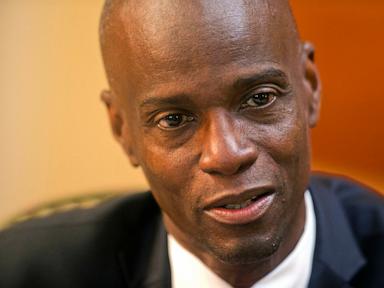
The federal courtroom in Miami serves as an imperfect theater for sorting through the wreckage of a shattered Caribbean state. Years after the July 2021 assassination of Haitian President Jovenel Moïse, judicial proceedings in the Southern District of Florida are moving past preliminary indictments into core adjudications. Yet viewing these trials merely as criminal accountability for individual actors misses the structural reality. The courtroom proceedings represent an exercise in extraterritorial jurisdiction attempting to untangle a decentralized conspiracy that bridged Florida real estate, Colombian military contracting networks, and elite political corruption inside Port-au-Prince.
To evaluate the ongoing Miami trials requires dissecting three distinct vectors: the financial and logistical architecture of the conspiracy, the institutional failure of domestic security apparatuses, and the limits of prosecuting transnational political violence through municipal federal courts.
The Financial and Logistical Architecture of Transnational Conspiracy
Complex political assassinations do not emerge from spontaneous radicalization; they operate as high-capital projects requiring specialized procurement. The conspiracy to eliminate Moïse functioned less like a traditional coup and more like a fragmented corporate venture backed by private capital, foreign mercenaries, and domestic political ambitions.
The logistical supply chain stretched from suburban Florida to the hills of Pétion-Ville. Christian Emmanuel Sanon, a Florida-based pastor with ambitions for high office, acted as an ideological and financial focal point, securing funding and organizing networks that believed they could install a transitional government. Beneath the political figureheads lay the procurement layer: former Colombian soldiers recruited under the guise of providing security detail for VIPs or infrastructure projects, who were later re-routed into an assault force.
This division of labor introduced severe operational vulnerabilities that are now laid bare under federal scrutiny. When conspirators rely on cross-border contracting, they generate digital trails, wire transfers, and communications logs that transcend weak domestic investigative bodies. The United States legal framework exploits these exact documentary failures. Federal prosecutors do not need to prove the intricate ideological motives of every participant; they rely on conspiracy statutes that penalize the cross-border coordination of violence, transforming a complex political homicide into an addressable racketeering and conspiracy problem.
The Structural Collapse of Internal Security
The operational success of the July 7 raid rested entirely on the systematic neutralization of the target's internal defense mechanisms. Moïse was protected by a presidential guard numbering between thirty and fifty officers. On the night of the breach, those defenses dissolved without significant resistance.
In forensic terms, the absence of active defense points to systemic institutional rot rather than mere cowardice. Subsequent investigations revealed that key elements within the security detail were compromised, compromised either through direct financial inducements or long-standing institutional alignment with opposing political and economic factions. When the assaulting force arrived at the private residence in Pétion-Ville, they encountered a vacuum where a perimeter should have existed.
This dynamic exposes the primary fragility of executive protection in fragile states: the bodyguard detail is only as reliable as the central state's ability to maintain a monopoly on loyalty. When executive authority is contested by domestic oligarchic interests and systemic state capture, personal security details become transactional assets. The trials in Miami are uncovering the mechanics of this internal corrosion, detailing how conspirators systematically peeled away institutional buffers months before the physical breach occurred.
The Limits of Extraterritorial Jurisprudence
Relying on federal courts in Miami to resolve the assassination of a foreign head of state highlights a profound mismatch between municipal legal tools and transnational political crimes. United States federal courts possess jurisdiction over conspiracies hatched or partially orchestrated within American borders—such as meetings held in Florida or financial transactions cleared through domestic banking channels.
However, prosecuting a subset of conspirators in a foreign jurisdiction creates an analytical distortion. The trials isolate discrete criminal acts from the broader ecological context of Haitian political corruption. While defendants face charges ranging from conspiracy to kill a person outside the United States to providing material support for murder, the judicial process cannot address the systemic void left in Haiti itself.
Haiti has operated without an elected president since the assassination, sliding deeper into territorial fragmentation dominated by armed gangs. Over three thousand people were killed in violence tracked across single reporting periods, and millions remain displaced. The Miami trials deliver individual sentences and establish legal records, but they function in a vacuum detached from structural rehabilitation. Prosecuting mercenaries and financiers in Florida does not alter the domestic balance of power in Port-au-Prince, nor does it rebuild fractured institutions.
Strategic Forecast for Regional Security and Legal Precedents
As federal juries deliver convictions and additional defendants face arraignment, the legal architecture established by these proceedings will set a critical precedent for how the United States handles transnational conspiracies against foreign leaders originating within its borders.
The trajectory of these trials indicates that prosecutors will successfully secure convictions against key organizers and mercenaries by exploiting financial records and co-operating witnesses. Yet, this legal closure will run parallel to deepening structural decay in Haiti. The long-term consequence is a bifurcated reality: clinical, highly formalized accountability administered in a Miami federal courtroom, contrasting sharply with the unmitigated security vacuum defining daily life in the Caribbean nation. Future deterrence against transnational political violence will depend less on the severity of Miami sentencing guidelines and more on the tightening of financial surveillance over private security procurement originating in Western jurisdictions.


