Canada is systematically dismantling its post-Cold War defense procurement model. Driven by structural friction in bilateral relations with the United States and an urgent requirement to project hard power into the Arctic, Ottawa has initiated a generational realignment of its national security apparatus.
This transition relies on a calculated pivot from a decentralized, U.S.-dependent acquisition model to a sovereign industrial strategy. Understanding this shift requires looking past surface-level budget announcements and examining the underlying economic mechanisms, procurement bottlenecks, and institutional architectures governing Canada's defense reindustrialization.
The Tripartite Economic Engine
The operational mechanics of Canada's defense expansion rest on three distinct structural pillars: accelerated spending baselines, localized procurement mandates, and dual-use technological incubation.
The first pillar is capital velocity. After decades of chronic underfunding that lagged behind NATO benchmarks, structural adjustments have pushed spending upward to meet the 2 percent GDP threshold. More significantly, the multi-year defense strategy projects an expansion path toward 5 percent of GDP by the mid-2030s. This influx is managed by the newly established Defence Investment Agency (DIA), an institutional mechanism designed to bypass traditional bureaucratic procurement paralysis. The DIA functions less as an ordinary administrative office and more as a sovereign wealth vehicle directed toward domestic defense equity, coordinating capital allocation across the National Technology and Industrial Base (NTIB).
The second pillar involves domestic substitution. Historically, Canadian defense procurement relied on Foreign Military Sales (FMS) through Washington, resulting in capital leakage to American prime contractors. The current industrial framework introduces explicit domestic-preference constraints. By directing capital into local manufacturing channels—ranging from specialized cold-weather textiles to heavy munitions production—Ottawa aims to capture the multiplier effect of defense spending within domestic labor markets.
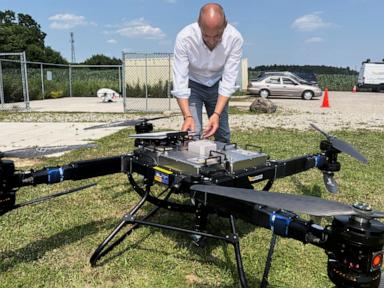
The third pillar is dual-use commercial integration. Because Canada's baseline posture remains distinct from a total-mobilization wartime economy, long-term contractor viability depends on commercial adaptability. Small and medium-sized enterprises (SMEs) are leveraging non-traditional sectors—such as autonomous robotics, artificial intelligence, and uncrewed aerial systems—to supply both civilian infrastructure and military requirements. Programs like the Bureau of Research, Engineering and Advanced Leadership in Innovation and Science (BOREALIS) serve as technical accelerators, compressing the timeline from fundamental research to operational deployment.
The Geopolitical Cost Function
The strategic divergence between Ottawa and Washington is not merely diplomatic; it is economic and operational. For decades, the implicit social contract of North American defense was clear: the United States provided a nuclear umbrella and high-end technological depth (exemplified by programs like the F-35), while Canada contributed niche capabilities and territorial access.
As tariff pressures, trade disputes, and divergent industrial policies strain this bilateral architecture, Canada faces a critical structural vulnerability: dependency on foreign supply chains for core national security assets.
To mitigate this exposure, Canada's "build-partner-buy" framework establishes a risk-hedging protocol:
- Build: Core capabilities requiring absolute sovereignty, such as domestic ammunition production, Arctic surveillance infrastructure, and local shipbuilding.
- Partner: Collaborative co-production with middle powers and alternative allies (such as European defense contractors for submarines and maritime patrol assets) to bypass American single-source bottlenecks.
- Buy: Off-the-shelf procurement from global markets only where domestic scaling is economically irrational.
This tripartite approach explains why Ottawa bypassed certain U.S. platforms in favor of European defense options. It reflects a calculated effort to insulate Canadian strategic autonomy from shifts in American political administrations.
Operational Constraints and Execution Risks
Despite the capital injection, the trajectory of Canada's defense industrial strategy faces severe systemic bottlenecks.
The primary friction point is industrial capacity. Decades of atrophy have left Canadian manufacturing without the skilled labor force, specialized machine tooling, and material inputs required to instantly absorb billions in defense contracts. While venture capital and government grants flow into early-stage robotics and drone startups, the transition from prototype to mass production remains unproven.
The second constraint is the friction of integration within existing binational structures. Organizations like the North American Aerospace Defense Command (NORAD) demand deep technical interoperability. If Canada attempts to decouple its defense supply chains from the United States while simultaneously trying to modernize continental aerospace defense, it risks creating technical incompatibilities. Communications protocols, secure data links, and cryptographic systems must remain interoperable across the border, limiting the extent of true industrial isolation.
Furthermore, geographic imperatives dictate collaboration. The Arctic theater is too vast, environmentally hostile, and economically punishing for any single middle power to secure unilaterally. Initiatives like the trilateral icebreaker pact involving the United States, Canada, and Finland demonstrate that selective industrial interdependence remains mandatory, even as broad political relations fray.
Strategic Execution Playbook
To successfully execute this transition without collapsing under the weight of procurement delays or fiscal inefficiency, industrial stakeholders and policy architects must navigate the following operational parameters:
- Target Dual-Use Scalability: Defense contractors must avoid pure-play military business models. Viability requires maintaining dual-use commercial pipelines that sustain revenue during procurement cycle troughs.
- Prioritize Sovereign Technology Gaps: Capital allocation should focus strictly on asymmetric advantages where Canada holds natural endowments, specifically critical minerals extraction, cold-weather engineering, and uncrewed autonomous navigation for polar domains.
- Institutionalize Multi-Allied Interoperability: Procurement programs must mandate technical standards compatible with both NATO allies and North American legacy systems to avoid operational isolation.