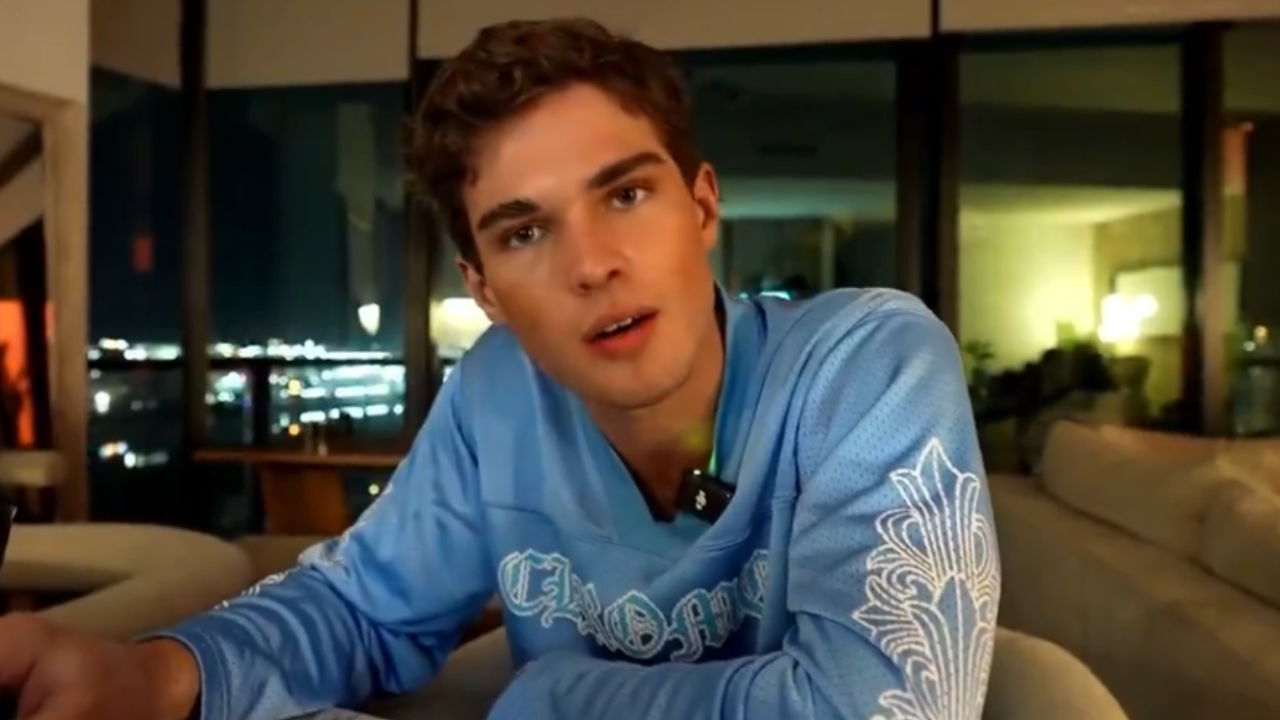
The modern live-streaming economy operates on platform arbitrage. When a prominent creator like Clavicular signals a potential relocation from Kick back to Twitch, the underlying decision is rarely emotional; it is a calculated response to margin compression, audience acquisition ceilings, and shifting monetization infrastructure. Observers often misinterpret these shifts as mere branding exercises or tribal loyalty tests, ignoring the cold financial mechanics governing creator retention.
Platform migration requires a rigorous cost-benefit analysis where upfront revenue guarantees are weighed against long-term audience decay and algorithmic visibility. To understand why creators continually evaluate these moves, we must deconstruct the financial mechanics, audience portability limits, and platform incentive structures that dictate the streaming market.
The Economic Triad of Live Streaming Platforms
Every streaming enterprise balances three competing financial vectors: creator acquisition cost, monetization efficiency, and infrastructure overhead.
Platform competition relies heavily on aggressive upfront guarantees to capture market share. However, these guarantees create structural imbalances. When a platform subsidizes a creator's base revenue beyond what organic ad impressions and subscription volume can support, the business model depends entirely on continuous external investment or rapid user base scaling.
Monetization efficiency dictates how effectively a platform converts raw watch time into fiat currency. Twitch relies on a mature, diversified infrastructure featuring native extensions, established brand ad-insertion systems, and habitual subscriber conversion patterns. Kick, conversely, has utilized aggressive revenue-share splits to attract talent, bypassing traditional margin retention to incentivize migration.
Infrastructure overhead limits how long a platform can sustain high-payout models. Video delivery networks, chat scaling, and moderation tools impose fixed operational costs. When margin pressure mounts, platforms inevitably adjust creator terms, triggering the exact migration cycles observed across the industry.
Audience Portability and Decay Functions
The core risk of any platform switch is audience attrition. Live-streaming audiences do not exhibit the same portability as static video consumers on archives-based networks.
When a creator shifts ecosystems, they encounter an immediate friction penalty. Viewers face three distinct barriers during a migration:
- Authentication and Habit Friction: Requiring a user to create a new account, install a different application, or alter their daily bookmark routine reduces conversion rates significantly.
- Algorithmic Discontinuity: Discovery mechanisms vary wildly between platforms. A creator optimized for one homepage recommendation algorithm may find their baseline organic reach compressed on another.
- Ecosystem Utility Loss: Platform-specific features, such as custom chat emotes, integrated extensions, and community touchpoints, do not transfer. The audience loses localized utility upon moving.
Mathematical modeling of creator migrations typically shows a sharp drop in concurrent viewership during the initial thirty-day window, followed by a logarithmic recovery phase. Creators who retain more than sixty percent of their baseline audience post-migration generally possess strong off-platform communities, such as Discord servers or YouTube channels, that act as retention funnels. Those reliant entirely on on-platform discovery experience severe audience contraction.
Contractual Leverage and the Signaling Game
Public statements regarding platform deals function as signaling mechanisms designed to maximize negotiating leverage. When a streamer hints at an impending switch without disclosing specifics, they initiate a bilateral monopoly negotiation dynamic.
The mechanics of this signaling game involve several distinct phases. First, the creator builds anticipation within their community, testing audience sentiment regarding the target platform. Second, they signal market interest to current and competing executive teams, creating artificial urgency. Third, they leverage this perceived optionality to extract favorable terms regarding revenue splits, non-exclusivity clauses, or promotional backing.
Exclusive contracts introduce high opportunity costs. By locking into a single ecosystem, a creator forfeits the ability to capture seasonal spikes on competing platforms or hedge against platform-specific policy shifts. Consequently, sophisticated creators increasingly demand hybrid or non-exclusive arrangements that preserve multi-platform optionality, even if the headline guaranteed payout is lower.
Platform Incentive Structures and Creator Lifecycle Stages
A creator's optimal platform strategy depends entirely on their current lifecycle stage. Growth-stage streamers require maximum discoverability, making legacy platforms with established organic traffic pipelines superior despite lower short-term revenue splits. Mature creators, conversely, maximize financial extraction by leveraging their existing audience equity on high-paying alternative platforms where they can monetize loyal fans without relying on organic discovery.
This lifecycle dynamic creates a continuous churn cycle. Emerging platforms capture mid-tier creators by offering outsized financial terms, while established platforms retain top-tier talent through network effects and robust infrastructure stability.
To future-proof operations, independent creators must decouple their brand identity from any single hosting infrastructure. Diversifying revenue across direct-to-consumer merchandise, independent video distribution, and cross-platform syndication mitigates the structural risks inherent in platform arbitrage. Treat platform agreements as short-term liquidity events rather than permanent operational homes, maintaining audience touchpoints that remain resilient regardless of where the live stream originates.


