Crimea, once Vladimir Putin’s ultimate geopolitical crown jewel, has transformed into an unsustainable security liability as coordinated Ukrainian drone and missile interdiction severs the peninsula's vital supply lines. By choking off fuel supplies, crippling fixed transit links like the Chonhar Bridge, and forcing a total state of emergency, Kyiv has systematically isolated the occupied territory. The Russian military can no longer safely supply its southern front lines or protect the civilian population, turning a symbol of imperial pride into a massive economic and logistical drain that compromises Moscow's broader campaign.
For twelve years, the narrative surrounding the peninsula was one of permanent integration and impregnability. That illusion is shattered.
The Logistics Collapse along the Highway of Death
The crisis reached a tipping point following the launch of a targeted interdiction effort by the Unmanned Systems Forces of Ukraine. This campaign focused squarely on achieving a total breakdown of occupational logistics within a critical depth behind the active front lines. Ukrainian forces shifted from sporadic high-profile strikes to a continuous, grinding assault on the arterial roads, bridges, and rail networks that connect Crimea to the southern mainland.
The results were immediate and devastating. In June, precision strikes severely damaged the Chonhar Bridge across the Syvash, cutting off the main highway route utilized for heavy military transport. Russian forces were forced to resurrect a temporary pontoon bridge first laid years prior, exposing a profound lack of structural redundancies. This forced detour created massive bottlenecks that left military convoys exposed to aerial reconnaissance and subsequent destruction.
Military cargo traffic along these southern highways dropped by over seventy percent within a single fortnight. The Russian command attempted to route logistics through alternative paths, but those lines proved equally vulnerable. Civilian truck movements were heavily restricted or outright banned by occupying administrators in Kherson and Luhansk as the military monopolized the remaining functional tarmac. Security became an impossible equation. The Kremlin discovered that holding a fortress matters very little if you cannot feed the garrison.
A State of Emergency and the Empty Pump
The strategic isolation of the peninsula is not merely a military problem. It is an economic catastrophe. In late June, the occupying head of Crimea, Sergei Aksyonov, was forced to declare a formal state of emergency across the territory. While official channels blamed general economic disruptions, the ground reality was defined by blackouts and a near-total depletion of refined petroleum products.
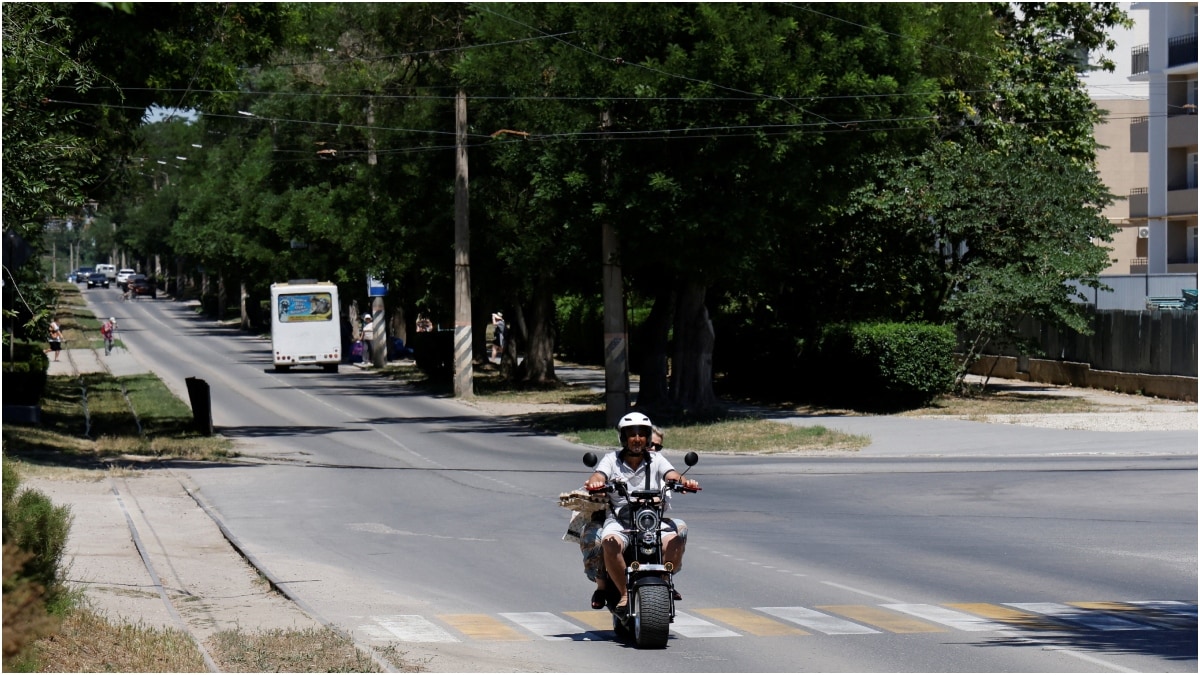
Fuel became the ultimate currency. Long queues snaked for kilometers down Crimean highways as filling stations completely exhausted their supplies of high-octane gasoline and diesel. Local authorities implemented strict rationing, capping civilian purchases at twenty liters per person through a archaic system of physical coupons. Public transportation networks across the peninsula ground to a halt or faced severe service reductions to preserve remaining fuel reserves for emergency services and military vehicles.
The civilian economy collapsed in lockstep. ATMs ran out of physical currency, and major commercial centers simply shuttered their doors due to rolling electrical outages and an absolute lack of consumer goods. Essential food items like sugar and bread became scarce in remote districts. To keep personal vehicles running, residents turned to a thriving black market, purchasing fuel directly from corrupt Russian soldiers who siphoned gas from military stockpiles at exorbitant prices. This internal rot further compromised the operational readiness of frontline units.
The Evacuation of the Imperial Playground
The domestic political value of the territory was historically tied to its status as a premier tourist destination, a tangible reward for the Russian public. That image is dead. The current summer season has seen the total closure of beaches, resort hotels, and youth camps across Sevastopol and western Crimea.
Air defenses failed to shield these coastal areas from incoming ordnance. Beachgoers found themselves dodging falling shrapnel from intercepted missiles, a reality that forced the occupation government to admit that no zone on the peninsula remained safe. The Black Sea Fleet, which once dominated the regional waters from its historic base in Sevastopol, has been thoroughly beaten back. Ukrainian naval drones and long-range missile strikes forced the remaining surface vessels to flee eastward to the relative safety of Novorossiysk, leaving the Crimean coastline undefended from the sea.
Tourism was the lifeblood of the local non-military economy. Its sudden elimination has left hundreds of thousands of local residents without income, forcing the Kremlin to choose between providing massive financial bailouts or risking severe civil unrest. For Putin, the political humiliation of an empty, locked-down Crimea is a direct blow to the foundational myth of his wartime leadership.
The Financial Drain on a War Economy
The physical defense of the peninsula requires resources that Moscow can no longer easily spare. With casualties mounting heavily on the eastern front, the necessity of maintaining a massive defensive force in the south strains Russia’s overextended recruitment system. The casualty ratio has tilted sharply against the occupying forces due to the ubiquity of strike drones.
The non-military economy of Russia is fracturing under the weight of deficit spending and rising inflation. Funding the occupation of a territory that produces zero economic output while consuming billions in security subsidies is an unsustainable proposition. Repairing targeted oil refineries and energy infrastructure within Russia proper is already costing billions; fixing the infrastructure of an isolated peninsula under constant bombardment is an exercise in futility.
The assumption that Russia could sustain an open-ended conflict at acceptable political and societal levels is being tested to its limits. The peninsula is no longer an unsinkable aircraft carrier. It is an anchor dragging down the entire state apparatus.
To truly understand how deep this logistical strangulation goes, witness the physical destruction of the main supply arteries that the Kremlin relied upon for years to maintain its grip on the south. For an in-depth visual breakdown of these operations, watch this report on how Ukraine crushes Russian logistics, which details the fiery aftermath of the strikes on the critical Chongar transit corridors.
The Kremlin remains trapped by its own rhetoric. It cannot retreat from the peninsula without triggering a catastrophic domestic political crisis, yet it cannot protect or supply the territory without diverting resources that are desperately needed elsewhere. The lines continue to thin. A geographic prize has become a strategic prison.