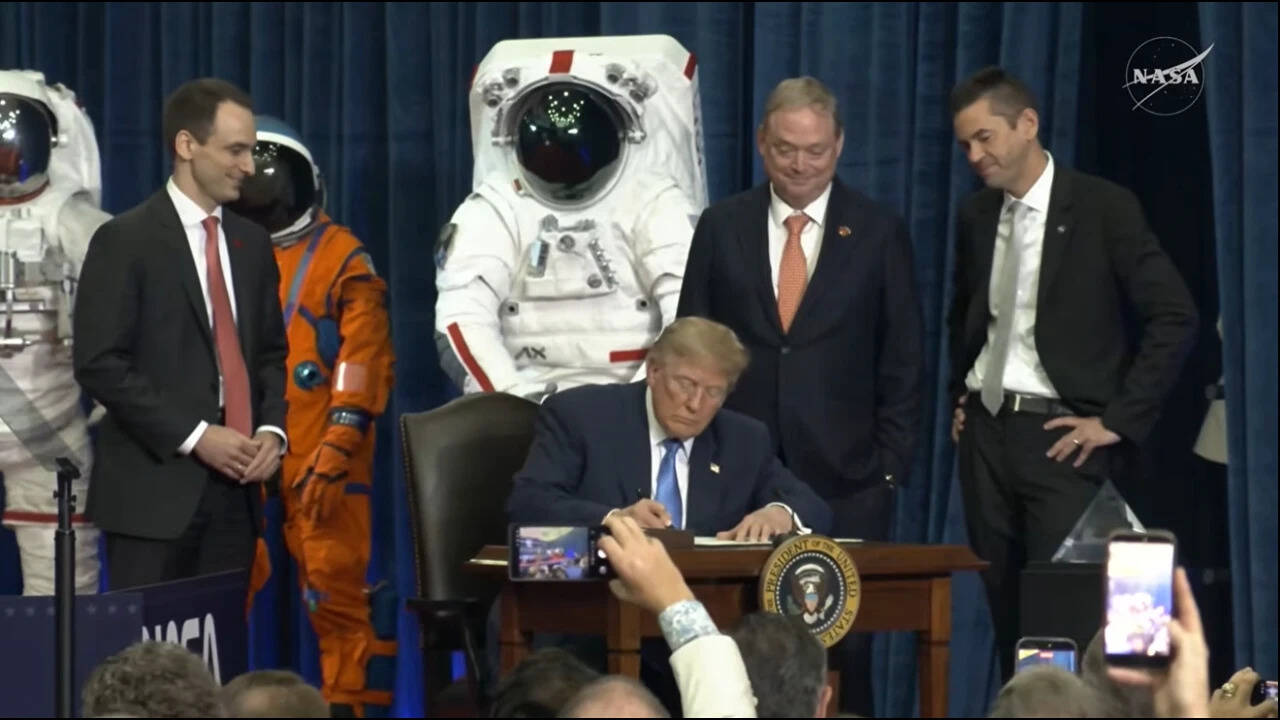
Institutionalizing human capital development for deep space operations requires shifting from ad-hoc astronaut selection pipelines to standardized, repeatable training architectures. The announcement regarding a dedicated space academy and extended operational horizons beyond lunar orbit highlights a structural transition in government-backed aerospace programs. This move addresses a fundamental capacity constraint: the current personnel pipeline is optimized for Low Earth Orbit maintenance, not prolonged interplanetary transit. Scaling missions to Mars and beyond necessitates a rigorous breakdown of training infrastructure, economic trade-offs, and systemic bottlenecks.
The Operational Deficit of Low Earth Orbit Paradigms
For decades, human spaceflight training focused on ISS residency, extravehicular activity within microgravity, and short-duration orbital mechanics. This framework assumes immediate rescue vectors, continuous supply chains, and low radiation exposure profiles. Transitioning operations past cislunar space invalidates these assumptions entirely.
Communications latency introduces autonomous decision-making requirements that standard mission control protocols do not train for. At Martian distances, round-trip signal delay ranges from eight to forty-four minutes. Trainees must master decentralized problem-solving, local hardware synthesis, and immediate hazard mitigation without ground-station telemetry support.
Psychological isolation scales non-linearly over months of transit. While ISS crews maintain daily visual contact with Earth and frequent cargo rotations, deep space missions induce profound sensory deprivation and interpersonal friction. Training pipelines must integrate prolonged confinement models with simulated communication blackouts to quantify crew resilience and operational degradation under high-stress conditions.
Structural Anatomy of a Dedicated Space Academy
Establishing an institution dedicated explicitly to deep space personnel requires redesigning selection criteria, technical curricula, and physical conditioning. The curriculum divides into three core operational domains: systems redundancy management, in-situ resource utilization, and closed-loop life support maintenance.
Candidates transition from mission-specific specialists to generalized systems engineers. Because crew sizes for deep space transit will remain small, typically four to six individuals, cross-functional competence is mandatory. A pilot must diagnose closed-loop environmental control failures, and a payload specialist must understand structural propulsion telemetry.
Technical Competency Vectors
- Closed-loop life support recovery mechanics and greywater reclamation loops
- Autonomous manufacturing utilizing local regolith and additive printing techniques
- Radiation shielding optimization and emergency solar proton event shelter protocols
- Orbital mechanics under high-thrust and continuous-burn propulsion regimes
Physical training moves away from neutral buoyancy simulation, which mimics microgravity but fails to replicate partial-gravity environments. Training regimens must incorporate fractional gravity adaptation protocols for lunar and Martian surface operations, where bone density loss and muscular atrophy manifest differently than in zero-gravity.
Economic Trade-offs and the Cost Function of Interplanetary Expansion
The expansion of national space capabilities beyond cislunar space is fundamentally bound by mass constraints and fiscal efficiency. Every kilogram launched into deep space carries an exponential cost penalty dictated by the Tsiolkovsky rocket equation.
Delta-V = Isp * g0 * ln(m0 / mf)
This physical reality dictates that institutional investment must prioritize mass reduction technologies over brute-force launch cadence. A space academy must therefore emphasize theoretical efficiency. Operators who understand propulsion chemistry, mass fractions, and thermal dynamics can execute missions with tighter margins, reducing the payload requirement for consumables and unneeded hardware.
The capital allocation strategy splits between terrestrial simulation facilities and actual flight hardware. Building high-fidelity deep space analogs on Earth, such as subterranean habitat networks or closed-ecological life support systems, offers a higher return on investment than premature flight testing. Ground-based failure analysis remains economically superior to orbital asset loss.
Systemic Bottlenecks in the Talent Pipeline
The primary constraint facing national space expansion is not hardware availability or budget allocation, but the velocity of human talent development. Traditional aerospace engineering education emphasizes component design over systemic integration. Universities produce specialists in propulsion, aerodynamics, or avionics, leaving a gap in holistic mission architecture.
A dedicated academy bridges this gap by enforcing interdisciplinary cross-training. However, institutional inertia within civil service and defense contracting creates friction. Procurement cycles for training simulators often lag behind rapid advancements in private sector propulsion and avionics, leaving trainees practicing on outdated interfaces.
Furthermore, competition with commercial space ventures drains experienced operational staff. Private aerospace firms offer remuneration packages that public institutions struggle to match, resulting in a brain drain of mid-career flight directors and systems engineers. To retain institutional knowledge, the academy must function as a dual-purpose entity, partnering with commercial operators to share telemetry data, training methodologies, and risk mitigation strategies.
Execution Pathways for Long-Duration Missions
Deploying personnel past the moon requires a phased capability ramp. Initial operational exercises should focus on permanent cislunar outposts as staging grounds, validating life support reliability before committing crews to heliocentric transit.
Training programs must abandon static curriculum models in favor of dynamic failure injection. Instructors should simulate cascading system failures where life support, propulsion, and navigation degrade simultaneously, forcing crews to prioritize resource allocation under extreme duress.
Establish mandatory joint-simulation exercises between ground controllers and flight crews operating under simulated deep-space communication delays. Rehearse autonomous planetary surface deployment procedures using remote-operated robotic precursors before human landing vectors are executed. Audit all legacy ISS training protocols to isolate and eliminate assumptions regarding immediate rescue availability.