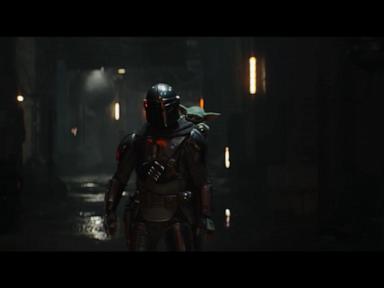
The shift of The Mandalorian from a flagship streaming series to a tentpole theatrical feature represents a fundamental pivot in Lucasfilm’s distribution logic. While Star Wars Day (May 4th) serves as a high-visibility marketing anchor, the transition is not merely a celebration of brand loyalty; it is a calculated response to the diminishing returns of the high-frequency streaming model. Success depends on the production's ability to scale the narrative stakes without diluting the intimate, episodic charm that initially stabilized the Disney+ subscriber base.
The Unit Economics of the Star Wars Pivot
The migration to film reflects a structural change in capital allocation. For three seasons, The Mandalorian functioned as a loss leader designed to drive "stickiness" within the Disney+ ecosystem. However, the overhead costs of high-fidelity Volume (StageCraft) production, coupled with the talent premiums required for lead actors and showrunners, have hit a ceiling in the subscription video-on-demand (SVOD) space.
By moving The Mandalorian and Grogu to a theatrical model, Disney is attempting to recapture the high-margin "event" revenue that streaming cannot replicate. This move addresses three specific economic pressures:
- Arbitrage on Production Value: A $100 million series budget spread across eight episodes results in roughly $12.5 million per hour. A $200 million film budget concentrated into 120 minutes increases the density of visual spectacle by nearly 400%, justifying the price of a theater ticket.
- Churn Mitigation: Streaming series often suffer from "subscription hopping." Theatrical releases force a single-point transaction that is immune to monthly churn cycles.
- Ancillary Synergy Acceleration: Grogu remains the most potent merchandising asset in the Lucasfilm portfolio. A cinematic release creates a centralized "cultural moment" that refreshes the character's relevance more effectively than a scattered, eight-week episodic rollout.
The Structural Hierarchy of the Mandoverse
The narrative must now transition from a "Planet of the Week" procedural format to a cohesive, three-act cinematic structure. This requires a re-engineering of the protagonist’s motivation. In the streaming format, Din Djarin’s goals were often tactical—repairing a ship, finding a contact, or surviving an ambush. For the big screen, these goals must become strategic.
The Three Pillars of Narrative Scalability
- Geopolitical Stakes: The conflict must transcend the personal survival of the duo. The film must link their journey to the broader instability of the Outer Rim or the nascent rise of the First Order. Without this, the film risks being perceived as a "long episode," which devalues the theatrical experience.
- Character Evolution: In the series, Grogu’s development was measured in incremental uses of the Force. The film necessitates a definitive shift in his status—from a protected asset to an active participant with agency.
- Antagonist Weight: While Moff Gideon served as a persistent episodic threat, a film requires a villain with ideological depth. The antagonist must challenge the Creed of the Mandalorians on a philosophical level, not just a physical one.
Technical Constraints of the Volume Transition
A primary risk in this transition is the reliance on ILM’s StageCraft technology. While revolutionary for television, the "Volume" has distinct limitations when projected on an IMAX-sized screen.
The "parallax bottleneck" occurs when the physical set and the digital background do not align perfectly during rapid camera movements. On a television, these discrepancies are often lost in the compression; on a 70-foot screen, they become glaring artifacts. Director Jon Favreau faces the technical challenge of integrating more traditional location filming with the Volume to ensure the "tactile reality" that audiences demand from Star Wars.
The move to cinema also necessitates a higher frame-rate or more sophisticated post-production processing to eliminate the "floaty" lighting often associated with LED-wall environments. The film must achieve a visual density that matches the gritty, practical aesthetic of the original trilogy while utilizing the efficiency of modern digital tools.
The Canonical Bottleneck
Lucasfilm’s greatest strategic hurdle is the "required reading" problem. The Mandalorian and Grogu sits at the center of a dense web of interconnected series, including The Book of Boba Fett and Ahsoka.
The film's script must solve a complex equation: How do you provide enough context for the casual "General Audience" attendee without boring the "Core Fan" who has watched every hour of television? If the film requires knowledge of the Darksaber’s lineage or the specific politics of Mandalore’s restoration, it creates a barrier to entry. If it ignores these elements, it risks alienating the superfans who drive the opening weekend box office.
The solution lies in "Invisible Exposition"—using visual cues and action-driven dialogue to establish the stakes. The film must function as a standalone entry point while simultaneously acting as the "Series Finale" of the show's first era.
Strategic Forecast: The Return of the Event Cycle
This film is a pilot program for the future of the franchise. If The Mandalorian and Grogu achieves a 3.0x multiplier on its production budget, it will validate the "Streaming-to-Cinema" pipeline. This would likely result in a permanent shift where streaming serves as the R&D lab for characters, and the successful ones are "promoted" to theatrical features.
The risk remains the dilution of the brand. If the film fails to distinguish itself from the high-quality television the audience has already received for free (as part of a subscription), it will signal that the "Disney+ Era" has permanently lowered the ceiling for Star Wars as a cinematic event.
To succeed, the production must prioritize the cinematic "Scale Factor." This means moving away from the tight, medium-shot intimacy of the television show toward expansive, wide-angle world-building. The camera needs to breathe. The score must move beyond the minimalist, Western-inspired themes of Ludwig Göransson into something more operatic and sweeping.
The definitive play for Lucasfilm is to position this film not as a continuation of a TV show, but as the return of Star Wars to its natural habitat: the cinema. This requires a ruthless pruning of the episodic "filler" that plagued the later seasons of the show. Every scene must serve the macro-plot. If the film succeeds, it creates a new blueprint for franchise management in the age of hybrid distribution. If it falters, it will confirm that the audience's appetite for the brand is limited to the living room, effectively ending the era of Star Wars as a dominant theatrical force.
Maximize the Grogu asset, solve the Volume’s visual limitations, and simplify the canonical requirements to ensure the broadest possible demographic reach.