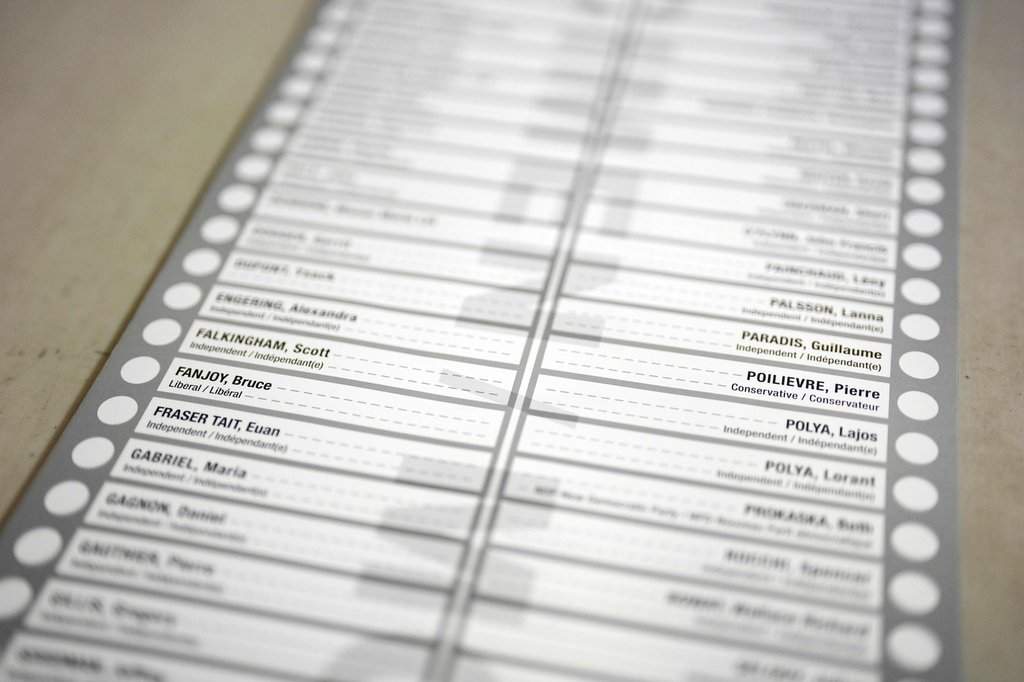
The return of the "Longest Ballot" protest group to the Terrebonne byelection represents a calculated exploitation of the administrative vulnerabilities inherent in the first-past-the-post (FPTP) system. By artificially inflating the candidate pool, these actors transform a simple electoral choice into a logistical bottleneck, forcing the state to choose between procedural collapse and legal overreach. This is not a grievance-based movement in the traditional sense; it is a stress test of democratic infrastructure designed to demonstrate that the current legislative framework cannot withstand mass participation if that participation is weaponized to maximize friction.
The Architecture of Electoral Obstruction
The protest relies on a structural loophole within the Canada Elections Act regarding candidate eligibility and the physical limitations of the paper ballot. To understand the impact of this maneuver, one must categorize the disruption into three distinct operational layers:
1. The Administrative Throughput Constraint
Every election operates on a fixed processing capacity. Increasing the number of candidates from a standard five or six to over 70 creates an exponential increase in the "surface area" of the election. Each candidate requires:
- Official agent verification.
- Financial reporting oversight.
- Equal space on a physical ballot.
- Witnessed tabulation during the count.
When the ballot exceeds the standard legal size, it ceases to be a list and becomes a physical obstacle. In previous iterations, the "Longest Ballot" forced Elections Canada to print ballots the size of a kitchen towel. This creates a secondary effect: the degradation of the "Secret Ballot" principle. If a ballot is too large to fit in a standard voting booth or requires unique folding patterns, the privacy of the voter is compromised by the sheer physics of the paper.
2. The Information Cost to the Electorate
The protest groups utilize a phenomenon known as "Choice Overload" to degrade the quality of the vote. In a standard electoral model, a voter compares a limited set of platforms. When the ballot includes scores of non-competitive, "protest" candidates, the signal-to-noise ratio collapses. The marginal cost for a voter to find their preferred candidate increases, which statistically correlates with an increase in spoiled ballots and accidental "voter error."
3. The Financial Subsidy of Dissent
Under current Canadian law, the barrier to entry for candidacy is remarkably low. While a deposit was once required, various court rulings have eliminated financial hurdles to ensure accessibility. The Longest Ballot strategy effectively uses state funds—via the administration of the election—to broadcast its message. The cost of printing, shipping, and counting these hyper-extended ballots is borne entirely by the taxpayer, creating a scenario where the state is forced to subsidize the very mechanism being used to critique its legitimacy.
The Causal Chain of Electoral Reform Agitation
The group’s stated objective—the abolition of FPTP in favor of Proportional Representation (PR)—is pursued through a paradox: they make the current system non-functional to prove it is obsolete. This creates a specific causal chain that legislators have struggled to break without infringing on Section 3 of the Canadian Charter of Rights and Freedoms.
The Loophole Mechanics:
- Step 1: Low-Bar Nomination. Gathering 100 signatures in a riding is a trivial logistical task for an organized group.
- Step 2: Legal Uniformity. Elections Canada must treat a "protest" candidate with the same legal gravity as a front-runner.
- Step 3: Logistical Saturation. The physical limits of the ballot box and the software limits of the counting machines are reached.
This strategy exposes a fundamental flaw in democratic design: the system assumes all participants are acting with the intent to win or influence policy through traditional means. It does not account for "Systemic Bad Faith," where the act of participating is itself the weapon.
The Cost Function of the Terrebonne Byelection
While the specific costs for the Terrebonne byelection have not yet been finalized by the Chief Electoral Officer, the "Cost Function" can be extrapolated from previous disruptions in Mississauga-Lakeshore and Winnipeg South Centre. The financial impact is not linear; it is geometric.
- Print Procurement: Standard ballots are printed on high-speed presses with fixed templates. A "Longest Ballot" requires custom sizing, heavier paper stock to prevent tearing, and specialized folding machines. This can increase the unit cost of a ballot by 400% to 600%.
- Labor Overheads: The time required for a poll clerk to explain how to fold the ballot, and the subsequent time for scrutineers to verify a 70-plus name count, extends the working hours of thousands of temporary staff.
- Auditing Requirements: Each protest candidate is a legal entity. Even if they receive zero votes, the administrative state must track their filings. This creates an "Administrative Tail" that lasts for months after the election is called.
The Legal Stalemate: Rights vs. Stability
The government faces a "Strategic Pincer." If they move to restrict the number of candidates—perhaps by reintroducing a $1,000 deposit or increasing the signature requirement to 1,000—they risk a Charter challenge that they are likely to lose. The Supreme Court of Canada has consistently prioritized the right to run for office as a fundamental pillar of democracy.
Conversely, if the government does nothing, the Longest Ballot group has signaled they will continue to escalate. Terrebonne is likely a beta test for the next general election. If 100 ridings were to face "Longest Ballot" conditions simultaneously, the national electoral infrastructure would face a systemic failure. The procurement of enough specialized paper and the programming of the results-reporting software would become a national security concern.
Tactical Diversion and the Media Feedback Loop
The group’s choice of Terrebonne is highly tactical. Byelections are low-turnout, high-scrutiny events. They provide the perfect "laboratory" for the group to refine their nomination-gathering techniques and maximize media impressions per dollar spent. The media often frames this as a "quirky" or "David vs. Goliath" story, which fails to quantify the actual risk: the degradation of the public’s trust in the basic mechanics of voting.
The "Signal Effect" here is more important than the actual vote count. By forcing the Chief Electoral Officer to issue warnings about "longer wait times" and "complex ballots," the protest group successfully creates a narrative of a "broken system" before a single vote is cast. This is a self-fulfilling prophecy; they break the system to prove it is broken, then use the resulting friction as evidence that their preferred alternative (PR) is the only solution.
Structural Vulnerability in Digital Tabulation
A critical, often overlooked bottleneck is the digital infrastructure used to report results. Most modern electoral software is designed with "Data Fields" that assume a maximum number of candidates (usually 20-25). When a field of 70-100 candidates is introduced:
- Database Bloat: The reporting UI becomes unreadable on standard mobile and desktop screens.
- Aggregation Latency: The time required to sync results from thousands of machines increases, leading to "Result Lag."
- Public Perception: In an era of high skepticism regarding election integrity, any delay in reporting—even one caused by the physical size of the ballot—is weaponized by conspiracy theorists to suggest foul play.
The Longest Ballot group is effectively performing a Distributed Denial of Service (DDoS) attack on a physical, analog system.
The Operational Pivot for Election Officials
To mitigate this, Elections Canada cannot rely on legislative changes in the short term. Instead, they must shift toward Operational Resiliency:
- Modular Ballot Design: Developing a multi-column or "Booklet" style ballot that can be processed by existing tabulators.
- Tiered Counting Protocols: Separating the "Serious" candidates from the "Protest" bloc for the purpose of initial media reporting (while maintaining legal equality for the final count).
- Cost-Recovery Mechanisms: Investigating whether "Administrative Fees" can be levied on candidates who fail to meet a certain threshold of votes, though this remains legally precarious.
The Terrebonne byelection will serve as the definitive data point for the 2025/2026 general election cycle. If the group successfully manages to place 100 candidates on the ballot without significant logistical failure, they will have proven that the cost of maintaining the status quo is higher than the political cost of reopening the constitutional debate on electoral reform.
The strategic play for the federal government is no longer to ignore the group, but to treat the "Longest Ballot" as a legitimate infrastructure threat. This requires a shift from political commentary to technical hardening. The goal is to decouple the "Right to Run" from the "Ability to Obstruct." Without this decoupling, the physical ballot remains a hostage to any group capable of mobilizing 100 signatures and a printer.
Would you like me to analyze the specific legal precedents from the 2023 Mississauga-Lakeshore byelection to determine the likelihood of a successful Charter challenge against new nomination hurdles?