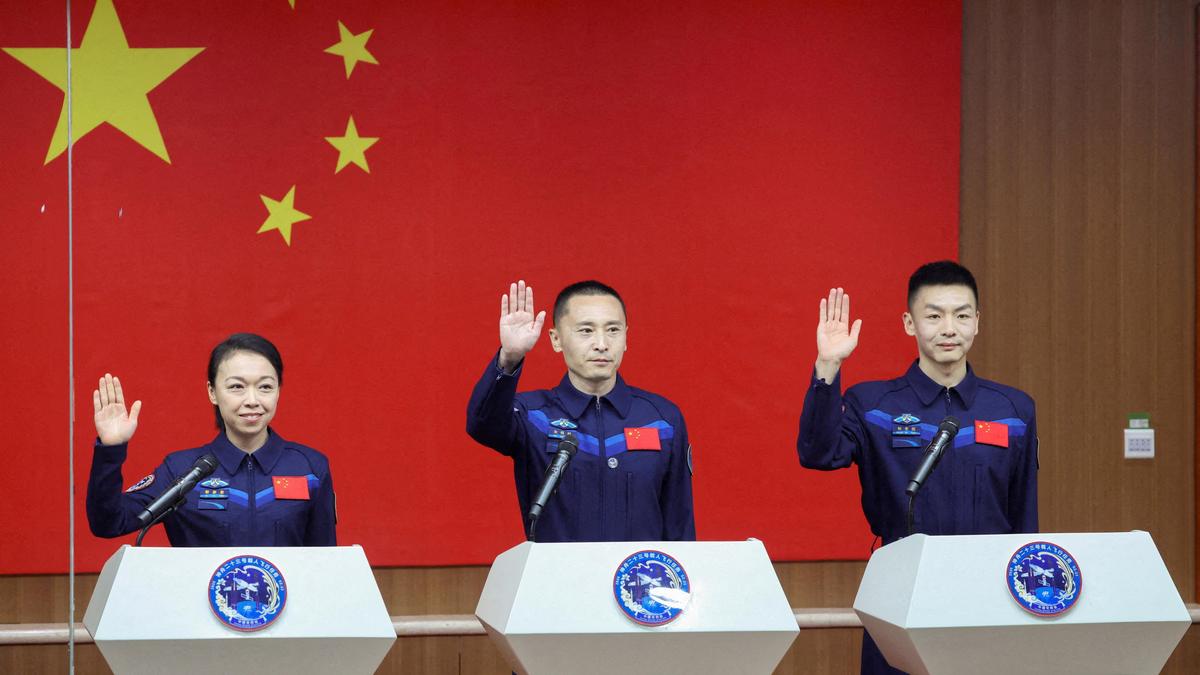
China’s selection of astronauts for a one-year residency aboard the Tiangong space station is not a pursuit of a duration record; it is a critical engineering stress test for the human component of a lunar logistics chain. While standard six-month missions validate orbital maintenance and microgravity physiology, a 365-day deployment targets the specific biological and psychological decay curves associated with a 2030 crewed lunar landing and the subsequent establishment of a permanent base. This mission functions as a de-risking mechanism for the ILRS (International Lunar Research Station), moving beyond low Earth orbit (LEO) sovereignty into deep-space operational capability.
The Triad of Lunar Mission Readiness
The transition from LEO operations to lunar exploration requires solving for three distinct variables: physiological preservation, autonomous life-support cycles, and psychological resilience under "earth-out-of-view" conditions.
1. Physiological Attenuation and Recovery Kinetics
Extended exposure to microgravity induces bone density loss (osteopenia) and muscle atrophy, particularly in the lower extremities. Current countermeasures—high-intensity resistance exercise and treadmill protocols—are optimized for 180-day intervals.
A year-long mission tests whether these countermeasures hit a plateau or if physiological degradation accelerates after the six-month mark. This data is vital for a lunar mission because, unlike a return from Tiangong which ends in a high-gravity recovery on Earth, a lunar crew must maintain enough physical strength to conduct complex Extravehicular Activities (EVAs) on the moon’s surface after days or weeks of transit.
2. Bioregenerative Life Support Systems (BLSS)
Tiangong currently utilizes a combination of physical-chemical life support (oxygen generation via electrolysis and CO2 scrubbing) and cargo resupply. A permanent lunar presence cannot rely on the high-frequency resupply cadence of LEO.
The year-long mission serves as a longitudinal test for "Closed Ecosystem" technologies. China’s "Lunar Palace 1" experiments on Earth previously demonstrated a 98% oxygen and water regeneration rate. Moving these systems into a year-long orbital environment validates the reliability of biological components—such as silkworms or high-protein plants—under cosmic radiation and microgravity, which are far more volatile than terrestrial labs.
3. The Communication Latency and Autonomy Pivot
While Tiangong maintains near-constant contact with Beijing through the Tianlian relay satellite constellation, the 2030 lunar objective introduces a 1.3-second communication delay each way. A year-long mission forces a shift in mission control philosophy. Ground teams will likely use this period to simulate "autonomous windows" where the crew must manage station failures or medical emergencies without real-time intervention. This builds the operational muscle memory required for a lunar descent where immediate ground-support is physically impossible.
Mapping the 2030 Lunar Architecture
China’s path to the moon is defined by a modular approach that avoids the high-risk, single-launch profile of the Saturn V. Instead, the strategy relies on the synchronization of two separate launches using the Long March 10 heavy-lift rocket.
The Two-Vehicle Rendezvous Model
The mission architecture dictates that the lunar lander and the crew spacecraft (the "Mengzhou") will be launched on separate rockets. They will rendezvous and dock in lunar orbit—a maneuver that China has already perfected in LEO with its Shenzhou and Tianzhou vessels.
- Launch A: Carries the lunar lander to a Near-Rectilinear Halo Orbit (NRHO) or a low lunar orbit.
- Launch B: Carries three astronauts in the Mengzhou spacecraft.
- The Nexus: The crew transfers to the lander, descends to the surface, and later ascends to rejoin the Mengzhou for the return to Earth.
The year-long Tiangong mission provides the statistical baseline for "dormant systems management." The Mengzhou capsule must remain viable and safe in the harsh thermal environment of space for the duration of the surface mission. Testing hardware durability on Tiangong for 12 months provides a safety margin that exceeds the expected lunar mission duration.
Infrastructure as a Geopolitical Lever
The expansion of the Tiangong station from three modules to six is a clear move toward establishing a multilateral orbital hub. By increasing the station’s volume, China creates "equity" for international partners.
The Economics of Orbital Participation
By inviting international astronauts to a station that is now functionally mature, China is positioning Tiangong as the primary alternative to the aging International Space Station (ISS). The logic is simple: the ISS is nearing its decommissioning phase (projected 2030-2031). As the ISS enters its terminal decline, China offers a turnkey solution for nations seeking microgravity research capabilities. This is not "cooperation" in the traditional sense; it is the construction of a China-centric space economy.
Hardware Standardization and Interoperability
A significant bottleneck in global space exploration is the lack of standardized docking and power interfaces. By making Tiangong the center of a year-long, high-occupancy mission, China implicitly sets the standard for hardware interfaces. Any nation wishing to participate must align their tech stack with Chinese specifications, creating long-term path dependency in the global aerospace supply chain.
Technical Constraints and Risk Profiles
Despite the momentum, the 2030 goal faces significant technical hurdles that the year-long mission does not address.
- Heavy-Lift Reliability: The Long March 10 is still in development. The success of the lunar program hinges on a flawless transition from the current Long March 5 to a vehicle with significantly higher thrust-to-weight ratios and cryogenic engine reliability.
- Lunar Dust Mitigation: On Tiangong, the primary enemy is radiation. On the moon, it is regolith—microscopic, glass-like dust that destroys seals and lung tissue. The year-long mission validates LEO survival, but it does not provide data on abrasive environmental wear.
- Thermal Cycling: A lunar day/night cycle lasts roughly 28 Earth days. The temperature swings are far more extreme than the 90-minute orbital cycles of Tiangong. The station provides a stable thermal environment, which may create a false sense of security regarding component longevity on the lunar surface.
Structural Comparison of Space Objectives
| Variable | LEO (Tiangong) | Lunar Surface (2030) |
|---|---|---|
| Radiation Exposure | Primarily trapped in Van Allen belts; lower dose. | Full galactic cosmic ray (GCR) and Solar Proton Event (SPE) exposure. |
| Resupply Delta-v | ~9.3–10 km/s from Earth. | ~13.1 km/s from Earth. |
| Abort Capability | Hours to atmospheric reentry. | 3–5 days for return trajectory. |
| Energy Source | High-frequency solar cycles (45 min light/dark). | 14 days of continuous darkness in some regions. |
The Shift to Polar Strategic Positioning
The 2030 mission is increasingly focused on the Lunar South Pole. This region is hypothesized to contain water ice in Permanently Shadowed Regions (PSRs). Water is the "oil" of the future space economy—it provides oxygen for breathing and hydrogen for propellant.
The year-long mission on Tiangong is the crucible for the "closed-loop" water recycling systems mentioned earlier. If a crew cannot maintain a 95%+ water recovery rate for a year in LEO, the lunar base becomes an unfeasible economic drain. Success in the 365-day mission is the prerequisite for the "In-Situ Resource Utilization" (ISRU) phase of China’s space strategy.
Strategic Forecast
The next 24 months will see a marked increase in "high-stress" orbital maneuvers. Expect China to conduct uncrewed tests of the Long March 10 and the Mengzhou spacecraft in high-elliptical orbits to simulate reentry speeds from the moon.
The year-long mission is the final validation of the "Human Factor." Once the biological decay data is stabilized, the bottleneck shifts entirely to the Long March 10's lift capacity. The strategic play is no longer about reaching the moon; it is about staying there. By the time the 2030 landing occurs, China intends to have a battle-tested cadre of long-duration astronauts and a proven bioregenerative life support system, effectively bypassing the "flags and footprints" model of the 20th century in favor of a 21st-century model of territorial and resource consolidation.
The integration of deep-space communications, modular station architecture, and long-term human physiological data suggests that China is not merely racing the United States to the moon—it is building the infrastructure to ensure that when it arrives, it never has to leave.