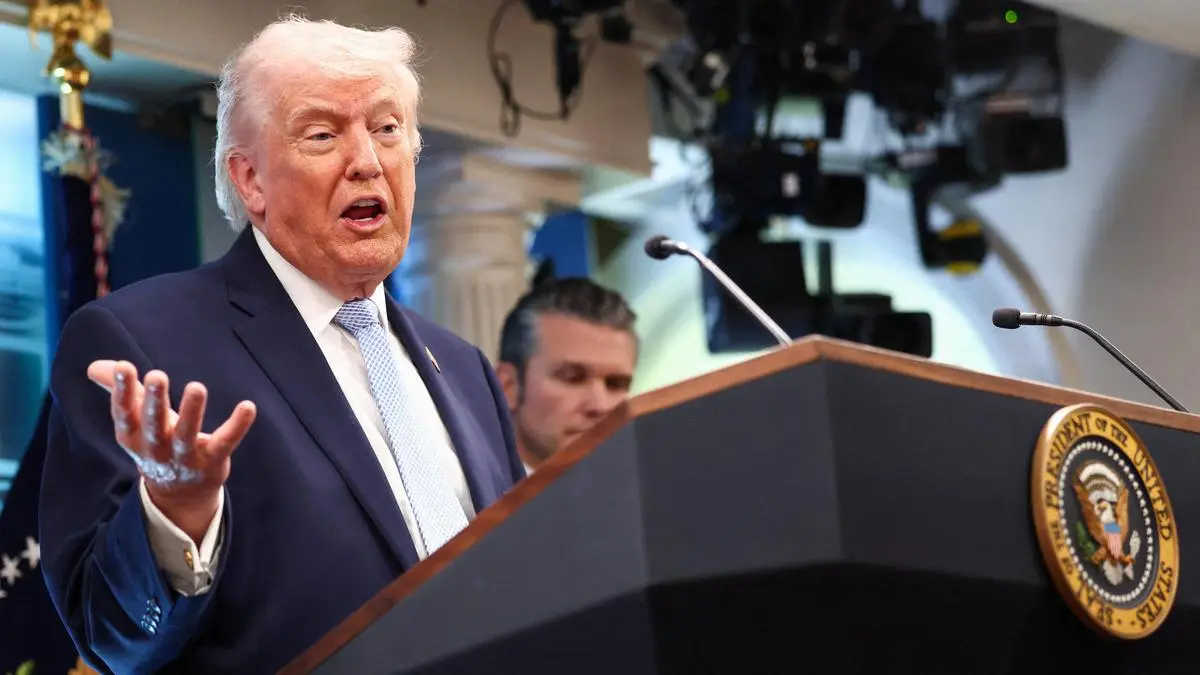
The two-week ceasefire agreement between the United States, Israel, and Iran functions less as a permanent resolution and more as a high-stakes operational pause designed to recalibrate regional deterrence. This window represents a calculated cooling period where the primary objective is not the settlement of ideological grievances, but the management of overextended military and economic resources. By examining the structural incentives of each actor, we can identify the specific failure points that necessitated this temporary halt in kinetic activity.
The Tri-Node Deterrence Framework
Regional stability in the Middle East currently rests on a fragile equilibrium defined by three distinct strategic pressures. When one node exceeds its risk threshold, the entire system faces a cascading failure.
- The Domestic Political Constraint (US): The Trump administration’s pivot toward de-escalation is driven by a mandate to prioritize internal economic stability and domestic energy security. Military entanglement in a multi-front conflict creates a volatility tax on global markets that complicates domestic fiscal objectives.
- The Attrition Threshold (Israel): Continuous high-intensity operations across Gaza, Lebanon, and direct exchanges with Iran have stretched logistical chains. A 14-day pause provides a necessary window for personnel rotation, equipment maintenance, and the replenishment of interceptor stockpiles.
- The Regime Survival Calculus (Iran): For Tehran, the threat of direct strikes on nuclear infrastructure or energy exports creates an existential risk. A ceasefire allows the leadership to signal internal strength while avoiding a conflict that could result in the decapitation of its command structure or the total collapse of its proxy network.
Mechanics of the Fourteen Day Window
The brevity of this deal—exactly 14 days—is not arbitrary. It serves as a "Proof of Intent" mechanism. Longer agreements often suffer from "commitment drift," where parties begin to exploit the peace to gain a permanent tactical advantage. A two-week window is short enough to maintain high-level diplomatic pressure but long enough to clear immediate humanitarian or logistical bottlenecks.
Logistics of Re-Armament vs. De-escalation
A critical tension exists during any ceasefire: the dual use of the pause. While the public focus remains on the cessation of hostilities, military planners utilize this time for "resetting the board."
- Intelligence Re-calibration: Both Israeli and Iranian intelligence services are currently re-mapping target lists based on the performance of air defense systems during the most recent exchanges.
- Proxy Alignment: Iran faces the challenge of ensuring its regional affiliates—Hezbollah, the Houthis, and various militias—adhere to the pause. Any "rogue" launch by a proxy during this window provides the US or Israel with the justification to resume operations with increased intensity.
- Diplomatic Signaling: The US is utilizing the timeframe to establish "red lines" regarding Iran's nuclear enrichment levels. The ceasefire is effectively a hostage to these specific technical benchmarks.
The Cost Function of Escalation
The decision to step back from the brink of total war can be analyzed through a cost-benefit lens. The expected value of continued escalation for all parties has turned negative.
- Oil Market Volatility: A full-scale war in the Persian Gulf risks a supply shock that could push crude prices toward $120 per barrel. For the US administration, this is an unacceptable inflationary risk that outweighs the strategic gain of neutralizing Iranian assets.
- Defense System Depletion: The cost-exchange ratio of using multimillion-dollar interceptors to down low-cost drones and ballistic missiles is unsustainable over a multi-month campaign. Israel requires this pause to adjust its defense posture toward more cost-effective solutions or to await fresh shipments of kinetic interceptors.
- Shadow War Limitations: The "gray zone" conflict has reached its saturation point. Direct state-on-state strikes have removed the veil of plausible deniability, forcing leaders into a binary choice: total war or structured retreat. They have chosen the latter to preserve their remaining strategic options.
Structural Bottlenecks to a Permanent Settlement
Three primary variables prevent this 14-day deal from naturally evolving into a long-term peace treaty.
The Verification Gap
There is currently no independent body capable of verifying compliance in a way that satisfies all three parties. Israel relies on its own signals intelligence (SIGINT); Iran relies on its internal security reports; the US relies on satellite surveillance. Without a unified verification protocol, a minor tactical misunderstanding can be misconstrued as a strategic violation.
The Nuclear Threshold
Iran’s proximity to "breakout" capacity remains the ultimate friction point. No amount of regional ceasefire agreements addresses the fundamental reality that Israel views a nuclear-armed Iran as an existential threat. The 14-day deal is a tactical maneuver that leaves the strategic nuclear problem entirely unaddressed.
The Proxy Autonomy Problem
The "Axis of Resistance" is not a monolith. While Tehran provides funding and direction, local commanders often have their own domestic incentives to maintain conflict. A ceasefire signed in a capital city does not always translate to a ceasefire on the ground in a fractured combat zone. The failure of a single militia unit to hold fire can collapse the entire trilateral agreement within hours.
Tactical Realignment and Buffer Zone Management
During this period, we observe a shift in geographic focus. The US is moving assets into a "containment posture," shifting from active strike groups to defensive screens. This signals to Tehran that while the US will not initiate a strike, it maintains the capacity for an immediate and overwhelming response if the ceasefire is breached.
Israel, meanwhile, is likely focusing on internal security and the consolidation of its northern border. The pause allows for the movement of heavy armor away from active contact lines, reducing the "target profile" available to anti-tank guided missile units. This tactical withdrawal serves a dual purpose: it lowers the immediate temperature of the conflict and prepares for a more defensible long-term position.
The Role of Economic Statecraft
The Trump administration's "Maximum Pressure 2.0" strategy uses this ceasefire as a lever. The threat of renewed and expanded sanctions acts as the silent guarantor of the 14-day pause. Iran's economy, already suffering from hyperinflation and restricted access to global banking, cannot withstand a new wave of secondary sanctions targeting its remaining oil customers.
The ceasefire provides the US with a diplomatic high ground. If the deal holds, the US claims credit for regional stability. If Iran breaks it, the US has the moral and political capital to enact the most severe economic restrictions in history, potentially with greater international cooperation.
Probability Distribution of Outcomes
Statistically, short-term ceasefires in the Levant and the Persian Gulf follow a predictable decay curve.
- Status Quo Extension (40%): The 14 days expire, and a new 14-day extension is negotiated under similar terms. This creates a "rolling pause" that avoids a formal treaty but prevents total war.
- Controlled Recidivism (35%): Minor violations occur—a single rocket launch or a targeted assassination—but the major parties choose to ignore them to maintain the broader pause.
- Systemic Collapse (25%): A high-casualty event or a significant intelligence breach leads to a rapid resumption of kinetic operations, likely at a higher intensity than before the ceasefire.
Future Defense Posturing and Resource Allocation
The strategic recommendation for regional stakeholders is to treat this pause as a "refit and re-evaluate" cycle. Military entities must prioritize the hardening of critical infrastructure during this window. If the ceasefire collapses, the next phase of conflict will likely target deep-state assets that were previously off-limits.
Commercial interests and energy markets should prepare for a "volatility spike" on day 13. The expiration of a ceasefire often triggers preemptive strikes from parties fearing a first-mover disadvantage. True stability will only be achieved when the underlying cost functions—nuclear ambition, territorial integrity, and economic survival—reach a point where the cost of war definitively exceeds any possible gain from combat. Until then, these 14 days represent a temporary dip in a long-term trajectory of friction.