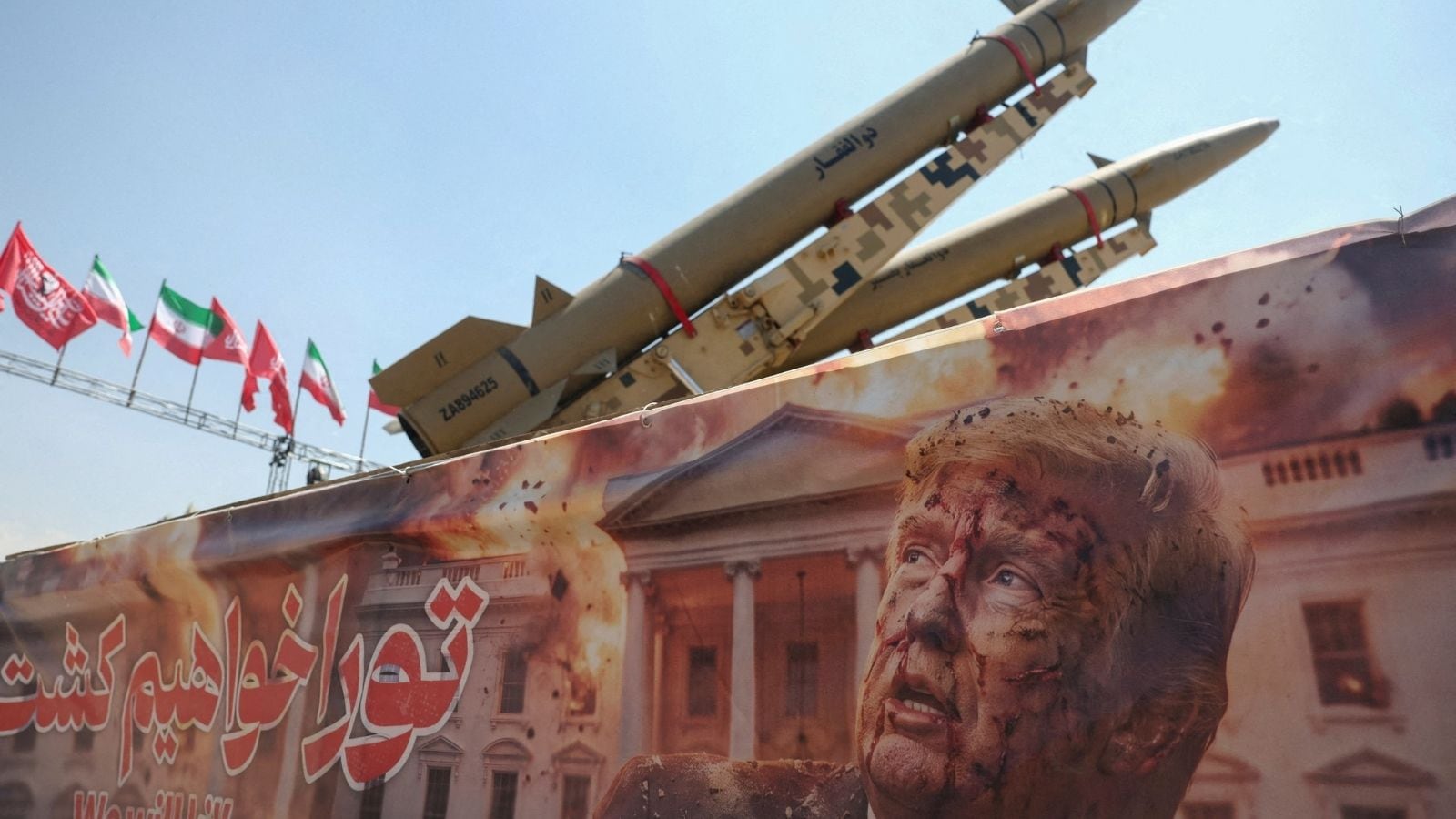
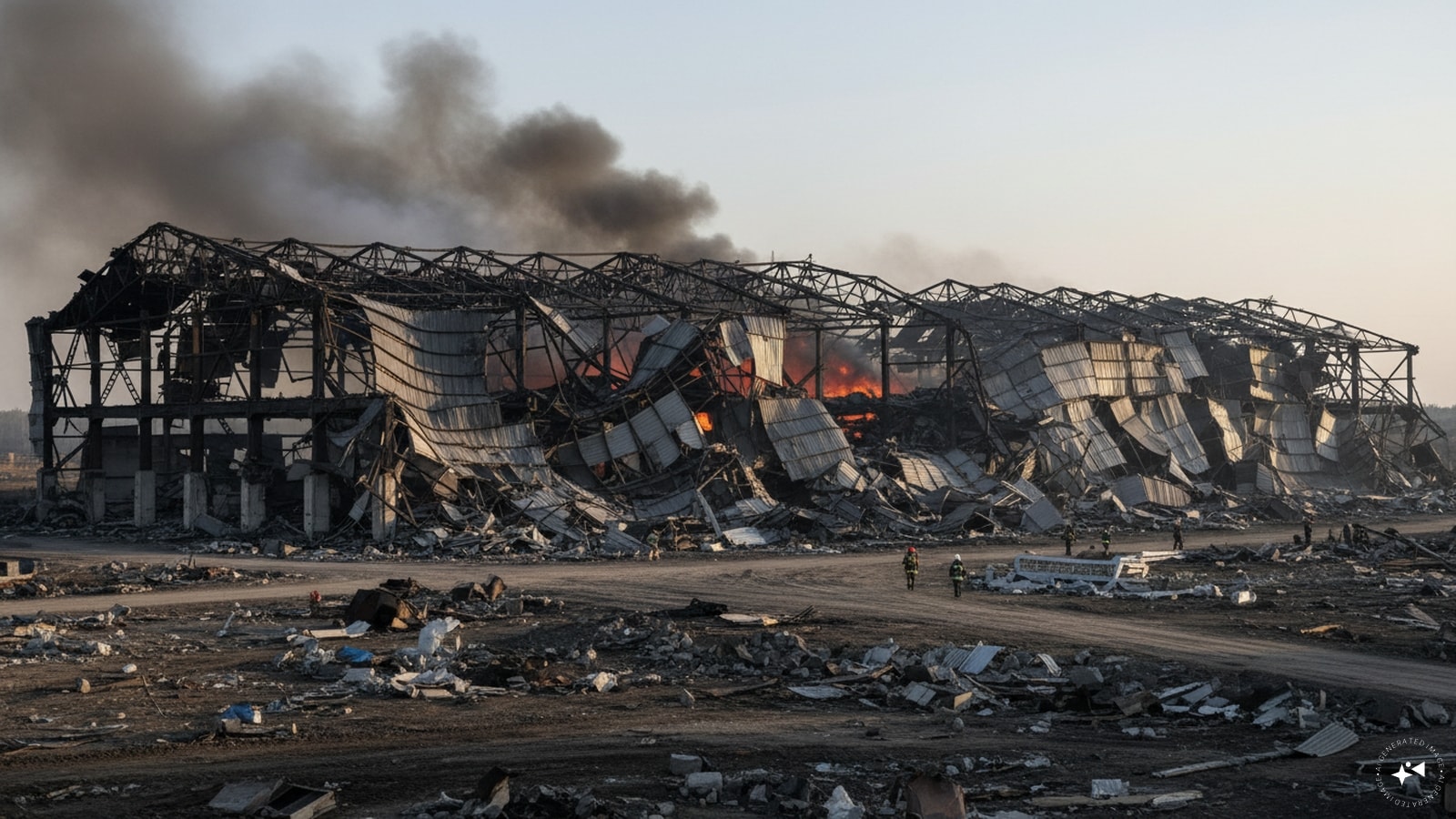
Sensationalized media coverage regarding potential nuclear strikes against sovereign states routinely strips away military reality in favor of visceral panic. When tabloid journalism outlines specific geographic coordinates or lists isolated infrastructure nodes as primary targets for foreign ballistic arsenals, it obfuscates the underlying mechanics of strategic deterrence, missile guidance systems, and modern targeting methodology. Evaluating the threat profile requires separating political posturing from operational doctrine.
The Triad of Strategic Targeting
Deterrence theory dictates that adversary strike planning relies on a hierarchy of objectives rather than arbitrary map coordinates. Strategic targeting models generally bifurcate into counterforce and countervalue operations, each carrying distinct mechanical parameters.
Counterforce strategy focuses on neutralizing an opponent's military capabilities. This includes nuclear silo fields, submarine bases, command and control architecture, and active air defense nodes. For the United Kingdom, this implicates specific military installations such as HMNB Clyde at Faslane, where the Vanguard-class ballistic missile submarines are homeported. Striking these locations demands extreme precision to degrade second-strike capability before assets can be dispersed or launched.
Countervalue strategy targets the economic, demographic, and political centers of gravity. The objective here is systemic collapse rather than tactical neutralization. Major metropolitan areas, financial hubs, and primary administrative nodes fall into this category.
Infrastructure nodes bridge these two domains. Power generation networks, telecommunications backbones, and deep-water ports represent force multipliers. Disrupting these nodes cripples the national logistics chain, rendering military coordination difficult even if primary command bunkers remain intact.
Mechanics of Intercontinental Delivery Systems
The transition from threat rhetoric to physical delivery involves complex ballistic physics and guidance engineering. Intercontinental ballistic missiles and submarine-launched ballistic missiles operate on sub-orbital spaceflight trajectories divided into three distinct phases: boost, mid-course, and terminal.
During the boost phase, rocket motors provide continuous thrust, making the vehicle thermally bright and easily trackable by infrared satellite constellations such as the United States Space Force's Space-Based Infrared System.
The mid-course phase occurs in the vacuum of space, where the missile coasts along an elliptic orbit. Modern delivery systems deploy multiple independently targetable reentry vehicles alongside penetration aids, chaff, and decoys to confound tracking radar.
The terminal phase initiates upon reentering the atmosphere. Reentry vehicles experience extreme thermal and aerodynamic stress, requiring advanced ablative shielding and high-precision terminal guidance systems. Radar altimeters, stellar navigation updates, and terrain contour matching ensure that CEP, or circular error probable, is minimized.
Proximity to coastal areas or inland positions dictates flight profiles. Submarine-launched systems operating from proximate oceanic sectors can utilize depressed trajectories to reduce radar horizon warning times, fundamentally altering the calculus of active missile defense architectures like the Sea Viper systems deployed on Royal Navy Type 45 destroyers.
The Economics of Escalation Dominance
Political threats serve as instruments of psychological pressure designed to manipulate domestic political discourse and constrain foreign policy choices. The utility of issuing explicit target lists lies in cost imposition. By forcing an adversary to contemplate high-consequence disruption, the signaling state attempts to deter intervention in localized geopolitical conflicts without expending actual ordnance.
Escalation dominance requires maintaining superiority at every rung of the conflict ladder. When a nuclear-armed state signals intent against allied territory, alliance commitments under Article 5 of the North Atlantic Treaty operate as a collective security deterrent. The calculated cost of striking any single node within the UK homeland triggers an asymmetric response doctrine, neutralizing the perceived strategic gain of the initial strike.
Civil defense preparedness, hardened communication links, and redundancy in critical infrastructure act as physical dampeners against psychological coercion. A resilient state minimizes the utility of coercive signaling by ensuring that targeted nodes possess high recovery velocity and distributed operational control.
Assessing Strategic Vulnerability
Modern critical infrastructure exhibits systemic interdependencies. A disruption in power transmission cascades rapidly into telecommunications failures, water treatment shutdowns, and financial transaction bottlenecks.
Resilience planning shifts the focus from hardening every individual asset to establishing rapid reconstitution protocols and decentralized operational loops. Distributed energy grids, encrypted decentralized networks, and redundant supply chains reduce the systemic risk posed by targeted infrastructure loss.
Strategic stability ultimately rests upon mutual vulnerability and verifiable second-strike capabilities. As long as retaliatory options remain invulnerable to preemptive degradation, the threshold for direct strategic exchange remains prohibitively high. Policy responses must therefore prioritize the hardening of core command architecture and the continuous modernization of alliance deterrence frameworks over reactive anxiety regarding sensationalized threat maps.