Media outlets love the "Strait of Confusion." They paint a picture of a fog of war where nobody knows which drone belongs to whom or whether a missile actually hit its mark. It makes for great tension. It sells ads. It also happens to be a complete fabrication.
There is no confusion in the Persian Gulf. There is only a highly choreographed, multi-billion-dollar performance where both the United States and Iran know exactly what happened, but find the truth far less useful than a well-constructed lie. If you think the Pentagon or the Islamic Revolutionary Guard Corps (IRGC) are genuinely "puzzled" by radar returns or telemetry data, you’ve bought into a narrative designed to keep you distracted from the actual mechanics of modern maritime brinkmanship. If you found value in this piece, you might want to read: this related article.
The reality is colder: The Strait of Hormuz isn't a flashpoint for an accidental world war. It’s a testing ground for electronic warfare (EW) and a stage for domestic signaling.
The Myth of the Fog of War in the Digital Age
The "confusion" narrative usually starts when Iran claims they chased off a US carrier group, while the US Navy issues a dry statement saying nothing happened. The public is left wondering who to believe. For another perspective on this story, see the latest coverage from The Washington Post.
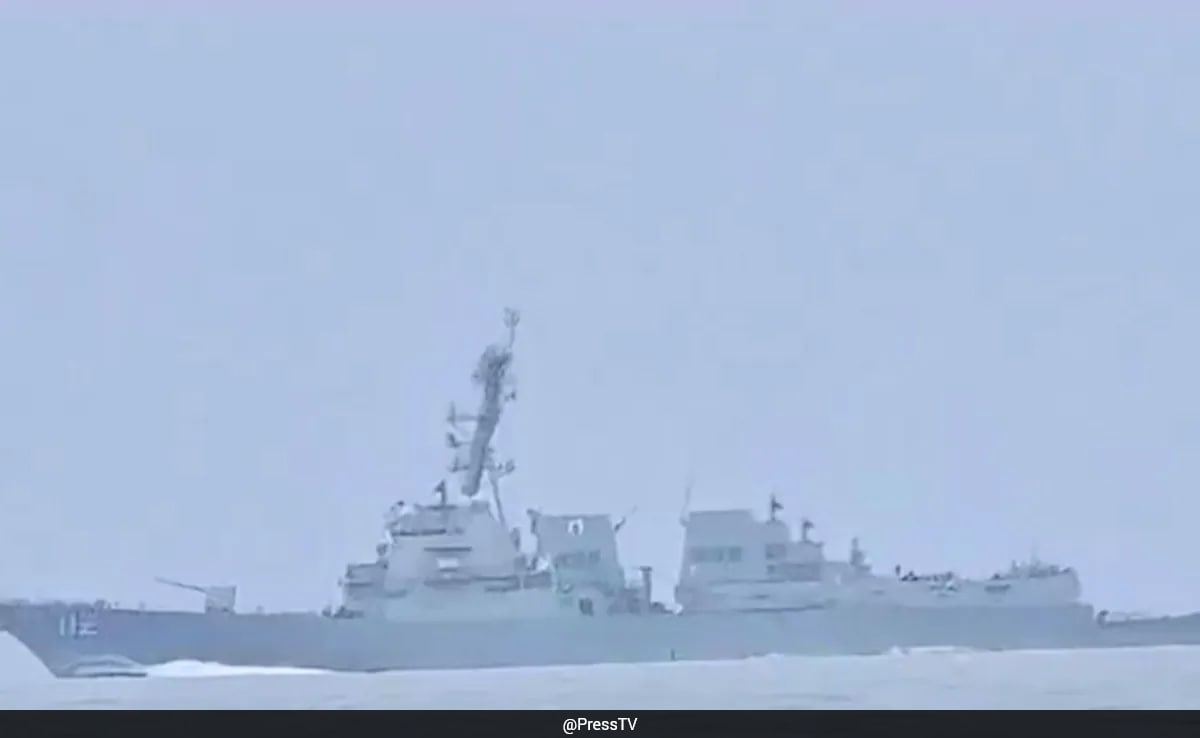
I’ve spent years analyzing the intersection of military hardware and geopolitical signaling. Here is what the "insiders" won't tell you: Modern warships are essentially giant, floating vacuum cleaners for data. A Nimitz-class carrier or an Arleigh Burke-class destroyer doesn't "lose track" of a drone. Between the AN/SPY-1 radar arrays and the latest Aegis Baseline upgrades, these ships can track objects the size of a bird from miles away.
When the US says "nothing happened," and Iran releases grainy footage of a "terrified" American sailor, neither side is confused. They are choosing different realities to project to their respective bases. Iran needs to project regional dominance to justify the IRGC's massive budget. The US needs to project "business as usual" to keep global oil markets from spiking.
The "confusion" is a product of the press release, not the cockpit.
Electronic Warfare: The Silent Ghost in the Machine
The most overlooked aspect of these encounters is the invisible war. Most people think of naval combat as missiles and deck guns. It’s not. It’s about the electromagnetic spectrum.
Imagine a scenario where an Iranian Mohajer-6 drone approaches a US vessel. The US doesn't necessarily want to shoot it down. Kinetic action—firing a physical missile—is an escalation. Instead, they use "soft kill" measures. They flood the drone's GPS frequency with noise or spoof its return-to-home coordinates.
When this happens, the drone might behave erratically. It might crash, or it might fly back to base with corrupted data. Iran then claims the drone "defied" American defenses, while the US claims the drone was "never a threat." Both are technically true and functionally false. We are seeing a live-fire exercise of electronic countermeasures where the goal isn't to destroy the enemy, but to see how their sensors react to being blinded.
The Asymmetric Pricing Scam
The "lazy consensus" in defense reporting is that the US is "winning" because it has the bigger ships. This is a fundamental misunderstanding of the economics of conflict.
In the Strait, Iran is running a high-frequency, low-cost harassment campaign. A swarm of fast-attack craft costs less than the paint job on a single Littoral Combat Ship. A suicide drone might cost $20,000. The RIM-116 Rolling Airframe Missile used to intercept it costs over $900,000.
Every time a US commander feels the need to "respond" or "monitor" these threats, the US taxpayer loses the exchange. Iran isn't trying to sink the fleet; they are trying to bankrupt the strategy. They are forcing a blue-water navy to play a coastal game it wasn't built for.
If you want to understand the Strait of Hormuz, stop looking at maps and start looking at balance sheets. The IRGC understands that perception is a force multiplier. If they can make the US look clumsy or "confused" on social media, they’ve won that day’s engagement without firing a single shot.
Why "Freedom of Navigation" is a Tired Script
We are told the Navy is there to ensure the free flow of commerce. This is a 20th-century justification for a 21st-century stalemate.
The US doesn't actually need the oil from the Persian Gulf as much as it used to, thanks to domestic shale production. The primary beneficiaries of a stable Strait of Hormuz are China and India. Yet, the US provides the security for free.
The "confusion" serves a purpose here, too. By maintaining a state of low-level, perpetual friction, the US justifies its massive presence in CENTCOM's area of responsibility. If the Strait were actually peaceful, the argument for keeping a carrier strike group permanently stationed nearby evaporates.
The tension is the product. The "claims and counter-claims" are the marketing material.
The Drone Data Harvest
Every time an Iranian drone gets close to a US ship, or a US helicopter flies near an Iranian base, a massive amount of SIGINT (Signals Intelligence) is gathered.
- Pulse Repetition Frequencies: Both sides are trying to map the radar signatures of the other.
- Response Times: They are timing how long it takes for a crew to go from "relaxed" to "battle stations."
- Communication Latency: They are monitoring the encryption and speed of the data links between the ships and their command centers.
When Iran claims they "captured images" of a US ship, they aren't bragging about the photo. They are telling the US, "We bypassed your jamming long enough to get a lock." When the US ignores it, they are saying, "We let you see what we wanted you to see."
It’s a high-stakes game of poker where both players are cheating, and both players know the other is cheating, but they keep playing because the onlookers are paying for the seats.
The Fragility of the "Professional" Navy Narrative
The biggest lie told by the West is that our side is the only one acting "professionally."
In the maritime world, "professional" is often code for "predictable." The IRGC is intentionally UN-professional. They use civilian boats, they ignore radio hails, and they swarm in erratic patterns. They are using "crazy-man theory" to force the more powerful adversary into a defensive, reactive posture.
The US Navy, bound by strict Rules of Engagement (ROE) and international law, is at a massive disadvantage in the PR war. If a US ship accidentally clips an Iranian boat, it’s an international crisis. If an Iranian boat hits a US ship, it’s "heroic resistance."
Stop Asking Who is Lying
People always ask: "Did the Iranians really fly over the carrier?" or "Did the US really jam the drone?"
You’re asking the wrong question.
In a world of deepfakes, sophisticated EW, and state-run media, "truth" is an obsolete metric for naval skirmishes. The only thing that matters is the effect of the claim.
Does the claim raise the price of Brent Crude?
Does it help a politician look "tough" before an election?
Does it secure funding for a new laser defense system?
If the answer is yes, then the claim will be made, regardless of what the radar saw.
The Strait of Hormuz is not a place where ships sail into confusion. It is a place where reality is manufactured to suit the needs of two regimes that, despite their rhetoric, need each other to keep the theater running. The "confusion" isn't a byproduct of the conflict; it is the most valuable export the region has left.
Stop looking for clarity in a place that thrives on shadows. The next time you see a headline about "conflicting reports" in the Gulf, understand that you aren't reading news. You're reading the script for a play that has been running since 1979, and the actors haven't missed a line yet.
Shut off the news, look at the satellite tracks, and follow the money. Everything else is just noise.