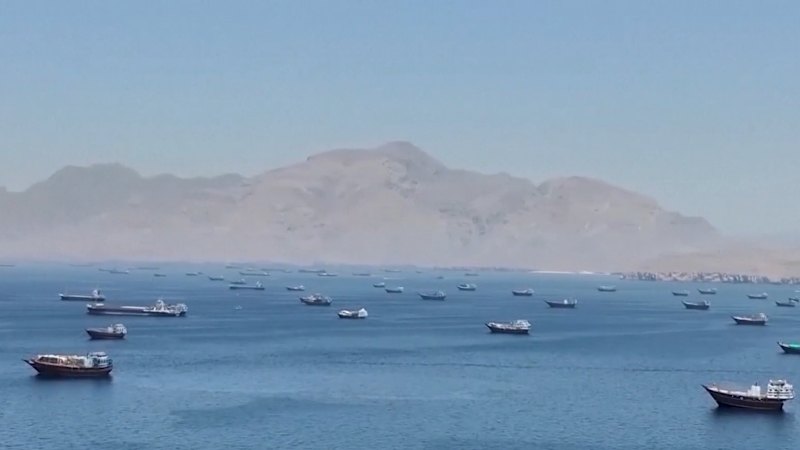
Iran says it's closed. The White House says it's open.
If you're reading the latest reports about the Strait of Hormuz, you're likely getting a sanitized version of a highly volatile maritime knife fight. Donald Trump just told NBC's Meet the Press that "we bombed the hell out of them last night" and insists traffic is flowing normally. Meanwhile, Iran's Islamic Revolutionary Guard Corps (IRGC) claims the world's most critical energy chokepoint is locked down until further notice.
Who's lying? Honestly, both sides are massaging the truth to protect their interests.
The real situation in the Gulf isn't a simple binary of open or closed. It's a grinding, violent stalemate that has shattered a 60-day interim ceasefire and pushed the global energy market into uncharted territory. To understand why this patch of water matters more than dozens of atomic bombs, you have to look at what's actually happening on the waves right now.
The Chaos Behind the Conflicting Headlines
On paper, US Central Command (CENTCOM) claims that "Iran does not control the strait" and that "traffic is flowing". Over 140 ships transited the waterway over the past week.
But let's look at the numbers. Before the outbreak of hostilities that began back on February 28, nearly 140 vessels moved through that narrow corridor every single day. Traffic hasn't stopped, but it has slowed to a fraction of its normal volume.
The latest flare-up triggered a massive American military response. After Iranian forces allegedly struck the Cyprus-flagged container ship GFS Galaxy with a drone, leaving the engine room destroyed and a sailor missing, the US military launched a blistering campaign. CENTCOM hit 140 targets across Iran in a single night, targeting drone launchpads, ammunition storage, and radar networks.
Strait of Hormuz Status Check:
- Historical daily traffic: ~140 ships
- Current weekly traffic: ~140 ships
- Recent US strikes: 140 targets hit overnight
- Status: Open by force, but heavily restricted
Iran didn't take the hit sitting down. Tehran immediately retaliated by launching missiles and drones at regional neighbors hosting American military assets. Air sirens blared across Qatar, Bahrain, Kuwait, and the UAE. Qatar's military intercepted incoming fire, but falling shrapnel wounded three people, including a child. This isn't just a localized naval spat; it's a regional conflagration threatening to swallow the entire Persian Gulf.
The Illusion of Freedom of Navigation
When the US says the strait is open, it means the US Navy can protect a heavily armed, severely reduced convoy of ships using alternative routes. Commercial vessels are currently hugging the southern shoreline off Oman to avoid entering Iran's territorial waters.
Iran's newly minted Persian Gulf Strait Authority is attempting to enforce a toll-and-permit system. They claim any ship traveling unauthorized routes will face warning shots and seizures. Mohammad Bagher Qalibaf, the speaker of Iran's parliament, made their position clear on social media: "The era of one-sided deals is OVER. Keep your word or pay the price."
Why Shippers Are Terrified Despite US Assurances
If you own a multi-million dollar commercial vessel, Trump's television assurances don't mean much when drone strikes are an active threat. Insurance underwriters are losing their minds. Maritime bodies like the Joint Maritime Information Center confirm the southern lane is technically usable, but the risk premium has skyrocketed.
- Crew safety is nonexistent: The attack on the GFS Galaxy forced 23 crew members into lifeboats, and an Indian national is still missing at sea.
- Regional allies are backing away: Oman took the rare diplomatic step of summoning the Iranian ambassador to protest drone strikes on its soil. Yet, countries like Qatar have advised local fishing and leisure boats to halt all activities entirely.
- A broken ceasefire: This violence essentially kills the June 17 interim agreement that was supposed to buy 60 days for permanent peace talks.
The markets are behaving oddly, too. Crude oil prices dipped to around $75 a barrel right before the weekend. That sounds like good news, but it's deceptively calm. It doesn't mean the risk is gone; it just means traders are betting that neither Washington nor Tehran wants a total, apocalyptic war that shuts down global trade permanently. They are adapting to a permanent state of high-intensity friction.
The Real Chokepoint Reality
The US military has the raw firepower to keep the Strait of Hormuz from being physically blocked by scuttled ships or sea mines. They can shoot down cruise missiles and suicide drones, just as they did when aircraft neutralized a new round of Iranian threats heading toward civilian mariners.
But an open waterway is useless if commercial shipping firms decide the route is a suicide mission. Right now, Iran is proving that it doesn't need to physically block the strait to disrupt global commerce. By turning the Gulf into an active crossfire zone, they achieve the same economic bottleneck without ever laying a single mine.
If you are managing logistics or supply chains dependent on Middle Eastern energy or goods, don't buy into the triumphalist political rhetoric from either side. Expect shipping delays, rerouted vessels, and elevated maritime insurance premiums to persist as long as both nations trade heavy missile strikes. Prepare for alternative routing and build buffer stock immediately because this standoff isn't ending anytime soon.