When maritime traffic stalls in a critical chokepoint like the Strait of Hormuz, the shockwaves travel fast. You might think a shipping lane thousands of miles away from North Africa wouldn't rattle a phosphate titan like the OCP Group. You would be wrong.
Global trade networks are fragile webs. When geopolitical tensions lock down the Persian Gulf, the disruption hits raw material supply chains hard. For Morocco's state-owned fertilizer giant, this maritime bottleneck isn't just an international headline. It is a direct operational stress test.
How a Gulf Chokepoint Chokes Moroccan Production
People often miss the hidden mechanics of modern agriculture. Making phosphate fertilizers like DAP or MAP doesn't just require phosphate rock. It demands massive quantities of sulfur and ammonia.
The Persian Gulf region accounts for a massive share of globally traded sulfur and ammonia, generated largely as a byproduct of oil and gas refining. When shipping through Hormuz grinds to a near-zero halt, those crucial inputs get trapped.
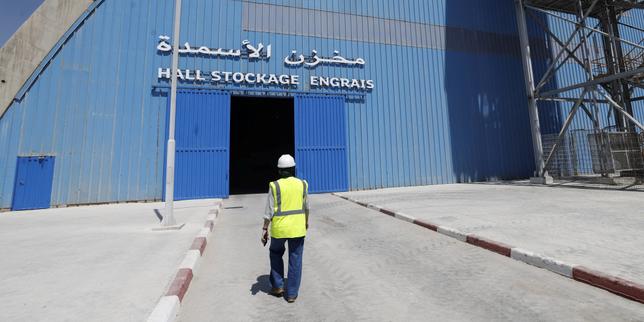
OCP relies on international markets to source the sulfur needed to produce its phosphoric acid. Even though Morocco sits on top of the world's largest phosphate reserves, it cannot turn that rock into high-value agricultural inputs without a steady chemical cocktail. When maritime insurers balk and tankers avoid the Gulf, input costs spike globally. Sulfur prices have doubled in response to these choke points, forcing a serious scramble for alternative suppliers.
The Domino Effect on Global Food Security
The crisis quickly evolved from a localized maritime standoff into a widespread supply shock. With Middle Eastern urea and ammonia exports constrained, international buyers turned their attention elsewhere.
Major importers in Asia and Latin America faced immediate crunches. Take India, for instance. Long-term supply agreements signed with OCP became vital lifelines as traditional trade routes out of the Gulf stalled.
World Bank data points to a sharp climb in fertilizer price indexes as a direct result of these logistical failures. Farmers everywhere face squeezed profit margins. When input costs skyrocket, agricultural productivity drops because growers cut back on necessary applications.
Testing Operational Resilience
OCP isn't sitting still. The group leverages its vast scale and existing logistics infrastructure to absorb the hit, but the strain remains real. Management has had to navigate tight sulfur markets by diversifying procurement channels and optimizing production schedules.
The strategy focuses on maintaining long-term commitments to key partners while insulating domestic supply chains as much as possible. Yet, no company operates in a vacuum. When core chemical inputs double in price and maritime insurance rates soar, margins feel the squeeze.
This pressure reveals a hard truth about global food security. You can control the primary resource, but if you rely on a globally interconnected chemical supply chain, you remain exposed to geopolitical friction points.
Watch how supply chains adapt over the coming months. Diversification and localized sourcing will separate the resilient companies from the vulnerable ones.