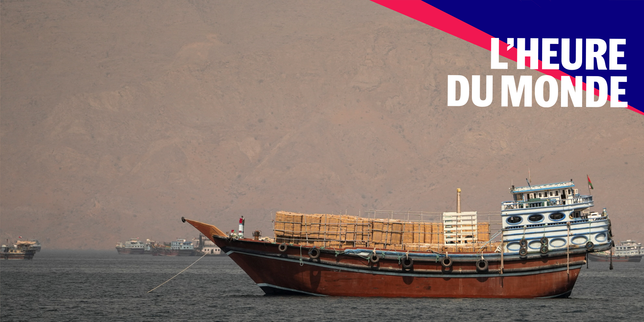
The global shipping model built on cheap, unhindered ocean transit has collapsed. If you think the recent military blockades in the Middle East were just temporary geopolitical flare-ups, you're missing the bigger picture. When the Strait of Hormuz effectively closed earlier this year following intense military strikes between the West and Iran, it didn't just cause a temporary spike in oil prices. It proved that strategic ocean chokepoints are no longer shared global infrastructure. They are weapons.
The global economy relies on a few remarkably narrow strips of water. For decades, Western naval dominance guaranteed that any commercial vessel, whether a massive crude tanker or a container ship packed with electronics, could pass through these straits safely. That guarantee is gone. Shippers can't just wait out the current crisis and expect a return to normal. The rules of maritime commerce have changed permanently, and businesses worldwide must adapt to an era of fragmented, costly, and highly politicized trade routes.
The Illusion of Open Waters
The fundamental reality of international trade is terrifyingly fragile. About 80% of global trade by volume moves by sea. A massive chunk of that traffic must squeeze through a handful of geographic bottlenecks: the Strait of Hormuz, the Bab al-Mandeb, the Malacca Strait, and the Suez and Panama Canals.
When the Strait of Hormuz crisis erupted on February 28, the immediate impact felt like an economic heart attack. Overnight, roughly 20 million barrels of petroleum liquids per day—one-fifth of global consumption—faced an absolute standstill. Major shipping giants like Maersk, MSC, and CMA CGM didn't hesitate. They suspended Persian Gulf and Suez rotations entirely, sending their fleets around the Cape of Good Hope.
This detour isn't just a minor inconvenience. Sailing around Africa adds roughly 3,500 nautical miles to a voyage between Asia and Northern Europe. It burns massive amounts of extra fuel, tacks on two to three weeks of transit time, and destroys predictable supply schedules. The ripple effects hit manufacturing plants within weeks. Components didn't arrive, port congestion spiked at secondary hubs, and empty containers ended up stuck in the wrong hemispheres.
The Dangerous Squeeze of Two Straits
What makes the current landscape uniquely dangerous is the simultaneous pressure on both the Strait of Hormuz and the Bab al-Mandeb. Historically, if one route faced friction, logistics managers looked for workarounds. For instance, Saudi Arabia has long relied on its East-West pipeline to pump crude across the peninsula to Red Sea ports, effectively bypassing Hormuz.
But that strategy falls apart when the Bab al-Mandeb—the narrow gate leading into the Red Sea—is equally hostile. Recent moves by Iranian-backed Houthi forces in Yemen to choke off traffic at the Bab al-Mandeb mean that even bypassed oil gets trapped. If a tanker loads up at Yanbu on the Red Sea coast but needs to ship that crude to buyers in China or India, it can't safely go south through the Bab al-Mandeb. Instead, it has to sail north, transit the Suez Canal, cross the Mediterranean, and navigate all the way around the African continent just to reach Asia. It's an absurd, incredibly expensive logistical nightmare.
This reality destroys the argument that alternative pipelines can seamlessly replace vulnerable waterways. The infrastructure simply isn't designed to handle the total volume, nor can it bypass the reality that ocean transit remains the only way to move bulk commodities across oceans.
The Real Cost of War Risk Insurance
For businesses trying to budget their logistics, the price of the physical commodity or the raw freight rate is only half the battle. The real killer is insurance.
Before the military escalations this year, war risk insurance premiums for a single transit through the Gulf hovered around 0.125% of the ship's hull value. During the height of the blockades, those premiums skyrocketed toward 0.4% and beyond. For a modern liquefied natural gas (LNG) carrier or a fully loaded ultra-large crude carrier worth $150 million, that means an extra half a million dollars in insurance fees just to sail through a single chokepoint.
Standard Transit Premium:  ~0.125% of vessel value
Crisis Transit Premium:    ~0.400%+ of vessel value
Net Impact: $300,000 to $600,000 extra per voyage
Some underwriters stopped offering coverage entirely for specific flags. When the private insurance market pulls the plug, commercial shipping stops, regardless of whether a strait is physically blocked by naval mines or warships. The financial risk alone acts as an invisible wall.
Even with tentative stabilization and partial diplomatic agreements lowering West Texas Intermediate (WTI) crude prices closer to the $70 mark, the underlying risk premium hasn't vanished. Underwriters have long memories. They've updated their risk models, and shippers will be paying the price for years to come.
Shifting From Just-in-Time to Just-in-Case
If you are running a business that relies on imported materials or global distribution, the strategy of keeping inventory lean to save cash is dead. The "just-in-time" supply chain was built for a world where the oceans were safe and predictable. In a world defined by maritime instability, you have to pivot to a "just-in-case" model.
- Diversify your port entries: Relying on a single gateway port leaves your supply chain incredibly vulnerable. Identify and vet secondary and tertiary ports that utilize alternative oceanic routes.
- Buffer your inventories: Build out safety stock for critical components that originate in or pass near high-risk maritime zones. A three-week delay at sea shouldn't force you to halt a production line.
- Audit your freight forwarders: Ensure your logistics partners have access to real-time maritime intelligence and multiple carrier alliances. The traditional fixed-rate annual contract provides zero protection when carriers declare force majeure and re-route ships around continents.
The conflict in the world's most strategic waterways has altered the economics of global trade. Ocean shipping isn't going away, but the days of expecting cheap, effortless, and uninterrupted transit through global chokepoints are gone. It's time to build supply chains that assume disruption is the default state of the world.