Every time a piece of metal from a commercial launch intersects with a celestial body, the internet loses its collective mind. Headlines scream about space junk vandalism, outraged commentators pen op-eds about corporate celestial negligence, and armchair astronomers clutch their pearls over the pristine face of the moon.
It is performative outrage built on a foundational misunderstanding of orbital mechanics, planetary science, and scale.
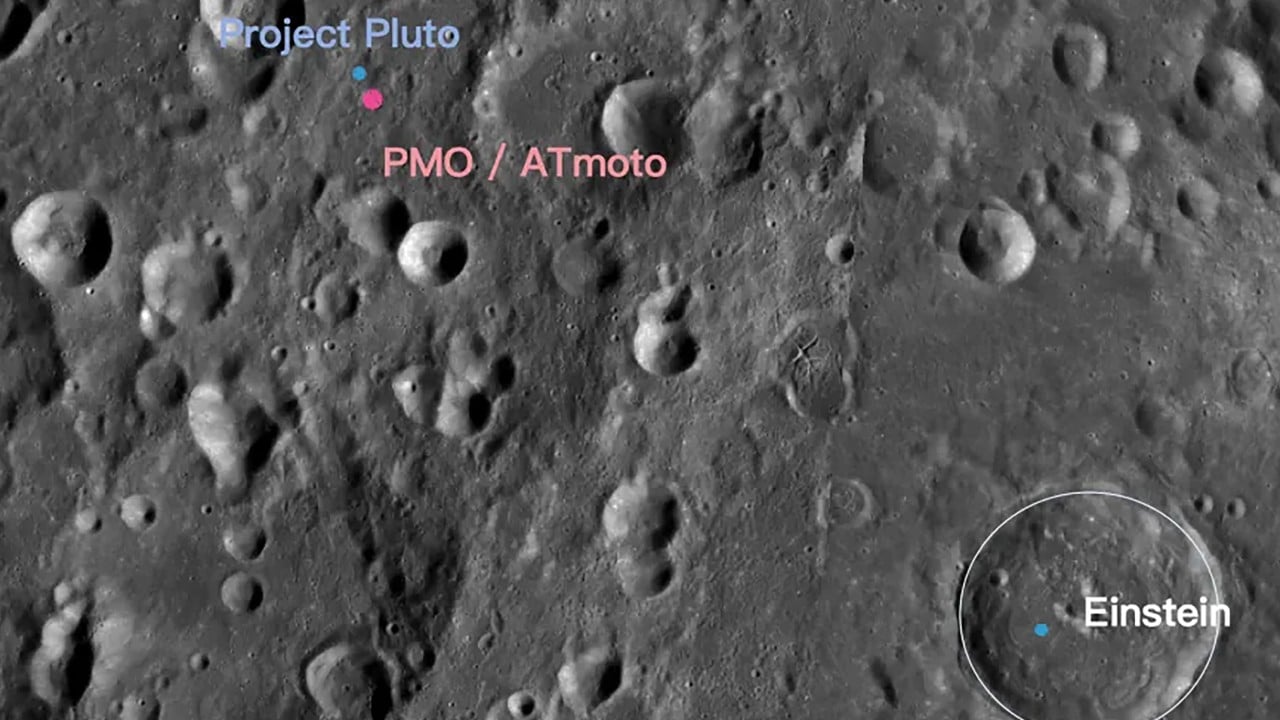
Let us dismantle the panic. A Chinese satellite allegedly captured footage of SpaceX booster debris impacting the lunar surface, and the immediate lazy consensus is that private space companies are trashing public vacuum. This is garbage analysis. The moon has been a cosmic punching bag for four and a half billion years, taking hits from asteroids, comets, and meteoroids ranging from microscopic dust to city-killing impactors daily. Adding a hollowed-out Falcon 9 second stage to that mix is the equivalent of dropping a single grain of sand into the Sahara Desert and crying about beach pollution.
Yet the media treats it like an environmental catastrophe in a pristine nature reserve. Why? Because outrage sells clicks, and big tech billionaires make easy targets.
I have spent over a decade watching aerospace companies try to balance raw physics with bureaucratic paralysis, and I can tell you straight up: the real danger in space is not a dead hunk of steel cratering an unpopulated gray rock two hundred thousand miles away. The real danger is entirely local, entirely anthropogenic, and happening right now in low Earth orbit.
The Physics Nobody Wants To Talk About
Let us define terms because the public discourse is drowning in fuzzy terminology. When people talk about space debris, they lump everything from a multi-ton rocket body on an escape trajectory to a fleck of paint orbiting at eight kilometers per second into one terrifying bucket.
This is intellectually lazy.
A spent rocket stage cruising out to deep space or impacting the moon poses zero threat to active infrastructure. It is gone. It is out of the orbital highway system. The kinetic energy of an impact on the moon is dissipated harmlessly into regolith, kicking up a tiny puff of dust that gravity immediately settles back down. There are no ecosystems to disrupt, no atmosphere to pollute, and no operational satellites to threaten.
Compare that to low Earth orbit, where the actual crisis sits. We have thousands of dead satellites, frozen batteries, and shattered collision fragments zipping around at twenty-eight thousand kilometers per hour. That is where a millimeter-sized screw can punch through a solar panel with the force of a hand grenade.
When commentators freak out over lunar impacts, they are looking at the wrong problem because the wrong problem is easy to visualize. A rocket hitting the moon makes for dramatic science fiction imagery. A cloud of untrackable paint chips slowly degrading a billion-dollar broadband constellation is boring, invisible, and terrifyingly real.
The Hypocrisy Of The Celestial Conservationist
The narrative pushed by certain state-backed media outlets and anxious observers is that commercial actors like SpaceX are uniquely reckless. This is historical revisionism at its finest.
For the past seventy years, space-faring nations—most notably the United States and the Soviet Union/Russia—have left thousands of metric tons of dead hardware scattered across orbit, deep space, and planetary surfaces. The Apollo descent stages, abandoned lunar rovers, and countless classified military payloads from the Cold War are littering the solar system.
When a state actor does it, it is geopolitical exploration. When a private company does it while drastically lowering the cost of access to space, it is corporate vandalism.
That double standard is pathetic. SpaceX builds reusable rockets precisely to reduce total mass left behind in space compared to the expendable launch architectures of the twentieth century. Returning boosters to Earth and landing them on drone ships is the single biggest step forward in orbital cleanup efficiency in the history of spaceflight. Focusing on the rare stray upper stage that ends up on a collision course with a dead moon, while ignoring the systemic marvel of the broader architecture, is like complaining that an electric car manufacturer occasionally loses a lug nut while driving through a wasteland.
Imagine a scenario where every launch had to achieve zero residual waste in deep space. You would instantly bankrupt commercial spaceflight, halt global telecommunications infrastructure expansion, and lock humanity to the surface of this planet forever, all to protect a few square meters of lifeless basalt from getting a new dent.
The Real Risk Assessment
Let us address the common counter-argument: "What if future lunar bases need that pristine environment?"
This is a favorite talking point of people who have never run a complex engineering project in their lives. The moon has a surface area of over thirty-seven million square kilometers. The odds of a stray piece of modern rocket debris landing on top of a future Artemis base or a scientifically critical site are functionally zero. It is statistically less likely than being struck by a meteorite while sitting indoors.
More importantly, the moon cleans up after itself. Without an atmosphere to cushion impacts, high-velocity hits vaporize significant portions of the impacting material and bury the rest deep beneath the regolith via continuous gardening by micrometeorites. Within a few million years, that booster won't even be recognizable as anthropogenic technology; it will just be another geochemical anomaly in the crust.
If you want to fix space debris, stop tilting at lunar windmills. Focus the energy on active debris removal in low Earth orbit, mandatory passivation for upper stages, and strict international tracking protocols for operational constellations.
The next time you see a viral video claiming a private rocket is desecrating the cosmos, check your pulse, check the physics, and realize you are being played by narrative architects who care more about a headline than an orbit.
The universe is a violent, chaotic, high-energy environment. It doesn't need us to wrap it in bubble wrap.