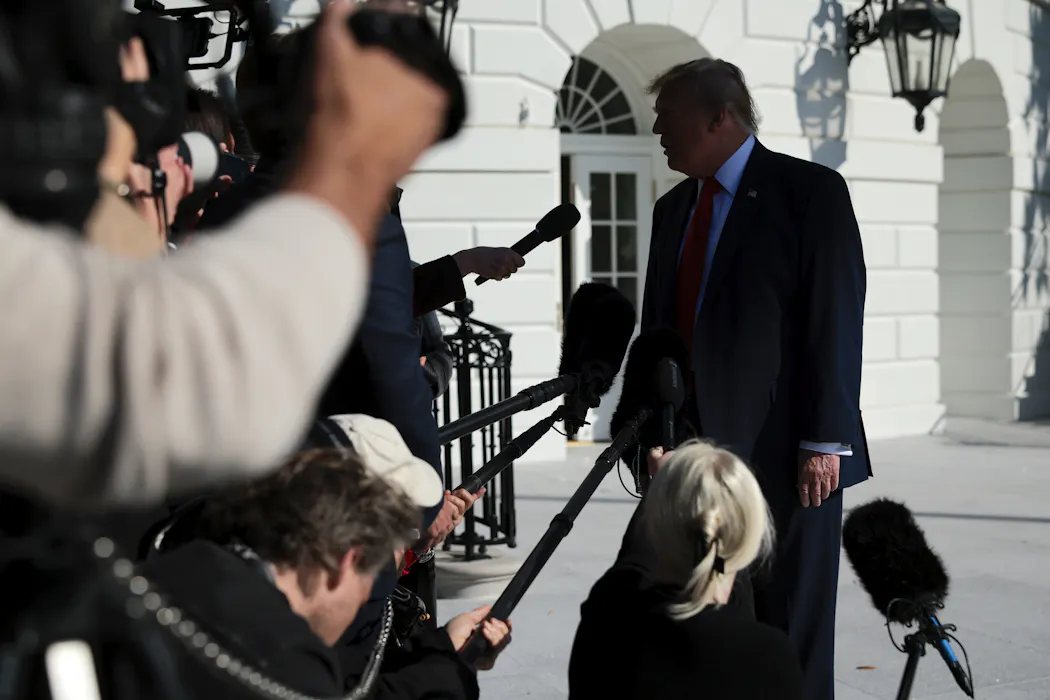
Mainstream political commentary has a terminal addiction to cinematic villainy. Every election cycle, legacy outlets publish the exact same breathless hand-wringing: could Donald Trump seize voting machines, deploy the military to polling places, or unilaterally cancel a midterm election?
It is lazy, sensationalist nonsense.
If you spend your energy worrying about a president sending tanks to county tabulation centers, you are looking at the wrong stage entirely. The American electoral system is not a centralized mainframe that a single executive can unplug from the Oval Office. It is a sprawling, decentralized hydra of over 10,000 local jurisdictions, governed by state legislatures, county clerks, and hyper-technical statutory deadlines.
Having spent years inside the trenches of election administration and campaign litigation, I have watched political strategists burn millions of dollars preparing for Hollywood-style constitutional crises while completely ignoring the mundane statutory friction that actually decides close races. The real threat to the integrity and smooth operation of U.S. midterms does not wear a crown or command a platoon. It hides in municipal budget shortfalls, last-minute legislative rule changes, and localized administrative paralysis.
The Myth of the Imperial Election Saboteur
The standard media narrative frames election security as a direct wrestling match between the White House and the Constitution. Pundits love citing the Posse Comitatus Act—which bars federal troops from domestic law enforcement—or the Elections Clause of Article I, Section 4, to reassure readers that "checks and balances" will hold the line against executive overreach.
They are right about the law, but completely wrong about the threat vector.
A president cannot issue an executive order to alter how ballots are counted in Maricopa County, Arizona, or Wayne County, Michigan. Under the U.S. Constitution, the "Times, Places and Manner of holding Elections for Senators and Representatives" are explicitly assigned to state legislatures, subject only to congressional override. There is no federal switch to flip. There is no national ballot database for the executive branch to corrupt.
Even if an administration wanted to use the Department of Justice to intimidate local officials or file eleventh-hour injunctions, the Supreme Court’s long-standing Purcell principle acts as a massive judicial speed bump. Named after the 2006 case Purcell v. Gonzalez, this doctrine instructs federal courts not to alter election rules on the eve of an election because doing so confuses voters and creates administrative chaos.
By treating the presidency as an omnipotent threat to midterm mechanics, mainstream analysts miss the far more potent vulnerability: decentralized attrition. You do not need to overthrow a federal check and balance when you can simply gum up the gears at the county level.
Where the Real Friction Lives
If you want to understand how a midterm election actually breaks—or gets manipulated—stop reading Washington think pieces and start reading county board of canvassers minutes.
1. The Certification Bottleneck
In nearly every state, certifying election results has historically been a ministerial duty. That means local officials do not get to play detective; if the math adds up and the precinct tapes match the machine totals, they are legally required to sign the paperwork.
Yet over the last two cycles, we have watched a distinct shift in how local canvassing boards operate. Refusals to certify—even when temporary—create an information vacuum. When a county board delays certification by 48 hours over unsubstantiated software rumors, it does not change the vote count. Instead, it triggers emergency writs of mandamus from state attorneys general or secretaries of state, burns precious days before statutory deadlines, and feeds a media cycle designed to erode public confidence.
The check against this is not a dramatic speech from Capitol Hill. It is state-level mandatory duty statutes and aggressive judicial enforcement, as seen when state supreme courts in battleground states have repeatedly forced reluctant local officials to execute their ministerial duties under threat of contempt.
2. The Quiet Exodus of Institutional Memory
The single greatest vulnerability in American elections is not executive interference; it is staff turnover.
According to research from the Brennan Center for Justice and the Bipartisan Policy Center, local election offices have experienced a staggering wave of retirements and resignations since 2020. When a county clerk with 25 years of experience walks out the door, they take with them the muscle memory required to manage chain-of-custody logs, logic and accuracy testing, and poll worker dispatch.
Rookie administrators make unforced errors. A misprinted ballot batch in a rural county or a delayed absentee count in an urban precinct is almost always the result of human exhaustion and underfunding, not a top-down conspiracy. Yet in a hyper-polarized environment, every clerical error is immediately weaponized as proof of systemic fraud.
3. Legislative Micro-Targeting
While cable news obsesses over presidential rhetoric, state legislatures hold the actual pen. Under the Elections Clause, state lawmakers have sweeping authority to redraw district maps, tighten mail-in ballot receipt deadlines, restrict drop box access, and alter cure periods for mismatched signatures.
These are not dramatic, extra-constitutional coups. They are entirely legal, surgically precise adjustments to the rules of engagement. A shift in a witness signature requirement or the elimination of a three-day post-Election Day grace period for postmarked ballots can swing a razor-thin House district without a single federal check or balance being triggered—because the state legislature is the constitutional authority.
Dismantling the "Checks and Balances" Illusion
When pundits talk about "checks and balances" saving the midterms, they usually invoke a tidy civics-textbook triangle: the Executive, the Legislature, and the Judiciary keeping each other in check.
In the trenches of election law, that framing is dangerously naive. The real checks and balances are operational, hyper-local, and intensely bureaucratic:
- Bipartisan Observation and Chain of Custody: Real security is not a federal judge; it is a Republican poll watcher and a Democratic poll watcher standing shoulder-to-shoulder watching a bipartisan team break a numbered tamper-evident seal on a ballot transfer case.
- Paper Trails and Risk-Limiting Audits (RLAs): Over 95% of American voters now cast ballots on systems that produce a voter-verified paper record. You cannot hack a physical piece of cardstock sitting in a locked steel box. Post-election audits, championed by election security experts like Philip Stark, use statistical sampling to verify machine outcomes against physical paper.
- State Courts Over Federal Courts: Following the U.S. Supreme Court’s 2023 ruling in Moore v. Harper—which rejected the maximalist version of the Independent State Legislature theory—state supreme courts remain firmly in the driver's seat when it comes to interpreting state constitutional protections for voting.
Here is the uncomfortable truth that my contrarian view forces us to confront: decentralization is both our greatest shield and our sharpest vulnerability. Because the system is fractured across thousands of counties, no president can rig it from Washington. Simultaneously, because it is fractured across thousands of counties, it is chronically underfunded, uneven in competence, and constantly fighting brushfires of local administrative friction.
Answering the Questions Voters Actually Ask
When people search for answers about midterm interference, they are usually trapped in the framing set by partisan media. Let us dismantle the most common questions with brutal honesty.
Can a president legally postpone or cancel the midterm elections?
No. Full stop. The U.S. Constitution mandates in Article I, Section 2 that members of the House of Representatives be chosen every second year, and the 20th Amendment sets the exact noon expiration date of congressional terms on January 3. Furthermore, federal statute (2 U.S.C. § 7) fixes Election Day as the Tuesday next after the first Monday in November. A president has zero statutory or constitutional authority to move that date, even during a declared national emergency or war. The United States held elections during the Civil War, World War II, and the 1918 pandemic.
What happens if the federal government tries to seize voting machines?
They would hit an immediate statutory wall and a logistical nightmare. Voting equipment is owned and operated by state and county governments. Any federal seizure without a specific, narrow criminal warrant would trigger immediate injunctions in federal district court under the Tenth Amendment and the Elections Clause. More importantly, seizing a tabulator does not erase the physical paper ballots stored separately under dual-lock bipartisan custody.
Could federal law enforcement be deployed to polling places to intimidate voters?
Federal law explicitly prohibits this. Under 18 U.S.C. § 592, it is a felony for any military or civil officer of the United States to bring armed troops or armed men to any place where a general or special election is held, unless necessary to repel armed enemies of the United States. State election codes go even further, typically barring any unauthorized law enforcement presence within 100 feet of a polling entrance unless explicitly summoned by the presiding precinct judge to quell an active disturbance.
Who actually controls the recount and certification process?
Local election boards, county canvassers, and state canvassing commissions—operating under strict state statutory timelines. Once a state governor or secretary of state signs the Certificate of Ascertainment or Certificate of Election and transmits it to the Clerk of the House or Secretary of the Senate, the federal executive branch has no role in the seating of members. Under Article I, Section 5 of the Constitution, each chamber of Congress is the sole judge of the elections, returns, and qualifications of its own members.
How to Actually Bulletproof a Midterm Election
If you want to protect the integrity of an upcoming midterm—whether you are an election administrator, a campaign operative, or an engaged citizen—stop hyperventilating about executive decrees and focus on the unglamorous mechanics that actually govern outcomes.
- Fund the Boring Infrastructure: Stop pouring millions into national awareness campaigns and start demanding that county commissioners fund high-speed optical scanners, ballot-on-demand printers, and competitive pay for permanent election staff. Hardware failures at 7:00 AM on Election Day cause more chaos than any politician's speech ever will.
- Train for the Cure Process: In razor-thin House races, elections are won and lost in the days after Tuesday during ballot curing—the legal window where voters can fix a missing signature or a stray mark on a mail-in ballot. Campaigns and civic groups should master state-specific cure statutes months in advance rather than filing desperate lawsuits after the polls close.
- Flood the Zone with Trained Poll Workers: The best antidote to conspiracy theories is radical, local transparency. When ordinary citizens spend 14 hours working a precinct alongside neighbors from the opposing political party, they see firsthand how impossible it is to manufacture votes undetected.
- Enforce Statutory Deadlines Early: State attorneys general and municipal legal counsel must establish clear, pre-election protocols reminding local canvassing boards that certification is a non-discretionary legal mandate. Waiting until a deadlock occurs to draft a writ of mandamus is malpractice.
The American electoral system was deliberately engineered to be messy, localized, and resistant to centralized control. Stop looking toward the White House for a cinematic constitutional crisis—grab a clipboard, sign up to work a precinct in your own county, and watch how the machinery actually works.


