The aerospace industry loves a good rescue narrative. Whenever a legacy multi-billion-dollar space telescope suffers a debilitating gyro failure or a degraded power system, the PR machine kicks into high gear. We get breathless headlines about robotic servicing missions, daring autonomous docking maneuvers, and heroic efforts to "save humanity's eyes on the universe."
It is a comforting story. It is also an absolute disaster for the advancement of astronomy.
The lazy consensus among space agency bureaucrats and romantic observers is that keeping an aging orbital asset alive is always a victory. They treat these instruments like sacred monuments that must be preserved at all costs. But out here in the real world, where budgets are finite and technology moves exponentially, keeping a twenty-year-old telescope on life support is not a triumph. It is an expensive sunk-cost fallacy that actively suffocates the next generation of discovery.
We need to stop saving dying space telescopes. We need to let them burn up.
The Myth of the Irreplaceable Satellite
The core argument for launching a robotic refueling or repair mission always boils down to a flawed premise: It is cheaper to fix what we have than to build something new.
This sounds reasonable on paper. In practice, it betrays a fundamental ignorance of how modern aerospace engineering and cost-structures work.
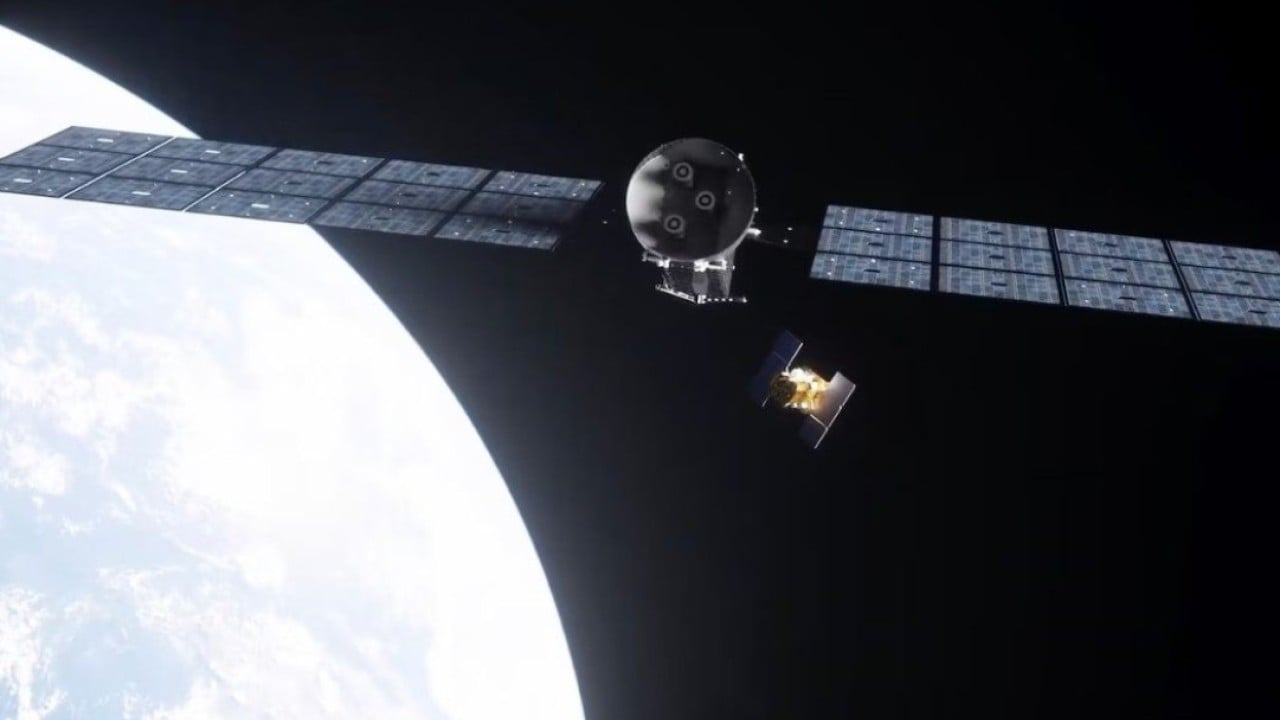
When you look at the budget of a mission designed to autonomously rendezvous, grapple, and repair a non-cooperative satellite in low Earth orbit (LEO), you are not looking at a cheap roadside assistance call. You are looking at a highly complex, high-risk R&D project. The servicing vehicle requires its own dedicated launch, advanced machine vision arrays, robotic arms, and hyper-precise propulsion systems.
I have seen aerospace programs burn through hundreds of millions of dollars just trying to simulate how a robotic gripper will interact with a thermal blanket that has been degrading in atomic oxygen for fifteen years. By the time you design, test, and launch the rescue bot, the bill frequently rivals the cost of a brand-new, vastly more capable observatory.
Consider what you are actually saving. A space telescope built in the late 2000s or early 2010s is running on hardware that belongs in a museum. Its focal plane arrays are tiny. Its data processing units have less computing power than a modern smart lightbulb. Its power efficiencies are abysmal.
When NASA or any other agency extends the life of an ancient platform, they are forcing the scientific community to keep consuming data through a straw. They are prioritizing continuity over progress.
The Opportunity Cost of Nostalgia
Space exploration operates in a zero-sum funding environment. Every dollar funneled into extending the life of a legacy asset is a dollar stolen from a project that could fundamentally rewrite our understanding of physics.
Let us break down the brutal math of orbital mechanics and obsolescence.
Imagine a scenario where an agency spends $800 million on a robotic servicing mission to replace the gyroscopes and batteries on an old optical telescope. The mission is a success. The telescope gets another five years of operational life. The press applauds.
But what did that $800 million actually buy? It bought five more years of the exact same resolution, the exact same wavelength coverage, and the exact same field of view that we have already had for two decades.
Meanwhile, in the project pipelines, next-generation concepts—telescopes utilizing flat-panel meta-lens optics, massive thinned mirrors, or highly integrated sensor suites—get delayed by three to five years because their development budgets were raided to pay for the rescue mission.
By choosing preservation over innovation, we miss out on order-of-magnitude leaps in sensitivity and survey speed. We are essentially choosing to fix a broken mainframe computer from 1995 instead of buying a fleet of modern laptops. It is scientific stagnation dressed up as sustainability.
Dismantling the "Space Junk" Deflection
Whenever you challenge the sanctity of these rescue missions, the establishment immediately pivots to environmental anxiety. They ask: If we do not service or controlled-deorbit these massive instruments, are we not just exacerbating the orbital debris crisis?
This is a classic strawman. Nobody is suggesting we leave defunct, school-bus-sized observatories to tumble blindly through chaotic orbits for a century, threatening the orbital shells used by commercial constellations.
The alternative to a complex, multi-million-dollar repair mission is not abandonment; it is a cheap, targeted disposal or an upfront design mandate. If an asset is at the end of its natural operational life, it should use its remaining fuel for a controlled re-entry, or be brought down via a simple, single-purpose de-orbit bolt-on that costs a fraction of a full-scale repair platform.
The choice is binary:
- Spend an exorbitant sum to patch up an obsolete instrument so it can produce diminishing scientific returns.
- Direct those resources toward building a superior replacement, while cleanly disposing of the old one.
The fact that we treat option one as the default option is a damning indictment of the risk-aversion paralyzing modern space administration.
Why Mass-Produced SmallSats are the Real Threat to Big Space
The traditional aerospace sector is terrified of admitting that the era of the monolithic, multi-decade flagship telescope might be drawing to a close. They want you to believe that space astronomy can only happen via a few, hand-crafted, multi-billion-dollar platforms that must be preserved like the Crown Jewels.
The commercial sector has already proven this philosophy wrong. The revolution in small satellites, standardized bus architectures, and drastically lowered launch costs courtesy of reusable rocketry has changed the economics of space permanently.
While a government agency spends a decade debating how to fix a single failing telescope, private entities and agile academic consortia are realizing they can launch networks of smaller, targeted space telescopes for a fraction of the cost.
- Rapid Iteration: If a sensor fails on a modular, lower-cost telescope, you do not launch a rescue mission. You launch version 2.0 on the next rideshare rocket three months later, featuring upgraded sensors.
- Component Degradation: Instead of fighting the harsh realities of the space environment with expensive patches, you accept that components degrade. You design the mission architecture around a five-year lifecycle, ensuring that your hardware in orbit is never more than a few years behind the state of the art on Earth.
- Distributed Risks: If a single flagship telescope suffers a catastrophic mirror alignment issue or a catastrophic power failure, the entire program is blinded. If you distribute your scientific goals across a constellation or a rolling series of medium-class missions, a single failure is merely a statistic, not a national tragedy.
The insistence on launching romanticized robotic salvage operations is nothing more than an attempt to prolong the relevance of an outdated procurement model. It protects the massive prime contractors who make billions designing bespoke, over-engineered hardware that requires bespoke, over-engineered repair solutions.
The Hard Truth About Scientific Pragmatism
To be clear, letting a historic telescope die hurts. It hurts the engineers who spent their careers building it, and it hurts the public that grew up looking at its spectacular images. I admit that transitioning to a disposable, rapid-iteration mindset means we will lose some continuity in specific observational datasets. There will be gaps.
But science does not advance through sentimentality. It advances through disruption.
We have allowed the narrative around space exploration to be dictated by emotional attachment to metal and glass floating in a vacuum. We celebrate the survival of the machine rather than the velocity of the data it produces.
If we want to map the atmospheres of exoplanets, find biosignatures, and peer into the earliest moments of cosmic inflation, we cannot do it using the patched-up remnants of yesterday’s technology. We need to stop treating orbital hardware as irreplaceable monuments.
Let the old telescopes die. Build the next ones faster. Stop fixing the past when we can afford to buy the future.